


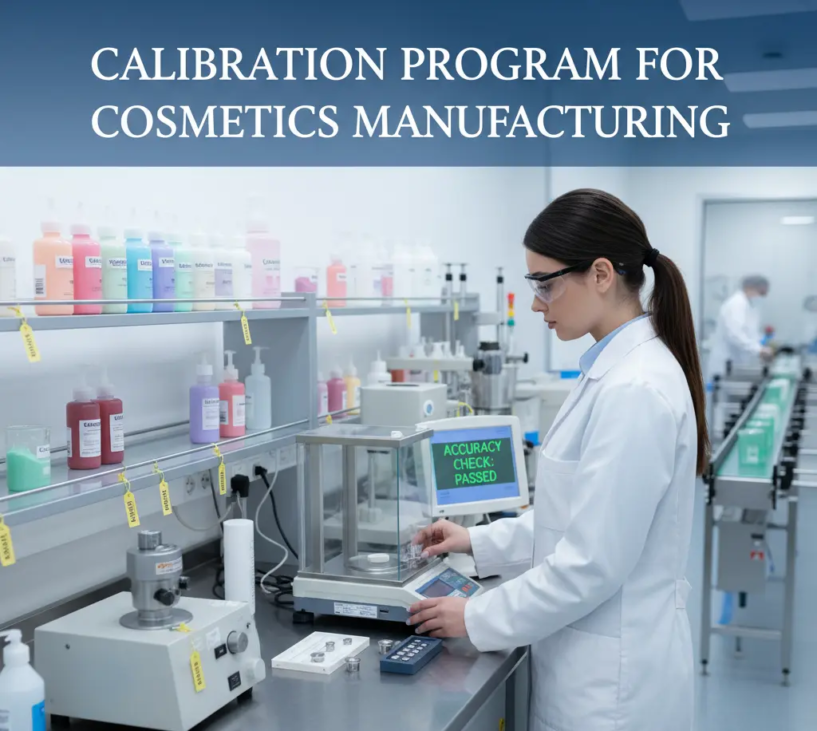
Cosmetics manufacturing depends heavily on accuracy. From ingredient measurements to environmental controls, every step affects product safety, quality, and regulatory compliance. A strong calibration program helps maintain reliable measurements, prevent deviations, and protect consumers. This guide explains the essential elements of a calibration program designed specifically for cosmetics production.
Why Calibration Matters in Cosmetics Manufacturing
Cosmetics products, including creams, serums, fragrances, powders, and color cosmetics, must meet strict quality and safety expectations. Accurate measurement is critical when working with:
-
Active ingredients
-
Preservatives
-
Color pigments
-
pH and viscosity levels
-
Filling volumes
-
Temperature-controlled processes
Any error can lead to instability, contamination risks, or failed batch performance. Calibration helps maintain control and reduces the chance of recalls, customer complaints, and regulatory penalties.
Building a Strong Calibration Foundation
A well-structured calibration program begins with clear policies that outline how, when, and by whom calibration will be performed. This foundation supports consistent measurement practices and minimizes variability in production.
Key components include:
-
Defined roles and responsibilities
-
Standardized procedures
-
Clear expectations for documentation
-
Training requirements for all involved personnel
A strong foundation helps workers understand how their actions affect product quality.
Creating a Complete Equipment Inventory
Cosmetics facilities rely on many instruments, including:
-
Balances
-
pH meters
-
Thermometers
-
Viscometers
-
Filling nozzles and volumetric devices
-
Hygrometers
-
Pressure gauges
-
Scales for raw material verification
Every item that affects product quality should be part of a calibration inventory.
The inventory should list:
-
Equipment name and ID
-
Location
-
Calibration frequency
-
Calibration method
-
Reference standard used
-
Status (active, out of service, retired)
A complete and updated inventory allows teams to track equipment easily and avoid missed calibrations.
Following ALCOA+ Documentation Principles
Documentation is essential in cosmetics manufacturing, where traceability supports product safety and compliance with GMP expectations. A calibration program must follow ALCOA+ principles:
-
Attributable
-
Legible
-
Contemporaneous
-
Original
-
Accurate
-
Complete
-
Consistent
-
Enduring
-
Available
Every calibration record should clearly show who performed the task, when it was performed, how it was completed, and what results were obtained.
Understanding Calibration Scheduling
An effective schedule keeps all equipment within acceptable accuracy ranges. Frequent checks reduce the chance of measurement drift affecting production.
Key scheduling elements include:
-
Automated reminders
-
Clear due-date tracking
-
Coordination with production schedules
-
Backup plans for unexpected equipment failure
-
Vendor support for outsourced instruments
-
CMS software for automated scheduling and status visibility
A predictable schedule helps production teams plan ahead and avoid uncalibrated equipment during critical steps.
How Often to Calibrate Cosmetics Equipment
Calibration frequency is not the same for every device. Instead, it depends on several factors, including:
-
Manufacturer recommendations
-
Instrument usage
-
Criticality of the equipment
-
Environmental conditions
-
Historical calibration data
-
Accuracy requirements
Typical calibration intervals range from 1 to 24 months, but high-use or high-risk equipment may need more frequent checks.
In cosmetics manufacturing, equipment used for weighing active ingredients, validating fill levels, or verifying pH usually requires shorter intervals due to a higher impact on product quality.
Managing Out-of-Tolerance (OOT) Findings
An out-of-tolerance finding occurs when equipment does not meet required accuracy limits. Cosmetics manufacturers must take immediate actions, including:
-
Quarantining affected batches
-
Reviewing production records
-
Assessing potential consumer impact
-
Evaluating whether rework or disposal is needed
-
Documenting all actions taken
-
Reviewing calibration frequency for possible adjustment
Even a small deviation can compromise stability, shelf life, or ingredient effectiveness. A structured OOT process helps control risk quickly.
Corrective and Preventive Actions (CAPA)
If repeated failures occur, a CAPA process helps identify root causes and prevent recurrence. CAPA effectiveness should be reviewed within 30–60 days.
Common CAPA actions include:
-
Retraining staff
-
Updating work instructions
-
Improving environmental controls
-
Replacing worn equipment
-
Modifying calibration frequencies
A strong CAPA system supports continuous improvement across the entire facility.
Maintaining Traceability to Standards
All calibration must be traceable to recognized national or international standards such as NIST or accredited metrology institutes. This traceability builds confidence in measurement accuracy, supports regulatory expectations, and protects product quality.
Traceable standards help confirm that instruments used in cosmetics production perform within acceptable accuracy limits.
Environmental Controls and Their Role in Calibration
Cosmetics production often requires controlled environments. Temperature, humidity, and air quality influence many instruments.
Examples include:
-
Balances sensitive to airflow
-
pH meters affected by temperature
-
Viscosity measurements influenced by humidity
Calibration areas should maintain stable conditions, and environmental records must be logged regularly.
Training for Calibration Personnel
Calibration staff must understand:
-
Measurement principles
-
Proper handling of instruments
-
Calibration procedures
-
Documentation requirements
-
GMP expectations
-
Potential sources of error
Regular training keeps skills sharp and prevents mistakes that could compromise quality.
Using Calibration Management Software (CMS)
Modern CMS systems simplify program management. Benefits include:
-
Automatic reminders
-
Electronic signatures
-
Digital records
-
Standardized workflows
-
Real-time visibility
-
Reduced manual errors
-
Audit trail creation
Many cosmetics facilities use CMS tools to support audit readiness and improve productivity.
Internal Audits and Continuous Improvement
Internal audits highlight weaknesses in calibration processes. Findings help refine procedures, strengthen compliance, and improve record quality.
Regular management reviews also support continuous improvement by:
-
Tracking performance metrics
-
Reviewing calibration intervals
-
Identifying training needs
-
Evaluating vendor performance
-
Updating procedures as standards evolve
Strong audit practices make the entire program more reliable.
Conclusion
A calibration program in cosmetics manufacturing supports accuracy, product safety, and regulatory compliance. By building clear procedures, maintaining strong documentation, training skilled personnel, managing scheduling, and responding quickly to OOT results, manufacturers can protect product quality and support long-term operational success.