

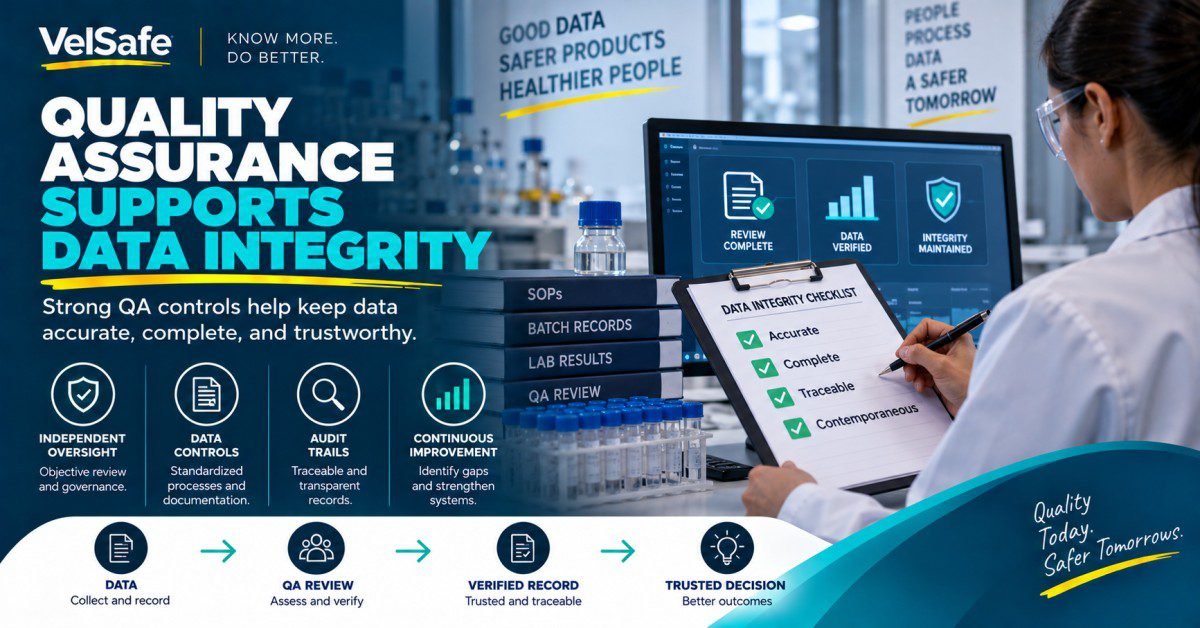
Tips: Quality Assurance and Data Integrity
Quality assurance supports data integrity by catching errors before they compound, not by reviewing clean data at the end of a study and hoping nothing was missed along the way.
Quality assurance and data integrity are inseparable in clinical research, pharmaceutical manufacturing, and regulated laboratory environments. FDA and ICH expect organisations to demonstrate not just that their data is correct but that their systems, processes, and controls make data integrity failures unlikely from the outset. These seven tips cover what QA professionals, clinical research coordinators, and quality managers must do at each stage of the data lifecycle to maintain data integrity: from protocol design through to archiving, CAPA, and audit readiness.
21 CFR
Part 11
Part 11
The FDA Electronic Records and Signatures Rule: Every Audit Trail, Access Control, and Validation Requirement for Electronic Data Systems
21 CFR Part 11 requires that electronic records used in FDA-regulated studies meet specific requirements for audit trails, access controls, system validation, and electronic signatures. QA’s role is to verify that every electronic data capture system in use is validated, that audit trails are enabled and unalterable, and that only authorised personnel can make or modify entries. Gaps in Part 11 compliance are among the most common findings in FDA inspections. Source: 21 CFR Part 11
ALCOA+
The Data Integrity Standard: Attributable, Legible, Contemporaneous, Original, Accurate, Plus Complete, Consistent, Enduring, Available
ALCOA+ is the FDA and MHRA’s framework for what constitutes data integrity in regulated environments. Every data point must be Attributable (who recorded it), Legible (readable now and in the future), Contemporaneous (recorded at the time of activity), Original (first capture), Accurate (correct), and meet the additional criteria of Complete, Consistent, Enduring, and Available. QA’s job is to verify all nine criteria are met by the systems and processes in use. Source: FDA: Data Integrity Guidance
ICH E6
GCP Guideline: Quality Assurance and Quality Control Are Both Required Throughout Every Clinical Trial
ICH E6(R2) requires sponsors to implement quality management systems that include both QA (systematic auditing) and QC (operational verification) throughout a clinical trial. QA is defined as all planned and systematic activities that provide confidence that the trial is conducted and data generated in compliance with GCP. This is not a post-study review function. It is an active programme running from protocol through to archiving. Source: ICH E6(R2): GCP
7 Quality Assurance Data Integrity Tips: Quick Summary
What QA must do at every phase of the data lifecycle
1
Build data integrity requirements into the protocol and data collection plan before the study starts
2
Validate every electronic system before it captures a single data point
3
Run in-process audits during data collection: do not wait until the study closes to find problems
4
Verify audit trails and access controls are functioning: every change must be attributed, timestamped, and unalterable
5
Drive CAPA to root cause: every deviation must be investigated, not just documented
6
Prepare for inspections continuously, not as a sprint before each audit
7
Confirm archiving meets regulatory retention requirements before study close-out
How Quality Assurance Supports Data Integrity: 7 Tips in Full
Tip 1: Build Data Integrity Requirements Into the Protocol Before the Study Starts
Why It Matters
Most data integrity failures are designed in at the planning stage. A protocol that does not clearly define the data points to be collected, the instruments that will collect them, the source document hierarchy, or the rules for handling missing or out-of-range values creates ambiguity that becomes error at the collection stage and discrepancy at the audit stage. ICH E6(R2) specifically requires that the protocol address data collection methods and define which documents constitute source data. QA’s role at the planning stage is to review the protocol and data collection plan against these requirements before any study activity begins. Source: ICH E6(R2) Section 6
What To Do
During protocol review, QA should confirm: each data variable is defined with acceptable ranges and units; the source document for each data point is identified; the data capture method (paper CRF, EDC, direct entry from instrument) is specified for each variable; missing data handling rules are stated in the protocol or data management plan; and query resolution timelines are defined. Where any of these elements are absent or ambiguous, QA should raise a formal review comment requiring resolution before the protocol is finalised. A protocol amendment to correct a data integrity design flaw mid-study is significantly more costly and complex than addressing it at review.
Common Mistake
Treating the protocol review as a scientific or statistical exercise and not a data integrity review. QA reviewers sometimes focus on endpoint definitions and statistical methodology while accepting data collection specifications that are vague or incomplete. A protocol that says “data will be collected by site staff using standard forms” without defining which forms are standard, who is authorised to complete them, or what happens when a value is missing has a data integrity gap that no amount of post-collection monitoring can fully close.
Pro Tip
Create a data integrity risk assessment during the planning phase. For each data variable, rate the integrity risk: how likely is an error, how detectable is it at collection, and what is the impact on the study if the value is wrong? High-risk variables (primary endpoints, safety data) should have additional controls specified: double-entry requirements, source data verification at every visit, or automated range checks in the EDC. This assessment becomes part of the quality management plan and provides the basis for QA’s in-process audit focus during the study.
Tip 2: Validate Every Electronic System Before It Captures a Single Data Point
Why It Matters
An unvalidated electronic system is a data integrity liability. 21 CFR Part 11 requires that electronic records used in FDA-regulated studies be generated by validated systems. Validation confirms that the system does what it is designed to do, that it does it consistently, and that the documentation exists to prove it. An EDC system, laboratory information management system (LIMS), or clinical data management system (CDMS) that has not been formally validated to an IQ/OQ/PQ standard cannot be relied upon to produce data that meets the ALCOA+ criteria. FDA inspection findings for electronic system validation failures are serious observations that can result in data rejection or warning letters. Source: 21 CFR Part 11
What To Do
Before any electronic system is used to capture, process, or store regulated data, QA must confirm: a validation plan exists and has been approved; installation qualification (IQ), operational qualification (OQ), and performance qualification (PQ) documentation is complete and on file; user acceptance testing (UAT) results are documented; the system’s audit trail function has been enabled and verified as unalterable; user access controls are configured so that only authorised personnel can view and modify each data category; and a system change control procedure is in place for updates. Where a vendor-provided system is used, QA must review the vendor’s qualification documentation and confirm it is adequate for the intended use in this specific study context.
Common Mistake
Accepting a vendor’s statement that their system is “validated” without reviewing the actual validation documentation. A vendor may have completed validation for a generic version of their platform. That validation does not automatically cover the specific configuration, custom fields, or workflows implemented for your study. QA must confirm that the validation documentation covers the specific system version and configuration in use, and that any custom elements were subjected to appropriate qualification testing before go-live.
Pro Tip
Perform a periodic audit trail review at least quarterly during a live study. Confirm that no entries have been made without a corresponding audit trail record, that all changes include a reason for change, that no entries are backdated or show timestamps inconsistent with the study visit timeline, and that no unauthorised users have accessed the system. Anomalies in the audit trail are frequently the first sign of a data integrity problem that would not be visible from the data alone.
Tip 3: Run In-Process Audits During Data Collection: Do Not Wait Until Close-Out
Why It Matters
Data integrity problems that are identified during a study can be corrected, documented, and explained. Data integrity problems discovered at close-out, during a regulatory inspection, or after submission cannot be corrected; they can only be explained. In-process QA audits during the data collection phase provide the opportunity to catch systematic errors (a site consistently using the wrong unit, an EDC field that is being misinterpreted, a monitoring gap that is allowing incomplete forms to persist) before they affect a large portion of the dataset. ICH E6(R2) requires that the sponsor’s quality management system include systematic evaluation of trial conduct during the study, not only at completion. Source: ICH E6(R2) Section 5.0
What To Do
Schedule in-process audits at defined intervals in the quality management plan: at minimum, one audit after the first 10% of subjects are enrolled and at least one more at the midpoint of the study. Each audit should cover a random sample of case report forms or EDC records, comparing entries against source documents, reviewing open and resolved queries, checking that protocol deviations have been properly reported and that adverse events are documented on time. Audit findings must be formally documented, routed to the responsible parties for response, and tracked to resolution. An audit that produces a finding but no documented follow-up does not satisfy the QA function.
Common Mistake
Relying on monitoring visit reports as a substitute for independent QA audits. Monitoring is a quality control function: it verifies that data matches source documents and that the protocol is being followed at each site. Auditing is a QA function: it independently evaluates whether the monitoring process itself is working, whether the systems are functioning as specified, and whether the overall quality management framework is being implemented. These are distinct functions that cannot substitute for each other. A QA audit that simply reviews whether monitoring reports are on file is not an audit of data integrity; it is a document check.
Pro Tip
Use data management metrics as a trigger for unscheduled audits. A query rate that suddenly increases at a specific site, a pattern of late adverse event reports from one investigator, or a spike in protocol deviations after a new staff member joins are all data signals that warrant an unscheduled targeted audit. Waiting for the next scheduled audit cycle means the underlying issue continues generating errors for weeks or months. Risk-based in-process auditing responds to these signals in real time and is explicitly supported by ICH E6(R2)’s risk-proportionate quality management approach.
Tip 4: Verify That Every Data Change Is Attributed, Timestamped, and Unalterable
Why It Matters
The “Attributable” and “Contemporaneous” elements of ALCOA+ require that every data entry and every change to a data entry be traceable to the specific person who made it and the exact time it was made. This is the fundamental basis of audit trail compliance. An audit trail that does not identify who made each change, or that can be modified or deleted, does not satisfy the data integrity requirement regardless of how accurate the underlying data appears to be. FDA’s data integrity guidance explicitly states that audit trails that are not secure, complete, or readily reviewable are a data integrity deficiency, and that data generated by a system with an inadequate audit trail is unreliable for regulatory purposes. Source: FDA: Data Integrity and Compliance With Drug CGMP
What To Do
QA must verify for every electronic system in the study: the audit trail is enabled by default and cannot be disabled by users; the audit trail records the original value, the new value, the user ID, the date and time of change, and the reason for change; the system’s timestamps are derived from a controlled time source that cannot be manipulated by users; the audit trail is stored separately from the data it records, so that data cannot be modified without the modification appearing in the audit trail; and the audit trail is retained for the full study record retention period. For paper records, QA must verify that corrections follow the required single-line strike-through format with initials, date, and reason, and that no pages have been replaced or white-out has been used.
Common Mistake
Allowing shared user accounts or shared login credentials for electronic systems. When multiple people use the same account, it becomes impossible to attribute individual data entries to a specific person. This is one of the most cited data integrity deficiencies in FDA warning letters. Every person who enters, modifies, or approves data must have a unique, individual login that is never shared, and the system must be configured to enforce this by design, not just by policy.
Pro Tip
During in-process audits, review the audit trail for the pattern of data entry timing relative to study visits. Entries that are systematically made days after the corresponding study visit, or that cluster at end-of-month rather than distributing across the month, are flags for reconstructed or retrospective data entry, which violates the Contemporaneous criterion of ALCOA+. This pattern is a finding that requires investigation regardless of whether the data values themselves appear accurate.
Tip 5: Drive CAPA to Root Cause: Document, Investigate, and Close Every Deviation Properly
Why It Matters
A CAPA system that documents deviations but does not investigate them to root cause and implement verified corrective actions is a compliance exercise, not a quality management tool. FDA and ICH both expect CAPA systems to demonstrate that the organisation understands why a deviation occurred and has implemented changes that make recurrence less likely. A CAPA that assigns “additional training” as the corrective action for every deviation, without investigating whether the deviation was caused by a knowledge gap, a system failure, or a process design problem, will not satisfy an inspector who reviews the CAPA record for evidence of genuine root cause investigation. Source: FDA: Investigations Operations Manual
What To Do
Every deviation must go through a defined CAPA process: classification (minor, major, or critical based on the impact on data integrity and subject safety); root cause investigation using a recognised method (5 Whys, fishbone diagram, failure mode analysis); corrective action defined at the root cause level, not the symptom level; preventive action defined to prevent the same or similar failure from occurring in other areas; implementation of both actions with responsible parties and due dates assigned; and effectiveness check scheduled at a defined point after implementation to confirm the corrective action worked. QA owns the CAPA process: QA opens the CAPA, reviews the root cause analysis, approves the actions, and confirms the effectiveness check. No CAPA should be closed without QA sign-off that it has been resolved at the root cause level.
Common Mistake
Closing CAPAs based on completion of the corrective action rather than verification of its effectiveness. A corrective action that was implemented but did not prevent recurrence is not a closed CAPA from a regulatory standpoint. If the same deviation recurs after a CAPA has been closed, it is evidence that the CAPA was ineffective, which is a more serious finding than the original deviation. Build effectiveness checks with specific criteria and deadlines into every CAPA plan before it is approved, not as an afterthought after the action is complete.
Pro Tip
Review your CAPA history quarterly for recurring themes. If the same root cause (such as inadequate SOP clarity, insufficient training for a specific task, or a system configuration gap) appears in multiple CAPAs across different studies or sites, it indicates a systemic issue that individual CAPAs are addressing symptom by symptom without fixing the underlying cause. Systemic CAPA reviews that identify cross-study patterns and generate corrective actions at the programme level are among the highest-value QA activities in a regulated organisation.
Tip 6: Maintain Continuous Inspection Readiness: Not a Sprint Before Each Audit
Why It Matters
FDA inspections can be announced or unannounced. An organisation that is inspection-ready only during the weeks before a scheduled audit is an organisation that is not implementing its quality management system properly the rest of the time. Continuous inspection readiness means that SOPs are current and followed, training records are complete and current for all personnel who handle regulated data, CAPA logs are up to date and all open items have active plans, validation documentation is accessible and complete for all systems in use, and audit trails are being reviewed rather than simply accumulated. Organisations that operate this way experience inspections as a verification of what they already know. Organisations that prepare for inspections as a remediation activity discover things during preparation that they should have caught months earlier. Source: FDA: Investigations Operations Manual
What To Do
Build a continuous readiness checklist into your QA calendar: monthly review of all open CAPAs for on-schedule closure; quarterly audit trail reviews for all active electronic systems; quarterly SOP review to identify any procedures that are overdue for their review cycle; semi-annual training record audit to confirm all personnel are current on required training; and an annual mock inspection using a team member unfamiliar with the study to walk through the record set as an inspector would. The mock inspection is particularly valuable: it surfaces document gaps, access issues, and inconsistencies that the study team has become blind to through familiarity.
Common Mistake
Creating back-dated or “tidied” records as part of pre-inspection preparation. Updating a training record, backdating a signature page, or adding a missing date to a form after receiving notice of an inspection are data integrity violations that are more serious than the original omissions they are meant to address. An inspector who finds evidence that records were modified in the days before their arrival will pursue this aggressively. Continuous readiness means the records are correct as they are being created, not corrected in advance of each inspection.
Pro Tip
Train all staff on what to do if an unannounced FDA investigator arrives, before one does. Every staff member should know: who to call immediately, where inspection-supporting documents are located, that they may speak with investigators but should not speculate beyond their direct knowledge, and that QA must be notified and present throughout the inspection. An unprepared staff response at the start of an unannounced inspection can create the impression of disorganisation or concealment that colours the entire inspection narrative.
Tip 7: Confirm Archiving Meets Regulatory Retention Requirements Before Study Close-Out
Why It Matters
The “Enduring” and “Available” components of ALCOA+ require that data remain readable, accessible, and complete for the full retention period required by regulation. ICH E6(R2) requires that essential documents be retained for at least two years after the last approval of a marketing application, and longer if required by local regulations or the study sponsor. FDA regulations require retention of certain study records for specified periods that vary by data type and study phase. An archiving failure that results in records being inaccessible, unreadable, or incomplete at the time of a post-study inspection is a data integrity deficiency even if the underlying data was accurate when it was recorded. Source: ICH E6(R2) Section 8
What To Do
Before study close-out, QA should confirm: the required retention period has been identified for every document type in the study record set; physical records are stored in a controlled, access-restricted environment with environmental monitoring appropriate for long-term preservation; electronic records are stored in a validated archival system that preserves the data in a readable format and maintains the audit trail and metadata; a record of what is stored, where it is stored, and when the retention period expires exists for every study record; and a procedure is in place for review and authorised destruction of records at the end of the retention period. A close-out audit specifically reviewing the completeness and accessibility of the trial master file (TMF) should be a standard QA activity before a study is formally closed.
Common Mistake
Archiving electronic data in a proprietary format that can only be read by the software version used during the study, without confirming that the software will remain available and licensed for the full retention period. Software becomes obsolete, vendors discontinue products, and licence agreements expire. Electronic records stored in a format that can no longer be read five years after archiving do not satisfy the “Available” criterion of ALCOA+ or the regulatory requirement for record accessibility during the retention period. At archiving, confirm that records are stored in a durable, non-proprietary format or that a long-term viewer or migration plan is in place.
Pro Tip
Conduct a periodic accessibility test of archived electronic records: at least once every two years, retrieve a representative sample of records from the archival system and confirm they are readable, complete, and that the associated audit trail is intact. This test identifies format migration issues, storage media degradation, or system access failures before they become irreversible. Log the test result and any corrective actions taken. This periodic review is a straightforward QA activity that can prevent an archiving failure that would be impossible to remediate.
QA Data Integrity Checklist by Study Phase
Before and During Data Collection
At Close-Out and Post-Study
Protocol reviewed for data integrity requirements
Data integrity risk assessment completed
All electronic systems validated before go-live
Audit trails enabled and verified as unalterable
Individual user accounts confirmed for all personnel
In-process audits scheduled at 10% enrolment and midpoint
Deviations documented and CAPA opened within 5 days
Audit trail reviews completed quarterly
All open CAPAs closed and effectiveness verified
TMF completeness audit conducted
Retention period identified for every document type
Physical records in controlled storage confirmed
Electronic records archived in accessible format
Record location log complete and on file
Lessons learned documented for future studies
Periodic archival accessibility test scheduled
Sources: FDA: Data Integrity Guidance | ICH E6(R2)
Key Takeaways
Quality assurance that only operates at the end of a study is not quality assurance: it is review
ICH E6(R2)’s definition of QA as “all planned and systematic activities” is the operative phrase. QA that is planned and systematic operates before the first data point is captured, during every phase of the study, and through archiving and post-study record management. A QA function that conducts a single end-of-study review is reviewing the data, not assuring the quality of the processes that generated it.
Data integrity is a system property, not a data property: fixing the data does not fix the system that produced the error
Every CAPA that addresses a data integrity finding by correcting the data value rather than the process that produced the incorrect value is a CAPA that will generate another finding. ALCOA+ compliance requires not just that the data recorded meets its criteria but that the systems, processes, and controls in place make it likely that future data will also meet them. This is the system-level orientation that distinguishes effective quality assurance from data correction.
An FDA inspector reviewing data integrity looks at the system first, the data second: shared accounts, disabled audit trails, and reconstructed records fail before the data values are even examined
The most common critical data integrity findings in FDA warning letters are not wrong data values. They are systemic failures that make it impossible to trust any data value: shared login accounts that cannot attribute entries to individuals, audit trails that were disabled or could be modified, records that were reconstructed after the fact rather than created contemporaneously, and CAPA systems that document without investigating. QA that prevents these systemic failures is protecting the entire dataset. QA that only reviews data values after the fact is performing a much narrower function that will not satisfy an inspector looking at the integrity of the system that produced the data.
Frequently Asked Questions
What is ALCOA+ and why does it matter for data integrity in clinical research?
ALCOA+ is the framework used by FDA, MHRA, and other regulatory authorities to define what constitutes data integrity in regulated environments. The original ALCOA criteria are Attributable (who recorded the data), Legible (readable now and in the future), Contemporaneous (recorded at the time of the activity), Original (the first record of the observation), and Accurate (correct and truthful). The “+” criteria add Complete, Consistent, Enduring (retained for the required period), and Available (accessible when needed for inspection). Every data point generated in a clinical trial, pharmaceutical manufacturing batch, or regulated laboratory environment must meet all nine criteria. QA’s role is to verify that the systems and processes in place make compliance with ALCOA+ the expected outcome, not the exception. Source: FDA: Data Integrity Guidance
What is the difference between quality assurance and quality control in clinical research?
ICH E6(R2) defines these as distinct functions. Quality control (QC) refers to the operational techniques and activities used to verify that the requirements for quality have been fulfilled: monitoring visits, source data verification, data query resolution, and in-process checks are all QC activities. Quality assurance (QA) refers to all planned and systematic activities that provide confidence that the trial is being conducted in compliance with GCP: auditing, process review, SOP development, training oversight, and CAPA management are QA activities. QA evaluates whether the QC system is working. They are complementary and neither can substitute for the other. Source: ICH E6(R2) Section 1
What does 21 CFR Part 11 require for electronic records in clinical trials?
21 CFR Part 11 establishes the criteria under which FDA accepts electronic records and electronic signatures as equivalent to paper records and handwritten signatures. The key requirements are: electronic records must be generated by validated systems; audit trails that capture who made each entry or change, when, and what the original and new values were must be enabled by default and stored securely; access to the system must be controlled so that only authorised individuals can access, enter, or modify records; computer-generated date and time stamps must be derived from a controlled time source; and electronic signatures must uniquely identify the individual signing and be linked to the signed record such that the signature cannot be excised and applied to another document. Compliance with Part 11 is assessed as part of FDA inspections of clinical research organisations. Source: 21 CFR Part 11
What are the most common data integrity findings in FDA inspections of clinical research organisations?
Based on FDA warning letters and inspection observation summaries, the most frequently cited data integrity findings in clinical research settings include: shared user accounts or login credentials that prevent attribution of individual data entries; audit trails that are incomplete, disabled, or capable of being modified; data entries made significantly after the corresponding study activity (violated Contemporaneous criterion); records that appear to have been reconstructed or back-dated; CAPA systems that document deviations without conducting root cause investigation; and electronic systems used for regulated data collection that have not been formally validated. These findings are considered critical because they undermine confidence in the entire dataset, not just the specific records where the violation was observed.
How long must clinical trial records be retained?
Retention requirements vary by record type, regulatory jurisdiction, and study phase. ICH E6(R2) requires that essential documents be retained for at least two years after the last approval of a marketing application in an ICH region, or until there are no pending or planned marketing applications, or until at least two years have elapsed since the formal discontinuation of clinical development. FDA regulations under 21 CFR Part 312 require that investigational new drug application records be retained for two years after the marketing application is approved or the IND is discontinued. Some document types, including safety data and informed consent records, may require longer retention. QA must identify the applicable retention period for each document type before archiving.
What is source data verification (SDV) and how does it support data integrity?
Source data verification is the process of comparing data entered into a CRF or EDC system against the original source document (patient chart, lab report, imaging record) to confirm that the transcription is accurate and complete. SDV is a quality control activity that directly supports the Accurate and Original criteria of ALCOA+. It is typically performed by clinical research associates (CRAs) during monitoring visits. QA’s role is to confirm that SDV is being performed at the frequency specified in the monitoring plan, that discrepancies found during SDV are raised as queries and resolved properly, and that the monitoring visit reports documenting SDV findings are complete and accurate. ICH E6(R2)’s risk-based monitoring approach allows SDV frequency to be adjusted based on risk, but QA must confirm that the risk rationale is documented and that critical data points retain appropriate verification coverage. Source: ICH E6(R2) Section 5.18
Can a CAPA system be itself a data integrity failure?
Yes. A CAPA system that does not accurately reflect the real status of corrections and preventive actions in the organisation is itself a data integrity problem. If CAPAs are closed in the system before corrective actions are actually implemented, if effectiveness checks are marked complete without a genuine review, or if the CAPA record does not accurately reflect the root cause investigation that was actually conducted, the CAPA system’s data does not meet the ALCOA+ criteria. FDA inspectors review CAPA systems as part of GMP and GCP inspections and will compare the CAPA record against evidence of actual implementation. A CAPA record that shows completion of actions that evidence does not support is a falsification finding, which is one of the most serious categories of data integrity violation.
Sources
Government and Regulatory Sources
- FDA: Data Integrity and Compliance With Drug CGMP: FDA’s primary guidance document on data integrity requirements for pharmaceutical and clinical research environments, including the ALCOA+ framework, audit trail requirements, and the most frequently cited data integrity deficiency categories.
- 21 CFR Part 11: Electronic Records and Electronic Signatures: the FDA regulation establishing requirements for audit trails, access controls, system validation, and electronic signatures for electronic records used in FDA-regulated studies.
- ICH E6(R2): Good Clinical Practice Guideline: the international standard for clinical trial conduct, including the definitions of QA and QC, essential document retention requirements, risk-based monitoring guidance, and the sponsor’s quality management system obligations.
- FDA: Investigations Operations Manual: FDA’s internal guidance for inspection procedures, used to understand what investigators examine during data integrity inspections and CAPA system reviews.
Standards and Industry Sources
- 21 CFR Part 312: Investigational New Drug Applications: source for IND record retention requirements and sponsor obligations for data collection, monitoring, and archiving in clinical investigations.
Related VelSafe Articles
Situational
Equipment Qualification Failure: A GMP Case Study
A case study of how an equipment qualification failure in a GMP environment created a data integrity gap: what went wrong, what the CAPA record showed, and what systemic controls would have prevented the outcome.
Guides
Industry 4.0 for Pharmaceutical Manufacturing
How digital manufacturing technologies affect data integrity obligations in pharmaceutical production: automated data capture, real-time monitoring systems, and the validation requirements that apply when electronic systems replace paper-based quality records.
Insights
HCP Interactions In-House: Compliance and Risk Guide
The data integrity and compliance obligations that apply to healthcare professional interactions in pharmaceutical and medical device organisations, including documentation requirements, review processes, and the audit trail standards that apply to HCP interaction records.
Clinical Research and GMP Data Integrity Resources
More Quality Assurance and Compliance Tips for Clinical and Regulatory Teams
VelSafe covers FDA compliance, GMP quality systems, ALCOA+ data integrity, CAPA management, and clinical research QA for quality professionals, regulatory affairs teams, and compliance managers in pharmaceutical, biotechnology, and clinical research organisations.
Browse All Compliance Tips