

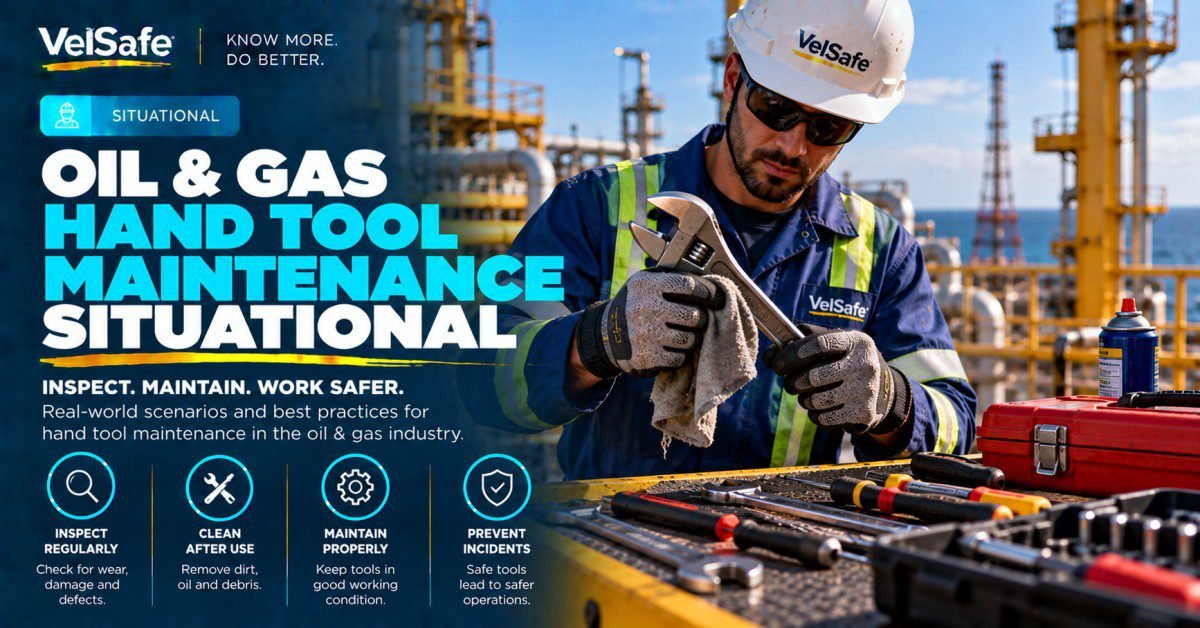
The Scenario: What Happened and Who Was Involved
Setting and People Involved
What Was Being Done
The technician was re-torquing the bolts on a 4-inch process line flange after replacing the gasket. The task required a 24-inch pipe wrench from the site tool store. The tool selected had been returned to the tool store by a previous crew without inspection. The jaws were visibly worn and the spring adjustment mechanism was loose. The technician picked up the tool, confirmed it was the right size, and began tightening the bolts. No pre-task JHA was completed. No pre-use tool inspection was performed. No cut-resistant gloves were worn.
Timeline: Sequence of Events Leading to the Injury
What Went Wrong: Root Causes
No Pre-Task JHA Completed
Tool Issued Without Inspection
No Pre-Use Tool Inspection by Technician
No PPE for the Task
No Tool Return Inspection by Previous Crew
Regulatory Failures: Standards Violated
Source: OSHA Hand and Power Tools 1926.301 | OSHA Hand Protection 1910.138 | OSHA Penalty Schedule 2024
Corrective Actions: What Should Have Been Done
Complete a Pre-Task JHA Before Every Maintenance Task
Inspect Every Tool Before Use and Before Issue from the Tool Store
Implement a Pre-Use Tool Inspection Habit for All Technicians
Specify Cut-Resistant Gloves for High-Torque Hand Tool Work
Train Technicians on Tool Serviceability Criteria
Enforce PPE Verification Before Task Start
Lessons Learned: Transferable Principles
Routine task classification creates a false safety assumption
Tool condition at return is the last chance to protect the next user
A defect noticed and ignored becomes a willful violation
PPE must be specific to the hazard, not the general task category
Supervisor presence at task start must include a PPE check
Prevention Checklist: Hand Tool Safety in Oil and Gas Maintenance
Before the Task
During the Task
After the Task / Returning Tools
Source: OSHA 29 CFR 1926.301: Hand and Power Tools | OSHA 29 CFR 1910.138: Hand Protection | ANSI/ISEA 105: Hand Protection Classification
Key Takeaways
Frequently Asked Questions
What OSHA standard covers hand tool inspection in oil and gas?
When must a hand tool be removed from service?
Are cut-resistant gloves required for hand tool work in oil and gas?
Is a pre-task JHA required for routine maintenance tasks?
What should a worker do if they notice a tool defect during a task?
How should the tool store manage hand tool serviceability?
What are the most common hand tool violations cited by OSHA in oil and gas?
Sources
Government and Regulatory Sources
- OSHA. 29 CFR 1926.301: Hand and Power Tools: unsafe tool prohibition; defective tool removal from service; employer obligation to provide safe hand tools in construction-classified activities.
- OSHA. 29 CFR 1910.242: Hand and Portable Powered Tools (General Industry): general industry equivalent; all hand tools must be maintained in safe condition.
- OSHA. 29 CFR 1910.138: Hand Protection: employer obligation to select and require appropriate hand protection for cut, laceration, and chemical hazards.
- OSHA. 29 CFR 1910.132: PPE General Requirements: written hazard assessment required before PPE selection; certification required; January 2025 fit amendment.
- OSHA. General Duty Clause: Section 5(a)(1) of the OSH Act: employer obligation covering recognised hazards not addressed by a specific standard; up to $156,259 per willful citation.
- OSHA. IMIS Citation Data: Hand and Power Tool Violations: most-cited hand and power tool standards in oil and gas construction and maintenance inspections.
Research and Industry Sources
- NSC. Injury Facts: Hand and Tool Injuries: average workers compensation cost of hand injuries approximately $40,000; hand injuries as the most frequent severe injury category in OSHA reporting.
- ANSI/ISEA 105-2016: American National Standard for Hand Protection Classification: cut-level A1 through A9 classification; glove selection by specific hazard category including cut, puncture, and abrasion.
- Energy Institute. Process Safety: Lessons from High-Consequence Events: root cause framework for maintenance incidents; tool condition and PPE failure as recurring causal factors in oil and gas maintenance incidents.
Related VelSafe Articles
Oil and Gas Control of Work: What Every Worker Needs to Know
Permit-to-work, isolation verification, and stop-work authority for oil and gas maintenance workers and supervisors.
Crane Inspection Failure: Oil and Gas Case Study
How skipped maintenance, an uncertified inspector, and an uncleared load path led to a fatal crane collapse. OSHA citation analysis and root cause breakdown.
8 Fall Protection Tips for Oil and Gas Operations
Trigger heights, anchorage capacity, equipment inspection, competent person designation, and near-miss investigation for oil and gas fall protection.