

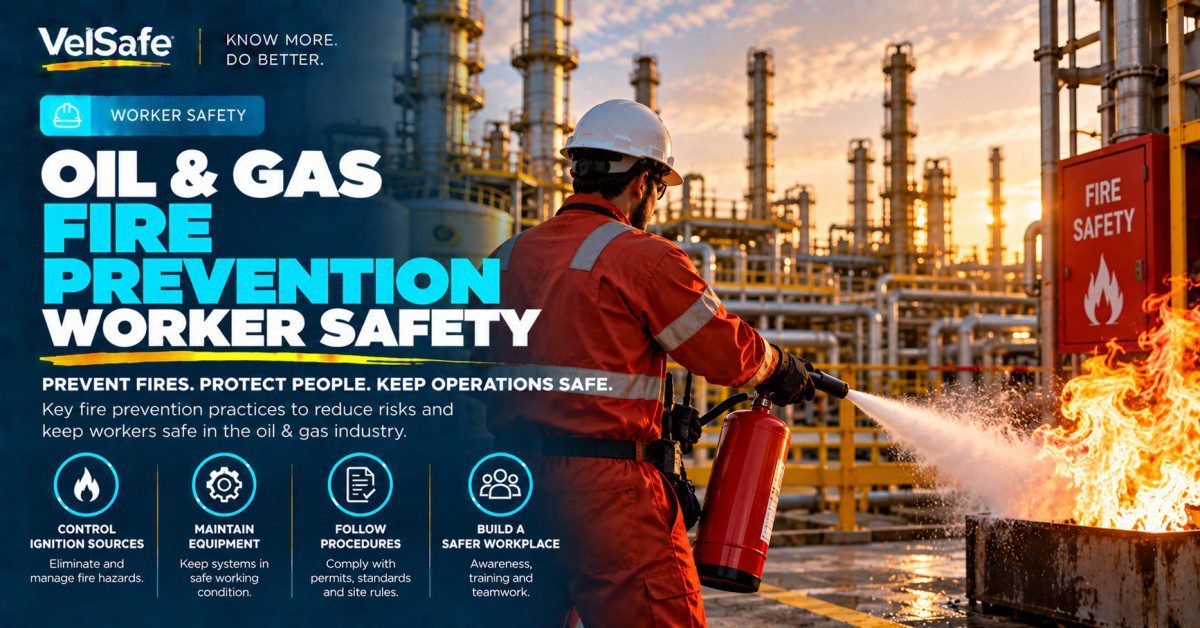
What Every Worker Needs to Know
Fire Hazards in Oil and Gas: What Causes Fires on Site
Oil and gas sites handle large volumes of flammable hydrocarbons under pressure and at elevated temperatures. Any release of these materials near an ignition source can cause a fire or explosion. Understanding where fires come from helps workers spot hazards before they ignite.
Hydrocarbon Leaks and Spills
Hot Work Without a Permit
Electrical Faults
Static Electricity
Friction and Mechanical Sparks
Spontaneous Combustion
Signs of Danger: When to Stop Work and Move Away
You have the right to stop work if you believe there is a fire or explosion hazard. No job is worth your life. Use your site stop-work authority. Your supervisor cannot overrule a safety stop for a genuine emergency. OSHA Stop-Work Authority
How to Prevent Fires: Step-by-Step for Every Worker
Know Your Area Classification Before You Start
Check for Active Gas Leaks Before and During Your Task
Never Perform Hot Work Without a Valid Permit
Inspect Your Equipment for Leaks Before Use
Bond and Earth Before Any Fluid Transfer
Keep Ignition Sources Away from Hydrocarbon Work Areas
Store Flammable Materials Correctly
Know Where Your Fire Extinguisher and Assembly Point Are
Fire Prevention: Do and Do Not
DO
DO NOT
What to Do in a Fire Emergency
Raise the Alarm
Call the Emergency Number
Get Yourself and Others Out
Go to the Assembly Point
Only Fight a Small Fire If Trained and Safe to Do So
Account for Everyone at the Assembly Point
Supervisor Tips: Fire Prevention Responsibilities
Verify hot work permits before any hot work starts
Conduct pre-shift fire hazard checks
Enforce ignition source controls in classified areas
Ensure all workers know the emergency response plan
Investigate every near-miss fire event before the next shift
Worker Fire Prevention Checklist
Before You Start
During the Task
After the Task
Source: OSHA Process Safety Management | NFPA 30: Flammable and Combustible Liquids Code | OSHA Hot Work Permit 1910.119(k)
Key Takeaways
Frequently Asked Questions
What is the most common cause of fire on oil and gas sites?
What should I do if I smell gas at my worksite?
Can I perform hot work without a permit if it is a very short task?
What type of fire extinguisher should I use on a flammable liquid fire?
What is a fire watch and when is one required?
Why do I need to bond and earth containers before transferring flammable liquids?
What tools can I use in a Zone 1 classified hazardous area?
Sources
Government and Regulatory Sources
- OSHA. 29 CFR 1910.119(k): Hot Work Permit: hot work permit requirements; fire watch minimum 30-minute post-work obligation; gas testing before permit issuance.
- OSHA. Process Safety Management Overview: PSM programme requirements including ignition source control, emergency response, and incident investigation for flammable hazard facilities.
- OSHA. Oil and Gas Well Drilling and Servicing: stop-work authority; classified area requirements; hydrogen sulfide controls.
- OSHA. Electrical Safety in Classified Hazardous Areas: Zone 0, 1, 2 classification; intrinsically safe (IS) and explosion-proof (EX) equipment requirements.
Research and Industry Sources
- Energy Institute. Process Safety: Lessons from High-Consequence Events: 80% preventable fire statistic; loss of primary containment as leading fire cause in oil and gas; ignition source control effectiveness data.
- NFPA 30: Flammable and Combustible Liquids Code: bonding and earthing requirements; storage quantity limits; container and area requirements for flammable liquids.
- NFPA. Fire Triangle and Combustion Principles: fuel, oxygen, ignition as the three elements of fire; application to oil and gas hydrocarbon fire prevention.
Related VelSafe Articles
8 Fall Protection Tips for Oil and Gas Operations
Trigger heights, anchorage capacity, equipment inspection, competent person designation, and near-miss investigation for oil and gas fall protection.
Oil and Gas Control of Work: What Every Worker Needs to Know
Permit-to-work, isolation, stop-work authority, and what workers must do when control of work systems break down on oil and gas sites.
Oil and Gas EHS Policies (US): A Complete Compliance Guide
How to build and audit a complete oil and gas EHS policy programme covering all 14 OSHA PSM elements including hot work, MOC, and emergency planning.