

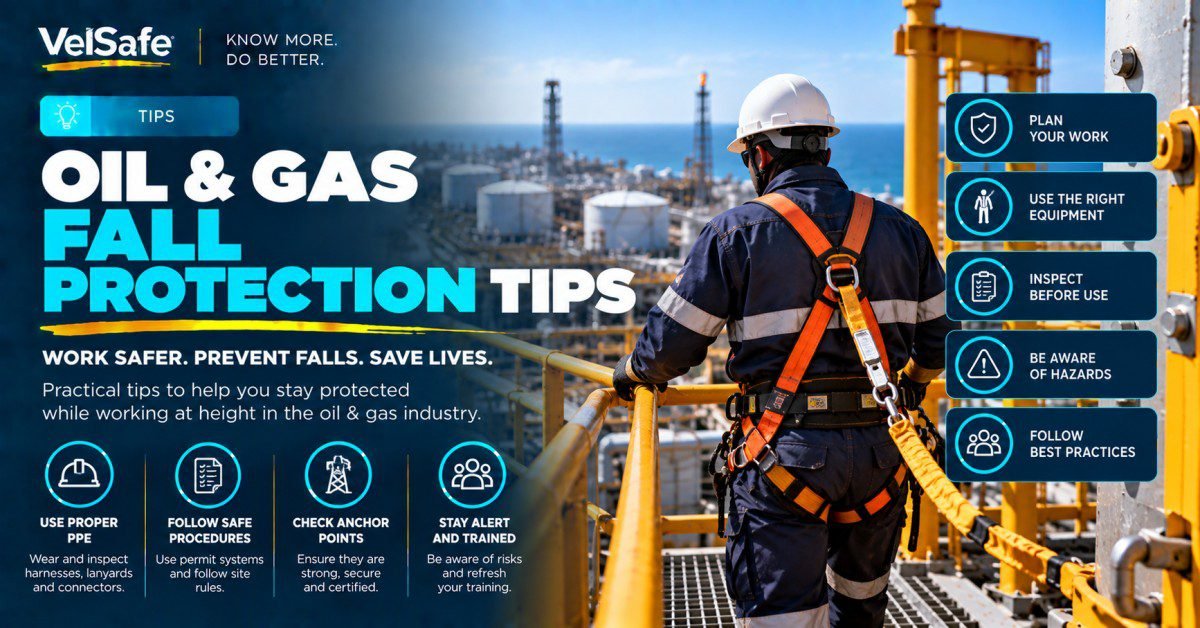
8 Fall Protection Tips for Oil and Gas: Quick Summary
These 8 tips address the fall protection gaps most commonly cited during OSHA inspections of oil and gas production, maintenance, and construction activities. Apply them in order of priority: the first tips address the failures most likely to result in a fatality or willful citation.
- Establish fall protection before any worker reaches the elevation threshold – 4 ft general industry, 6 ft construction
- Inspect all fall protection equipment before each use – damaged harnesses and lanyards are the most common PPE citation
- Re-establish fall protection at every elevation change – not just at project start
- Use a competent person to plan and approve fall protection systems – not the foreman or the worker themselves
- Never use a personal fall arrest system as the sole protection on a leading edge without a controlled access zone
- Train all workers on the specific fall protection system they will use before they use it – general safety orientation is not enough
- Document pre-task fall protection planning in writing before each elevated task
- Conduct a post-incident fall protection review even when no injury occurred – near-misses predict fatalities
Oil and Gas Fall Protection Tips: Full Detail
Tip 1: Establish Fall Protection Before Any Worker Reaches the Elevation Threshold
Tip 2: Inspect All Fall Protection Equipment Before Each Use
Tip 3: Re-Establish Fall Protection at Every Elevation Change
Tip 4: Use a Competent Person to Plan and Approve Fall Protection Systems
Tip 5: Verify Anchorage Capacity Before Connecting a PFAS
Tip 6: Train Workers on the Specific Fall Protection System They Will Use
Tip 7: Document the Fall Protection Plan in Writing Before Each Elevated Task
Tip 8: Investigate Every Near-Miss Fall Event Before the Next Shift
Pre-Task Fall Protection Checklist for Oil and Gas
Source: OSHA 29 CFR 1926 Subpart M: Fall Protection | OSHA 29 CFR 1910.23: Walking-Working Surfaces
Key Takeaways
Frequently Asked Questions
What is the fall protection trigger height in oil and gas?
Can workers use equipment handrails as PFAS anchorage points?
How often must fall protection harnesses be inspected?
What qualifies a person as a ‘competent person’ for fall protection?
What must a fall protection training record include under OSHA?
Is a written fall protection plan always required?
What should an oil and gas site do if fall protection cannot be installed before work starts?
Sources
Government and Regulatory Sources
- OSHA. 29 CFR 1926 Subpart M: Fall Protection: guardrail systems (1926.502(b)), PFAS requirements (1926.502(d)), anchorage (1926.502(d)(15)), equipment inspection (1926.502(d)(21)), training (1926.503).
- OSHA. 29 CFR 1910.23: Walking-Working Surfaces and Fall Protection: 4-foot trigger height for general industry; guardrail and PFAS requirements for fixed elevated workstations.
- OSHA. Top 10 Most Cited Standards 2024: fall protection (1926.502) as most-cited standard for 10+ consecutive years.
- OSHA. Penalty Schedule 2024: $156,259 maximum willful/repeat penalty per citation.
- OSHA. General Duty Clause: Section 5(a)(1) of the OSH Act: employer obligation to protect against recognised fall hazards not covered by a specific standard.
Research and Industry Sources
- BLS. Census of Fatal Occupational Injuries (CFOI) 2023: falls at 38-39% of construction and maintenance fatalities; leading cause category for 20+ consecutive years.
- NIOSH. Fall Prevention in Construction: leading edge and scaffold fall data; competent person role in fall prevention; training effectiveness research.
Related VelSafe Articles
Oil and Gas Control of Work: What Every Worker Needs to Know
Permit-to-work, isolation, stop-work authority, and what workers must do when control of work systems break down on oil and gas sites.
8 Continual Risk Assessment Tips for Oil and Gas
Practical CRA tips covering trigger-based reassessment, stop-work authority, SIMOPS reviews, and permit-to-work integration for oil and gas safety teams.
Oil and Gas EHS Policies (US): A Complete Compliance Guide
How to build and audit a complete oil and gas EHS policy programme covering all 14 OSHA PSM elements, MOC, PHA revalidation, and compliance audit obligations.