

What Every Worker Needs to Know
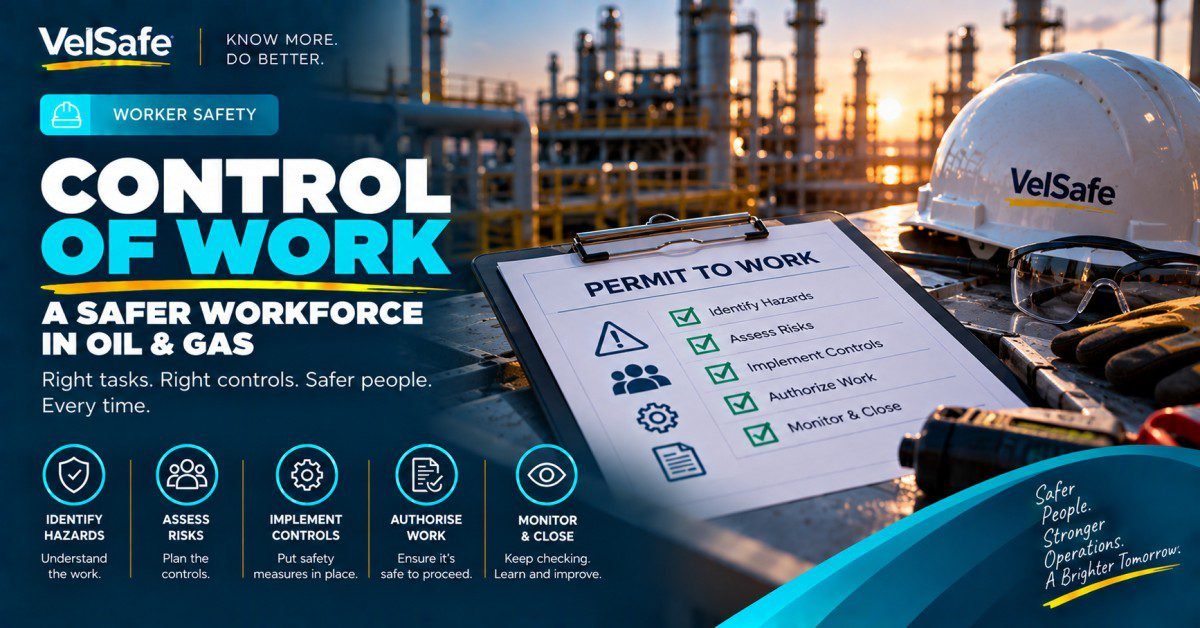
Control of work (CoW) is the formal system used on oil and gas sites to manage hazardous tasks safely. It covers everything from the permit you sign before breaking a flange to the isolation certificate that confirms the energy is locked out, the risk assessment that identifies the hazards, and the authorisation that says you are cleared to begin. When CoW works, it protects you. When it fails, people get hurt.
Most oil and gas fatalities and serious injuries involve a breakdown in the CoW system at some point in the chain. The permit was not current. The isolation was not verified. The scope of the job changed and nobody updated the paperwork. A second crew started work in the same area without checking the existing permit. Understanding where CoW breaks down is just as important as understanding how it works.
This article covers what control of work means for oil and gas workers, what your responsibilities are before and during a task, the warning signs that CoW has broken down, and what to do when something does not feel right.
Why Control of Work Failures Are Dangerous
Permit Not Current
Isolation Not Verified
Scope Creep Without Reauthorisation
Simultaneous Operations (SIMOPS)
Where CoW Most Commonly Fails: Hazard Overview
The Three Core CoW Documents: What Each One Means
Step-by-Step: Your CoW Responsibilities Before and During a Task
Attend the pre-task briefing and ask questions
Read and sign the permit to work
Verify the isolation yourself – test before touch
Confirm no SIMOPS conflicts before starting
Stop work immediately if conditions change
Participate in the close-out and debrief
Do and Do Not: Control of Work Rules
Do
Do Not
Emergency Response: When CoW Breaks Down
Stop all work immediately
Make the area safe
Notify the permit issuer and your supervisor
Do not reinstate the work until the CoW failure is investigated
Report it formally, even if nothing happened
Supervisor Tips: Making CoW Work on Every Shift
Worker CoW Checklist: Before, During, and After
Key Takeaways
Frequently Asked Questions
What is control of work in oil and gas?
Who is responsible for control of work?
What should I do if my permit has expired?
Can I start work if I cannot find the permit?
What does test before touch mean?
What is my right to stop work?
What happens if the task scope changes during the job?
Sources
Government and Regulatory Sources
- OSHA. (2024). 29 CFR 1910.119: Process Safety Management of Highly Hazardous Chemicals – PSM operating procedure and authorisation requirements for oil and gas operations.
- OSHA. (2024). 29 CFR 1910.147: Control of Hazardous Energy (Lockout/Tagout) – isolation and lockout/tagout requirements for energy control in CoW tasks.
- OSHA. Whistleblower Protection Programme – protections for workers who report safety concerns including CoW failures.
Research and Industry Sources
- Energy Institute. (2023). Hydrocarbon Releases and Control of Work – analysis of CoW system failures in major oil and gas incidents.
- Energy Institute. (2023). Process Safety: Lessons from High-Consequence Events – incident data on permit failures, isolation errors, and SIMOPS conflicts.
- Energy Institute. (2021). Guidance on Permit-to-Work Systems – industry standard for PTW design, SIMOPS review, and shift handover requirements.
- CCPS. (2007). Guidelines for Risk-Based Process Safety – framework for CoW within the broader process safety management system.