

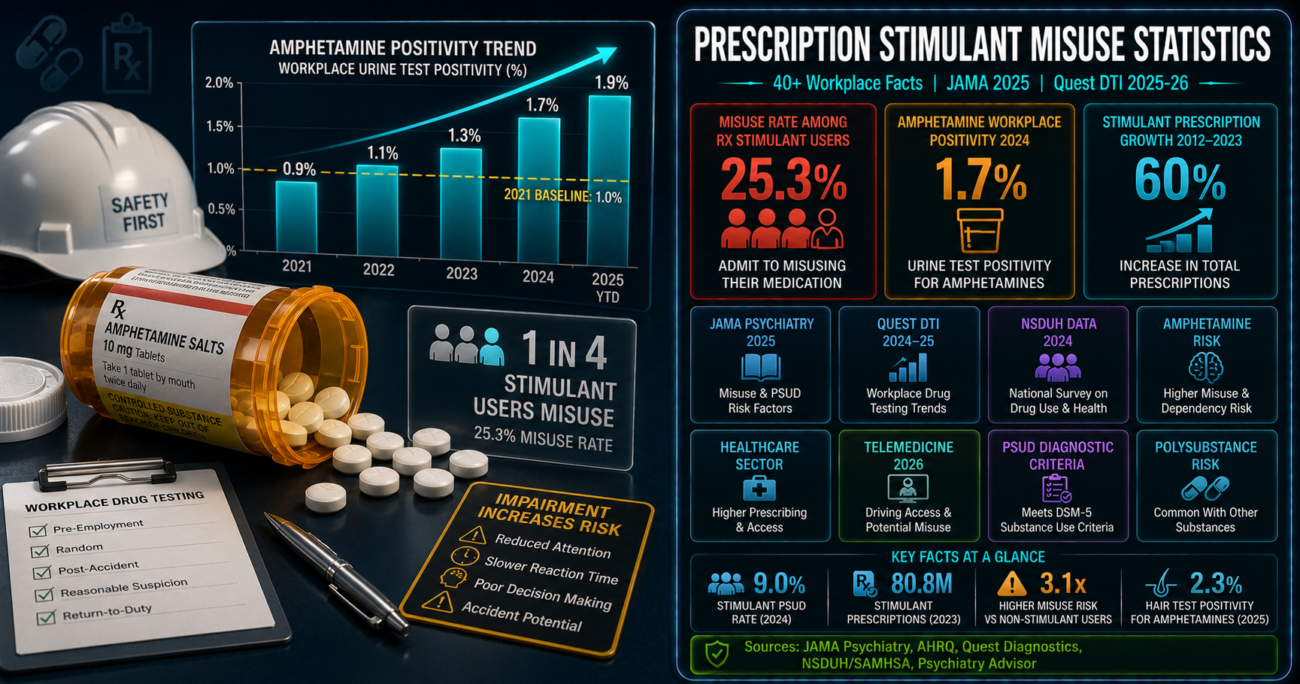
Prescription stimulants occupy a distinct and complicated position in the workplace substance use landscape. Unlike illicit drugs, they are legally prescribed, widely available, and often framed as productivity tools rather than substances of misuse. But the data from 2024 and 2025 tells a different story. One in four adults who are prescribed stimulants misuses them. Nearly one in ten meets criteria for prescription stimulant use disorder. Amphetamine positivity in workplace drug tests has risen consecutively for two years. And the stimulant shortage that began in 2022 has pushed some patients toward unregulated markets where counterfeit pills laced with fentanyl are an increasing risk.
The regulatory environment is also shifting. In January 2025, the DEA proposed a new framework for telemedicine prescribing of controlled substances. The telemedicine waivers that expanded stimulant access during the pandemic have been extended through the end of 2026. Stimulant prescriptions rose 60% from 2012 to 2023. Below we have compiled 40+ statistics on prescription stimulant misuse prevalence, workplace drug testing trends, safety impacts, the prescription shortage, and the current regulatory picture through 2025-26.
Editor's Choice: Key Prescription Stimulant Statistics for 2025-26
1. Prevalence of Prescription Stimulant Misuse: 2025 National Data
- A March 2025 JAMA Psychiatry study by researchers from NIDA, SAMHSA, and CDC found that 25.3% of U.S. adults using prescription stimulants reported misuse – approximately 1 in 4 – and 9.0% met diagnostic criteria for prescription stimulant use disorder. (JAMA Psychiatry, 2025; MedicalXpress, March 2025)
- Among those with PSUD, 72.9% used only their own prescribed stimulants – not diverted medications – and 87.1% were prescribed amphetamines. This underscores that misuse predominantly involves prescribed medications rather than diverted supply. (JAMA Psychiatry, 2025)
- The 2023 National Survey on Drug Use and Health (NSDUH) found that an estimated 1.4% of Americans aged 12 and older – approximately 3.9 million people – misused prescription stimulants in the prior year. Past-month misuse prevalence was 0.4%. (NSDUH 2023; AHRQ Rapid Evidence Product, July 2025)
- In 2022, more than 4.3 million individuals aged 12 and older misused ADHD stimulants – a figure that has declined from peak levels, likely reflecting the worldwide stimulant shortage, which suggests supply restriction may be an effective policy lever. (Psychiatry Advisor, citing SAMHSA 2022 data)
- In 2020, the prevalence of stimulant misuse among all U.S. adults was 1.9% overall, including 1.6% for amphetamine-based medications, 0.3% for methylphenidate, and 0.2% for modafinil – figures that frame the population-level magnitude of the issue. (RADARS System / AHRQ, 2025)
- Near 7% of U.S. adults used prescription stimulants in the past year in 2020, indicating that a substantial subset were using medications either without a prescription or in ways not prescribed. (Psychology Today, April 2025, citing national data)
2. Who Is Misusing Prescription Stimulants: Demographics and Patterns
- Prescriptions for stimulants increased across all demographics in 2025 JAMA data, with the most substantial rise occurring among women aged 35 to 64 – growing from 1.2 million in early 2019 to 1.7 million by late 2022 – while their misuse rate of 13.7% was lower than younger adults. (JAMA Psychiatry, 2025)
- Amphetamine users were 3.1 times more likely to misuse their medication than those prescribed methylphenidate, and had a 2.2 times greater likelihood of developing PSUD – a finding with direct implications for risk stratification in workplace health programs. (JAMA Psychiatry, 2025)
- From 2019 to 2023, nonmedical use of prescription stimulants among 12th graders fell from 2.5% to 1.6%, yet diversion-focused studies still find 21.7% of college students reporting diversion and 29.7% reporting misuse, sale, or diversion activity. (Gitnux / NSDUH; ADHD statistics review)
- 78.2% of prescription stimulant misusers report that their primary motivation is performance enhancement – focus, productivity, or academic performance – rather than recreational intoxication, which shapes both the risk profile and the detection challenge in professional work environments. (AddictionHelp.com, citing survey data)
- Approximately 15.5 million adults and 7 million children in the United States have an ADHD diagnosis, creating a large population of prescription-holders whose medication may be misused by themselves or diverted to others. (ADHD Advisor / Psychology Today, 2025)
3. Stimulant Prescription Growth, the ADHD Shortage, and the Telemedicine Connection
- The number of stimulant prescriptions dispensed in the U.S. increased 60% from 2012 to 2023 – from 50.4 million to 80.8 million annually – driven by expanded adult ADHD recognition, telemedicine access, and prescribing during the COVID-19 pandemic. (DEA-commissioned report, cited in Contemporary Pediatrics, 2026)
- Stimulant prescriptions increased by 14% from 2020 to 2022 alone, especially among young adults, and the percentage of individuals with stimulant prescriptions at pharmacies rose from 3.6% in 2016 to 4.1% in 2021. (Psychology Today, April 2025)
- From August 2019 to August 2020, telemedicine insurance claims increased by 3,552%. This expansion coincided with the COVID-era suspension of the Ryan Haight Act, which had previously required in-person evaluation before prescribing controlled substances including ADHD medications. (Rittenhouse Psychiatric Associates, citing HHS data)
- The ADHD stimulant shortage, which began in October 2022, produced a billion-dose shortfall in both 2022 and 2023 – below DEA-allowed production limits – affecting legitimate ADHD patients while pushing some toward unregulated markets where counterfeit pills laced with fentanyl pose a serious risk. (ADHD Treatment 2025 / AllMedRx, January 2026)
- In January 2025, the DEA proposed a new regulatory framework for telemedicine prescribing of controlled substances, aiming to create structured pathways that balance treatment access with prevention of diversion and misuse – without the blanket waivers granted during the pandemic. (Psychology Today, April 2025)
- The DEA telemedicine waivers for controlled substance prescribing – which allow stimulant prescriptions without in-person evaluation – have been extended through the end of 2026, maintaining the expanded access environment that contributed to prescription volume growth. (MedVidi, March 2026)
4. Stimulants in Workplace Drug Testing: Amphetamine Positivity Data 2023-2025
- Amphetamine urine test positivity in the general U.S. workforce rose to 1.7% in 2024, up from 1.5% in 2023 – a consecutive year-over-year increase that makes amphetamines the second most commonly detected drug category in workplace urine testing, behind only marijuana at 4.5%. (Quest Diagnostics 2025 DTI; EHSLeaders, December 2025)
- Oral fluid tests for amphetamines in 2024 showed 1.2% positivity, capturing more recent use patterns than urine testing and reflecting likely workplace exposure within hours to days rather than weeks. (Quest Diagnostics 2025 DTI)
- Hair test positivity for amphetamines in the general workforce reached 2.3% in 2025, up 27.8% from 1.8% in 2021 – a four-year trend of rising amphetamine detection in the test method that captures the longest use history. (Quest Diagnostics 2026 DTI, July 2026; PR Newswire)
- In federally mandated (DOT-regulated) tests, amphetamines were the second most detected drug at 0.80% in 2024, just below marijuana at 0.87% – and ahead of all other drug categories in the safety-sensitive transportation workforce. (Quest Diagnostics 2025 DTI)
- The healthcare sector recorded the highest overall drug positivity rate at 5.8% in 2025 (up from 5.1% in 2021), with the increase largely attributed to marijuana and amphetamines – meaning the sector with the most vulnerable patient population also has the highest stimulant-related positivity trends. (Quest Diagnostics 2026 DTI / CLPMag, July 2026)
- Amphetamine co-positivity with fentanyl in workforce drug tests rose from 11% in 2020 to 16% in 2024 – meaning an increasing proportion of workers positive for fentanyl are also positive for amphetamines, creating a polysubstance impairment risk more severe than either drug alone. (Quest Diagnostics 2025 DTI)
5. Workplace Safety Impact: Accidents, Impairment, and Performance Effects
- Stimulant impairment in the workplace causes poor judgment, decreased reaction times, mood swings, and a significantly higher risk of accidents – with risks especially severe in safety-sensitive roles such as construction, transportation, and manufacturing. (WorkSafeBC, 2024)
- A 2024 study published in the American Journal of Psychiatry found increased risk of incident psychosis and mania with prescription amphetamine use – a safety consequence beyond physical impairment, affecting workplace behavior, interpersonal stability, and decision-making. (AJP, October 2024; NCBI, 2025)
- Approximately 23% of the U.S. workforce has used prescription drugs non-medically, with consequences including absenteeism, impaired performance, and accidents that directly affect organizational efficiency and productivity. (National Drug and Alcoholism data, cited in original study)
- Workers misusing stimulants typically begin with a perceived productivity benefit – focus and alertness – but the performance profile is not linear. Crash periods of fatigue, irritability, and cognitive impairment follow stimulant cycles and may be more dangerous than the stimulant-active periods in settings requiring sustained concentration. (Harmony Ridge Recovery, 2024; WorkSafeBC)
- Emergency department visits related to non-medical use of prescription stimulants among adults grew from 5,212 in 2005 to 15,585 in 2010 – a near-tripling in five years – establishing the trend that more recent data continues to reflect. (Drug Abuse Warning Network, cited in AHRQ Rapid Evidence Product, 2025)
- In Rhode Island overdose deaths involving polysubstance use from 2017 to 2020, prescription amphetamines or methylphenidate contributed to 39 accidental deaths, with 90% also involving opioids – confirming the polysubstance mortality risk that workplace testing data is increasingly capturing. (Psychiatry Advisor, citing study data)
6. Employer Concern and Policy Landscape for Prescription Stimulant Misuse
- A National Safety Council survey found that 67% of U.S. employers were concerned about prescription drug misuse in their workforce, viewing it as equally or more impactful than workplace violence and more concerning than illegal drug use. (NSC Employer Survey, 2018 – the most recent published employer-level survey data)
- 49 of 50 U.S. states had operational Prescription Drug Monitoring Programs (PDMPs) as of 2024 – a near-national infrastructure for tracking controlled substance prescribing that states increasingly integrate with occupational health and employer drug programs. (NASPMP, 2024 status update)
- The healthcare sector’s 5.8% overall drug positivity rate in 2025 – driven partly by amphetamines – represents a particularly acute employer concern, as healthcare workers in patient-care roles operate in safety-sensitive environments where impairment from any substance creates direct patient risk. (Quest Diagnostics 2026 DTI / CLPMag, July 2026)
- The challenge for employers is that no validated test currently exists for real-time stimulant impairment. Unlike blood alcohol content testing, positive amphetamine drug test results confirm use but cannot precisely confirm impairment at the time of testing – creating policy complexity particularly when an employee holds a legitimate prescription. (WorkSafeBC, 2024; industry consensus)
- Employer drug-free workplace programs that include prescription stimulants should address both declared and undeclared use – requiring employees in safety-sensitive roles to disclose prescription stimulant use to occupational health, similar to requirements for other prescribed medications that affect fitness for duty. (industry best practice; NSC)
7. Regulatory Landscape in 2025-26: DEA, FDA, and Telemedicine Policy Updates
- In 2024, the FDA requested a rapid review of ADHD stimulant misuse among adults, marking the most significant federal acknowledgment of the scope of the problem since SAMHSA’s NSDUH data began capturing stimulant-specific misuse rates. (Psychiatry Advisor, June 2026)
- The resulting AHRQ Rapid Evidence Product, published July 2025, covered published research from 2004 through September 2024 and identified persistent misuse patterns, demographic trends, and evidence gaps – including the finding that the stimulant shortage itself appeared to reduce misuse rates. (AHRQ, July 2025)
- The January 2025 DEA telemedicine proposal addresses the post-pandemic structural change: from August 2019 to August 2020, telemedicine insurance claims increased 3,552%, and prescribing of controlled substances through online platforms contributed substantially to the stimulant shortage. (Psychology Today, April 2025)
- The June 2024 DOJ enforcement action against Done Global charged the founders of a telemedicine ADHD platform with health care fraud for facilitating stimulant access without appropriate clinical justification – the highest-profile diversion enforcement in the telehealth stimulant space. (Contemporary Pediatrics, 2026)
- With DEA production quota increases approved in September 2024 for some ADHD medications and telemedicine waivers extended through 2026, the stimulant shortage – while not fully resolved – is expected to ease further into late 2025 and 2026, potentially increasing prescription access and associated misuse risk. (ADHD Advisor, 2026)
Key Takeaways for Safety Managers and HR Professionals
Sources
Government and Research Sources
- JAMA Psychiatry (March 2025) – Prevalence and patterns of prescription stimulant use, misuse, and disorders among U.S. adults (NIDA/SAMHSA/CDC): 25.3% misuse, 9.0% PSUD, 3.1x amphetamine risk
- AHRQ Rapid Evidence Product (July 2025) – Misuse of ADHD Prescription Stimulants Among Adults: 2004-2024 systematic literature review commissioned by FDA
- NCBI Bookshelf – Misuse of ADHD Prescription Stimulants in Adults: NSDUH 2023 data, emergency department trends, prescription pattern analysis
Industry and Research Sources
- Quest Diagnostics 2026 DTI (July 2026) – Amphetamine hair test positivity 2.3% in 2025 (+27.8% since 2021); healthcare sector 5.8% overall positivity
- Quest Diagnostics 2025 DTI (September 2025) – Amphetamine urine positivity 1.7% in 2024, oral fluid 1.2%; fentanyl-amphetamine co-positivity 16%
- CLPMag (July 2026) – Quest 2026 DTI analysis: healthcare sector drug positivity trends, amphetamine and cocaine increases 2021-2025
- Psychiatry Advisor (June 2026) – Adult ADHD stimulant misuse review: 4.3M misusers in 2022, FDA rapid review request 2024, shortage impact on misuse rates
- Psychology Today (April 2025) – The New Amphetamine Crisis: 250% prescription surge 2006-2016, DEA telemedicine proposal January 2025, JAMA March 2025 findings
- Contemporary Pediatrics (2026) – Stimulant shortage causes: 60% prescription growth 2012-2023, DOJ enforcement against Done Global June 2024, supply chain factors
- MedVidi (March 2026) – ADHD Medication Shortage Guide: telemedicine waiver extension through 2026, DEA quota system, Ryan Haight Act history
- EHSLeaders (December 2025) – Amphetamine positivity 2023-2024 trend analysis; Quest 2025 DTI implications for safety professionals