PRACTICE TEST: Hot Work Awareness
Test your knowledge of hot work hazards, permit requirements, fire watch responsibilities, and OSHA compliance. Questions reflect core competencies required for workers, supervisors, safety officers, and contractors who perform or authorise hot work in industrial, commercial, and construction settings.
How to Use This Practice Test
Read each question and consider your answer before reviewing the explanation. Questions span four areas: hot work hazard identification, permit requirements and process, fire watch duties, and OSHA compliance obligations. For any question you answer incorrectly, review the referenced standard or guidance before moving on. The answer key and score interpretation appear at the end.
Section 1: Hot Work Hazard Identification
Hot work hazards are not limited to the immediate point of operation. Sparks, radiated heat, and conducted heat through structural members create ignition risks at distances and in locations that are not immediately obvious during the pre-work assessment. Understanding the full hazard profile of a hot work operation is the foundation of effective hazard control.
Question 1: According to NFPA 51B, what is the minimum radius around a hot work location that must be assessed for combustible materials before work begins?
A. 10 feet
B. 20 feet
C. 35 feet
D. 50 feet
Correct Answer: C
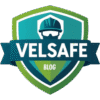
NFPA 51B specifies a minimum 35-foot radius for the pre-work combustible material assessment. This distance reflects documented spark travel patterns from welding, cutting, and grinding operations under normal conditions. Sparks from these operations are capable of igniting combustible materials at 35 feet and beyond, particularly in draughty or elevated conditions. The 35-foot requirement applies in all directions including below the work surface when hot work is performed at elevation.
Source: NFPA | NFPA 51B Standard for Fire Prevention During Hot Work
Question 2: A worker is welding on a steel beam at the second floor level. Which area below requires inclusion in the pre-work combustible materials assessment?
A. Only the floor directly beneath the beam
B. The floor area within 35 feet of the work point, and the area below the floor if it contains combustibles
C. No floor-level assessment is required because sparks fall straight down
D. Only areas within 10 feet of the beam directly below the work point
Correct Answer: B
Sparks and molten metal from elevated hot work do not fall straight down. They travel laterally as they fall and can land at significant horizontal distances from the work point, particularly when air movement is present. The 35-foot assessment radius applies in all directions from the work point, including the floor area below and any areas on lower levels that are accessible through floor openings, grating, or gaps in the structure. If those lower areas contain combustibles, they must be cleared or protected.
Source: OSHA | 29 CFR 1910.252 Welding, Cutting, and Brazing
Question 3: Which of the following is NOT a recognised category of hot work as defined by OSHA and NFPA 51B?
A. Oxy-fuel cutting
B. Angle grinding
C. Pneumatic pressure testing of pipelines
D. Torch-applied roofing membranes
Correct Answer: C
Pneumatic pressure testing does not generate heat, sparks, or open flame and is not classified as hot work under OSHA or NFPA 51B. Oxy-fuel cutting, angle grinding, and torch-applied roofing are all recognised hot work operations because they generate heat, sparks, or open flames capable of igniting combustible materials. Angle grinding is a frequently overlooked hot work operation: the sparks it generates are at high temperature and can travel considerable distances, yet workers sometimes assume grinding does not require a hot work permit.
Source: NFPA | NFPA 51B Standard for Fire Prevention During Hot Work
Section 2: Hot Work Permit Requirements
The hot work permit is both a planning tool and a safety control. It requires the authoriser to physically assess the area, document what hazards were found and what controls are in place, and assign a fire watch before work begins. Understanding what the permit must contain and when it is required is a core competency for supervisors and safety officers.
Question 4: Under which circumstance is a hot work permit generally NOT required under OSHA and NFPA 51B?
A. When the hot work is performed by a contractor rather than a facility employee
B. When the hot work is performed in a facility-designated welding area that is permanently maintained free of combustibles
C. When the duration of the hot work is less than 30 minutes
D. When the hot work operator has more than five years of experience
Correct Answer: B
Hot work permits are required for any hot work performed outside a designated area that is specifically maintained for that purpose. If a facility has a permanent welding area that is kept free of combustibles, is properly ventilated, and is equipped with appropriate fire suppression, work performed within that area does not require a permit. The permit requirement applies regardless of contractor vs employee status, operation duration, or operator experience. Short-duration hot work by experienced workers outside a designated area still requires a permit.
Source: OSHA | 29 CFR 1910.252(a)
Question 5: A hot work permit is issued at 8:00 AM for welding operations in a maintenance bay. At 1:00 PM, a delivery of flammable solvent is made to an adjacent storage room that was empty during the morning assessment. What is the correct action?
A. Continue work; the permit covers the full shift regardless of changes
B. Stop hot work immediately; the original permit is no longer valid for the changed conditions
C. Continue work if the solvent is in sealed containers
D. Reduce the work pace but continue under the existing permit
Correct Answer: B
A hot work permit documents the hazard conditions and controls at the time of assessment. When conditions change materially, such as the introduction of flammable materials to the vicinity of the hot work area, the permit no longer accurately reflects the actual hazard profile. Hot work must stop until the permit authoriser re-assesses the area under the new conditions and either reissues a permit with updated controls or determines that hot work cannot safely continue. The status of the containers does not change this: flammable vapour can escape from containers during handling and use.
Source: NFPA | NFPA 51B Section 5.4
Section 3: Fire Watch Duties and Responsibilities
The fire watch is one of the most frequently misunderstood elements of the hot work programme. Both OSHA and NFPA 51B establish specific requirements for who may serve as fire watch, what their duties are during operations, and how long they must remain after work concludes. These requirements exist because delayed ignition from smouldering materials is a predictable and preventable cause of hot work fires.
Question 6: Which of the following is an acceptable arrangement for fire watch during hot work?
A. The hot work operator pauses periodically to scan the area for ignition
B. A supervisor walks through the area every 15 minutes to check for fire
C. A dedicated individual with no other assigned duties maintains continuous observation of the work area throughout the operation
D. A trained operator who can simultaneously weld and monitor adjacent areas
Correct Answer: C
OSHA and NFPA 51B require the fire watch to be a separate, dedicated individual whose sole function during the hot work operation is monitoring for fire. The fire watch must be continuously present and must not be assigned any other duties that divide their attention. Periodic walkthroughs by a supervisor do not satisfy the continuous monitoring requirement. The hot work operator cannot serve as their own fire watch because performing welding or cutting requires focused attention that is incompatible with scanning the surrounding area for ignition signs.
Source: OSHA | 29 CFR 1910.252(a)(2)(iii)
Question 7: Hot work welding is completed at 3:30 PM. The fire watch inspects the area immediately, finds no ignition, and leaves the area at 3:35 PM. Which requirement has been violated?
A. No requirement has been violated; a post-work inspection is not required if no ignition is found
B. The post-work fire watch duration requirement: NFPA 51B requires a minimum 30-minute post-work fire watch
C. The fire watch must remain for exactly 60 minutes regardless of findings
D. The fire watch must be relieved by a second person for the post-work period
Correct Answer: B
NFPA 51B requires a minimum 30-minute post-work fire watch after hot work concludes. This requirement is based on documented patterns of delayed ignition: smouldering materials in wall cavities, ceiling voids, insulation, and structural members may not produce visible flame for 30 minutes or more after hot work ends. Finding no ignition in a five-minute inspection immediately after welding does not satisfy the 30-minute requirement and does not detect delayed ignition scenarios. The 30-minute minimum is a floor, not a target; for work near combustible construction, a longer watch period is appropriate.
Source: NFPA | NFPA 51B Post-Work Fire Watch Requirements
Section 4: OSHA Compliance and Regulatory Framework
Hot work compliance obligations span multiple OSHA standards depending on the industry and location of the work. Understanding which standards apply, what they require, and how they interact with NFPA 51B is essential for safety officers and compliance managers responsible for hot work programmes.
Question 8: Which OSHA standard requires a hot work permit specifically for work on or near process equipment covered by the Process Safety Management (PSM) standard?
A. 29 CFR 1910.252
B. 29 CFR 1926.350
C. 29 CFR 1910.119
D. 29 CFR 1910.146
Correct Answer: C
29 CFR 1910.119, the Process Safety Management standard, includes a specific hot work permit requirement at section 1910.119(k). This requirement applies whenever hot work is performed on or near a PSM-covered process. The PSM hot work permit requirement is separate from the general welding standard at 1910.252 and adds additional obligations because of the presence of highly hazardous chemicals. 29 CFR 1926.350 covers gas welding in construction, and 29 CFR 1910.146 governs permit-required confined space entry, which may apply concurrently with hot work in confined spaces.
Source: OSHA | 29 CFR 1910.119(k) Process Safety Management Hot Work Permits
Question 9: A contractor performs hot work on a facility’s premises and causes a fire. Under OSHA’s multi-employer citation policy, who may potentially receive a citation?
A. Only the contractor, because they performed the work
B. Only the facility, because they own the premises
C. Both the contractor and the facility, depending on their respective roles and the nature of the violation
D. Neither, because a fire is not an OSHA violation if a permit was issued
Correct Answer: C
OSHA’s multi-employer citation policy allows citations to be issued to the contractor as the creating employer, the facility as the controlling or exposing employer, or both, depending on their respective roles and the nature of the violation. A facility that permitted contractor hot work without verifying the contractor’s compliance with permit requirements, or that failed to inform the contractor of site-specific hazards, may receive a citation as the controlling employer even though the contractor performed the work. The existence of a permit does not eliminate liability if the permit process was not properly followed.
Source: OSHA | OSHA Multi-Employer Worksite Policy
Question 10: Before hot work begins in an area where flammable vapour could be present, atmospheric testing is required. What concentration of flammable vapour, expressed as a percentage of the Lower Explosive Limit (LEL), is the generally accepted maximum before hot work may proceed?
A. 25% LEL
B. 10% LEL
C. 50% LEL
D. 5% LEL in all cases
Correct Answer: B
The generally accepted maximum concentration for proceeding with hot work is 10% of the Lower Explosive Limit. This 10% LEL threshold provides a safety margin below the concentration at which ignition becomes possible. Some programmes and authorities having jurisdiction require 5% LEL for additional margin, making 5% LEL the safest practice where it can be achieved. Hot work must not begin until the atmosphere is confirmed below 10% LEL throughout the work area and the surrounding hazard zone, including low points where heavier-than-air vapours accumulate. Continuous atmospheric monitoring is required in some process area applications where vapour concentrations may change during the work.
Source: OSHA | 29 CFR 1910.252 Atmospheric Testing Requirements
Answer Key Summary
Score Interpretation
9-10
Strong Foundation
You have a solid grasp of hot work hazard identification, permit requirements, fire watch duties, and OSHA compliance. Review any questions you missed and confirm your understanding of the specific regulatory citations before your next certification assessment.
6-8
Developing Knowledge
You have working knowledge in most areas but have gaps in one or two sections. Review the explanations for all incorrect answers and the referenced standards before attempting a formal assessment. Focus particularly on fire watch requirements and permit validity conditions.
0-5
Additional Study Needed
Review the Hot Work Safety guide, OSHA 29 CFR 1910.252, and NFPA 51B before returning to this test. Read the explanation for each incorrect answer carefully and look up the referenced standard to understand the regulatory basis for each requirement.
Frequently Asked Questions
What is hot work and why does it require a permit?
Hot work is any operation that produces open flames, electric arcs, or sparks capable of igniting combustible materials. This includes welding, cutting, grinding, brazing, and torch operations. A permit is required because these ignition sources, when introduced into a non-designated area, create a documented fire risk. OSHA 29 CFR 1910.252 requires written permits for hot work performed outside a permanently designated welding area. The permit forces a pre-work hazard assessment and documents that controls are in place before ignition begins.
Who is responsible for authorising a hot work permit?
The permit must be authorised by a qualified individual (typically a safety officer, maintenance supervisor, or designated hot work authoriser) who has physically inspected the work area, verified that combustible materials have been removed or protected, confirmed fire suppression equipment is available, and assigned a qualified fire watch. The hot work operator cannot serve as their own authoriser. Contractor operations on a host facility require the host to enforce its own permit requirements regardless of the contractor’s own programme.
What are the fire watch requirements under OSHA and NFPA 51B?
OSHA requires a fire watch during hot work operations and for at least 30 minutes after work concludes. NFPA 51B extends this to 60 minutes in areas with concealed combustibles such as wall cavities or floor voids. The fire watch must be a dedicated individual whose sole responsibility during and after hot work is monitoring for ignition. They must have immediate access to a charged fire extinguisher, know how to use it, and have a clear means of summoning emergency assistance. A fire watch cannot simultaneously perform any other task.
What is the minimum clearance radius for hot work operations?
NFPA 51B requires a minimum 11-metre (35-foot) radius around the hot work location to be assessed for combustible materials before work begins. All combustibles within that radius must be removed, relocated, or protected with fire-resistant coverings. Where combustibles cannot be moved, the hot work should be relocated to a designated area or deferred until controls can be implemented. The 11-metre standard applies to all hot work operations regardless of duration.
When is atmospheric testing required before hot work?
Atmospheric testing is required before hot work in confined spaces, areas near flammable liquid storage, and process areas where flammable or combustible gases may be present. Testing must confirm oxygen levels are within the 19.5 to 23.5 percent range and that flammable gas concentrations are below 10 percent of the lower explosive limit (LEL). Testing must be performed by a qualified person using calibrated equipment. In permit-required confined spaces, atmospheric monitoring must continue throughout the operation, not only at the start.
Can a hot work permit be reused or extended?
No. A hot work permit is valid only for the specific location, specific operation, and specific time period stated on the permit. If work extends beyond the permit period, a new permit must be issued after a fresh hazard assessment of the work area. If the nature of the work changes (different location, different process, or different team), a new permit is required. A permit is not transferable between workers or between shifts. Each shift that continues hot work must have its own current permit.
What PPE is required for hot work operations?
Required PPE for hot work varies by operation but generally includes: a welding helmet or face shield with the correct shade lens for the process and amperage, flame-resistant (FR) clothing covering all exposed skin, leather welding gloves, leather boots, and hearing protection where grinding or cutting creates hazardous noise levels. Respiratory protection is required where ventilation does not adequately control fume and gas exposure. OSHA 29 CFR 1910.252 specifies minimum eye and face protection requirements by process. FR clothing must meet NFPA 2112 or equivalent standards for workers in arc flash or flame-exposure environments.
Sources
- OSHA 29 CFR 1910.252: Welding, Cutting and Brazing General Requirements
- NFPA 51B: Standard for Fire Prevention During Welding, Cutting and Other Hot Work
- OSHA 29 CFR 1910.146: Permit-Required Confined Spaces
- OSHA 29 CFR 1926.352: Fire Prevention (Construction)
- NFPA 2112: Standard on Flame-Resistant Clothing for Protection of Industrial Personnel
- OSHA Hot Work Safety Resources
Related VelSafe Articles
Guides
Hot Work Safety: Permits, Controls and OSHA Compliance
The complete guide to hot work permit requirements, hazard controls, fire watch responsibilities, and OSHA 29 CFR 1910.252 compliance.
Insights
HIPAA Privacy Standards: Compliance Insights
Enforcement trends, notice of privacy practices, individual access rights, minimum necessary standard, and administrative safeguards.
Law
HIPAA Privacy: Uses and Disclosures of PHI
TPO purposes, minimum necessary standard, authorisation requirements, and role-based training obligations under the HIPAA Privacy Rule.
Practice Tests
Browse All VelSafe Practice Tests
Workplace safety, OSHA compliance, HIPAA, and hazard communication practice tests to help you prepare for formal assessments and certifications.
WORKPLACE SAFETY TRAINING
Ready to Certify Your Hot Work Knowledge?
Explore the full VelSafe hot work safety guide, compliance resources, and practice tests to prepare for your workplace safety assessment.
Read the Full Hot Work Guide