
Biological Hazards Are Invisible. Your Controls Must Not Be.
Biological hazards in labs range from low-risk organisms to pathogens capable of causing life-threatening disease. This guide covers the four biosafety levels, the OSHA standards that apply, required PPE, decontamination procedures, and how to respond when an exposure occurs.
Laboratory workers handle biological agents every shift. OSHA’s Bloodborne Pathogens Standard (29 CFR 1910.1030) and the Laboratory Safety Standard (29 CFR 1910.1450) set the minimum requirements for labs handling human blood, infectious materials, and hazardous chemicals. The CDC and NIH Biosafety in Microbiological and Biomedical Laboratories (BMBL) framework adds the containment standards that determine how labs are built, ventilated, and operated. Understanding both frameworks is not optional: failure to follow them puts you, your coworkers, and the public at risk.
This guide covers what every lab worker needs to know about biosafety levels, standard microbial practices, primary and secondary barriers, decontamination, waste disposal, and emergency response.
The Four Biosafety Levels: What They Mean for Your Work
Biosafety levels describe the combination of work practices, safety equipment, and facility design required to safely handle agents of different risk levels. The level is assigned based on the agent’s potential to cause disease, the severity of that disease, and whether treatments exist.
Most hospital, clinical, and industrial labs operate at BSL-1 or BSL-2. Knowing your lab’s assigned BSL tells you which PPE, procedures, and containment equipment apply to your work.
Signs of Biological Hazard: When to Stop Work
- A visible spill, aerosol, or splash involving biological material
- A puncture, cut, or broken skin contact with a biological agent or contaminated sharp
- A biosafety cabinet alarm, airflow failure, or HEPA filter warning
- Broken or cracked containment vessels containing infectious material
- Any PPE breach: torn glove, cracked face shield, loose respirator seal
- Signs of contamination outside the designated work zone
Never attempt to clean up a BSL-2 or higher spill alone without training. Alert your supervisor, secure the area, and follow your lab’s written spill response procedure.
Standard Microbiological Practices: Step-by-Step
These practices apply at every biosafety level. They are the foundation of lab safety, not optional additions to it.
Don PPE Before Entering the Work Area
Put on your lab coat, gloves, and eye protection before you enter the lab. At BSL-2 and above, gloves must cover the wrist and overlap with your lab coat cuff. Inspect gloves for tears before donning. Double-glove when working with sharps or concentrated infectious agents.
Work in the Biosafety Cabinet for Aerosol-Generating Tasks
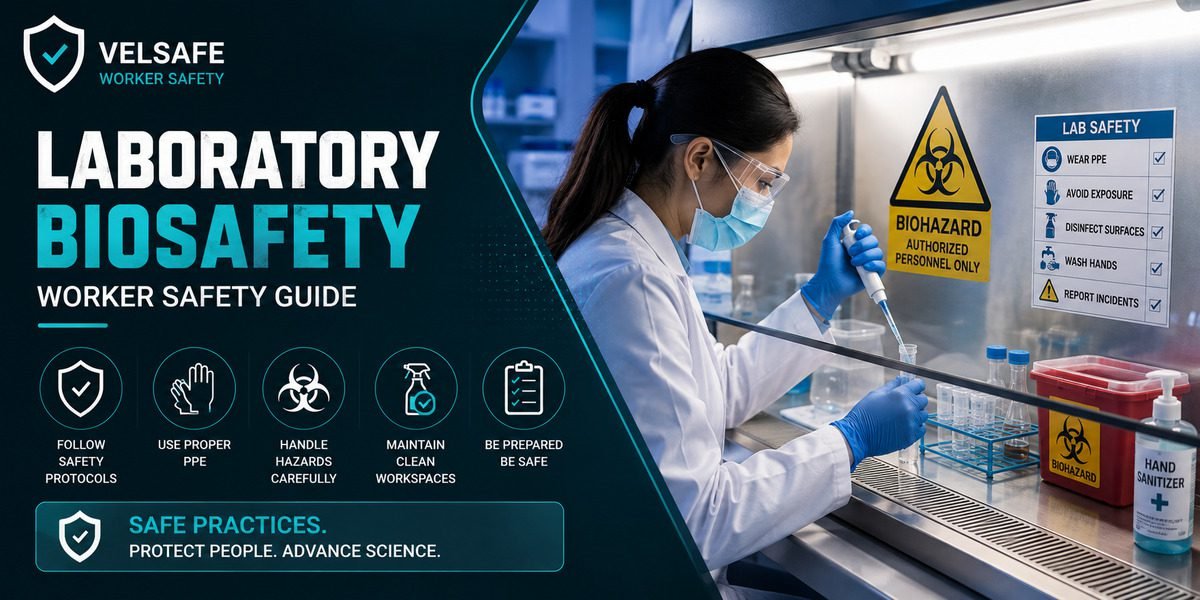
Any procedure that could generate droplets or aerosols must be performed inside a certified biosafety cabinet (BSC). This includes pipetting, vortexing, centrifugation of unsealed tubes, and opening culture vessels. Do not work in a biosafety cabinet with a blocked sash or a tripped airflow alarm.
Minimise Sharps Use and Never Recap by Hand
Needlestick injuries are among the most common lab exposure events. Use needles only when there is no safer alternative. Never recap a used needle by hand. Use a one-handed scoop technique or a mechanical recapping device. Dispose of all sharps immediately in a rigid, puncture-resistant sharps container. Never fill sharps containers above the fill line.
Decontaminate Work Surfaces Before and After Use
Wipe down bench surfaces and biosafety cabinet interiors with an appropriate disinfectant (70% ethanol, 10% bleach solution, or EPA-registered disinfectant) before starting work and after completing it. Allow adequate contact time for the disinfectant to be effective. Do not use a disinfectant unless it has been validated for your agent.
Dispose of Biohazardous Waste Correctly
All materials that contact infectious agents must be decontaminated before disposal. Autoclave solid waste at 121 degrees C for the cycle time specified in your lab’s protocol. Liquid waste can be chemically inactivated before drain disposal where permitted. Biohazard bags must be sealed, labelled, and handled by trained staff only.
Wash Hands and Remove PPE in the Correct Order
Remove gloves first, turning them inside out as you remove them. Wash hands for at least 20 seconds with soap and water immediately after removing gloves. Remove lab coat before leaving the lab and store it in a designated area. Never wear a lab coat into break rooms, restrooms, or outside the lab building.
Lab Biosafety: Do and Do Not
DO
- Wear all required PPE for your biosafety level before entering the work area
- Perform all aerosol-generating work inside a certified biosafety cabinet
- Decontaminate surfaces before and after each work session
- Dispose of sharps in puncture-resistant containers immediately after use
- Wash hands after removing gloves and before leaving the lab
- Report all exposures, spills, and near-misses to your supervisor immediately
- Follow the written procedures for your specific agent and biosafety level
DO NOT
- Eat, drink, smoke, or apply cosmetics anywhere in the lab
- Pipette by mouth under any circumstances
- Recap used needles by hand
- Store food or personal items in lab refrigerators or freezers
- Work alone with infectious agents when a buddy or check-in system is required
- Remove biohazardous material from the lab without authorisation
- Wear lab coats, gloves, or biosafety PPE outside the lab building
Emergency Response: What to Do After an Exposure
Skin or mucous membrane contact: Wash the affected area with soap and water (skin) or flush with water (eyes/mouth) for at least 15 minutes.
Sharps injury: Allow the wound to bleed freely for a few seconds, then wash with soap and water for at least 15 minutes. Do not squeeze or suck the wound.
Alert your supervisor immediately. Do not wait until the end of the shift. Every exposure must be reported the same day it occurs.
Seek medical evaluation. Your employer must provide post-exposure follow-up at no cost to you under 29 CFR 1910.1030. This includes source testing, prophylaxis where indicated, and counselling.
Document in writing. Complete an incident report the same day. Your employer must maintain exposure records for at least 30 years under 29 CFR 1910.1020.
If a large spill occurs involving a BSL-3 agent or unknown material, evacuate the area, close doors, and call your institution’s biosafety officer before re-entering. Do not attempt cleanup without guidance.
What Supervisors Must Do Before Workers Begin Lab Work
Provide Written Procedures
Every biological agent used in the lab must have a written Standard Operating Procedure (SOP) covering hazards, required PPE, safe work practices, decontamination steps, and spill response. Workers must be trained on the SOP before they handle the agent.
Certify the Biosafety Cabinet
Biosafety cabinets must be certified annually by a qualified field certifier following NSF/ANSI 49 standards. A cabinet that has not been certified within the past 12 months must not be used for infectious work until certification is current.
Maintain Exposure Control Plan
OSHA 29 CFR 1910.1030 requires labs that handle human blood, OPIM, or HIV/HBV to maintain a written Exposure Control Plan, updated annually and reviewed after any changes in tasks or procedures that affect exposure risk.
Lab Biosafety Checklist: Before, During, and After
Before Each Work Session
- Review the SOP for the agent or procedure
- Inspect PPE for damage before donning
- Confirm biosafety cabinet airflow is normal
- Decontaminate work surfaces and BSC interior
- Confirm eyewash and emergency shower are accessible and unobstructed
During Work
- Keep the biosafety cabinet sash at the correct operating height
- Minimise movement in and out of the work area
- Never recap needles by hand
- Keep containers labelled with agent name and biosafety level at all times
- Alert your buddy or supervisor if you feel unwell
After Each Work Session
- Decontaminate BSC interior and bench surfaces
- Dispose of biohazardous waste in correct labelled containers
- Remove gloves and wash hands immediately
- Remove lab coat and store in the designated area inside the lab
- Log any incidents, near-misses, or equipment issues before leaving
Key Takeaways
Your Biosafety Level Sets Your Minimum Requirements
BSL-1 through BSL-4 each require progressively more stringent PPE, containment equipment, and facility controls. Know your lab’s assigned biosafety level and follow all associated requirements without exception.
Standard Practices Are Not Optional
Hand washing, no mouth pipetting, proper sharps disposal, surface decontamination, and correct PPE use apply at every biosafety level. These practices prevent the majority of lab-acquired infections and are required under OSHA 29 CFR 1910.1030 and 29 CFR 1910.1450.
Report Every Exposure, Every Time
No exposure to a biological agent is too minor to report. OSHA requires your employer to provide post-exposure medical evaluation at no cost to you. Delayed reporting limits the effectiveness of prophylaxis and reduces your legal protections under the Bloodborne Pathogens Standard.
Frequently Asked Questions
What is the difference between BSL-2 and BSL-3?
BSL-2 covers agents that cause disease in healthy humans but for which treatments exist, such as hepatitis B and salmonella. BSL-3 covers agents with serious or potentially lethal consequences transmitted through inhalation, such as Mycobacterium tuberculosis. BSL-3 requires directional HVAC, controlled access at all times, and respiratory protection for all lab work.
Does OSHA require lab workers to be vaccinated?
OSHA’s Bloodborne Pathogens Standard (29 CFR 1910.1030) requires employers to offer the hepatitis B vaccine at no cost to workers with occupational exposure to blood or OPIM. The employer must make the vaccine available within 10 working days of initial assignment. Workers may decline but must sign a declination form. Other vaccines may be required depending on the agents handled.
What types of biosafety cabinets are used in labs?
Class II Type A2 biosafety cabinets are the most common in clinical and research labs. They protect the worker, the product, and the environment through HEPA-filtered inflow and exhaust air. Class III cabinets (gas-tight gloveboxes) are used for BSL-4 agents. Class I cabinets protect the worker and environment but not the product. All BSCs must be certified annually per NSF/ANSI 49.
Can I use a chemical fume hood for biological work?
No. Chemical fume hoods protect the worker from chemical vapours by directing air away from the user, but they do not filter exhaust air and do not provide HEPA-level protection against biological agents. Using a fume hood for infectious work puts both the worker and the environment at risk. Always use a certified biosafety cabinet for biological agents.
What must an employer do after a needlestick injury in the lab?
Under 29 CFR 1910.1030, the employer must provide a confidential post-exposure evaluation and follow-up at no cost to the worker. This includes documenting the route and circumstances of exposure, identifying the source individual, offering source testing, and providing necessary prophylaxis. The employer must also document the injury in the sharps injury log required under the standard.
Who is responsible for assigning a biosafety level in my lab?
The Institutional Biosafety Committee (IBC) at your facility is responsible for reviewing and approving the biosafety level assigned to each protocol involving biological agents. The principal investigator or lab supervisor proposes the level based on the CDC/NIH BMBL risk assessment criteria. Workers cannot change the assigned biosafety level on their own.
What does the OSHA Lab Standard (29 CFR 1910.1450) require?
The OSHA Lab Standard requires employers in laboratories that use hazardous chemicals to develop a written Chemical Hygiene Plan, train workers on chemical hazards and controls, provide medical surveillance for workers exposed above action levels, and designate a Chemical Hygiene Officer. It applies to laboratory use of hazardous chemicals, not to large-scale production or incidental use outside the lab setting.
Sources
Government and Regulatory Sources
- CDC/NIH: Biosafety in Microbiological and Biomedical Laboratories (BMBL), 6th Edition: defines the four biosafety levels and required containment practices for laboratory work.
- OSHA 29 CFR 1910.1030: Bloodborne Pathogens Standard: exposure control requirements, PPE, post-exposure follow-up, and hepatitis B vaccination obligations.
- OSHA 29 CFR 1910.1450: Occupational Exposure to Hazardous Chemicals in Laboratories: Chemical Hygiene Plan and laboratory safety programme requirements.
- OSHA Penalty Schedule: current maximum civil penalty amounts for serious, wilful, and repeat violations.
Research and Industry Sources
- CDC/NIOSH: Sharps Injuries Among Hospital Workers: statistics on needlestick and sharps injuries in healthcare and laboratory settings.
- NSF International: NSF/ANSI 49 Biosafety Cabinetry Standard: certification requirements and performance criteria for biosafety cabinets.
- American Biological Safety Association (ABSA): Laboratory Biosafety Resources: professional guidance on biosafety programme implementation and training.
Related VelSafe Articles
Build a Stronger Lab Biosafety Programme
VelSafe training content helps lab workers, supervisors, and safety managers stay current on biosafety requirements, OSHA standards, and incident prevention.
Explore VelSafe Training