SITUATIONAL: CAPA and Crisis Nonconformance
CAPA in Crisis: Managing Nonconformance After Natural Disasters or Power Outages
When a power outage or natural disaster disrupts a regulated facility, the compliance obligation does not pause with the operations. Temperature excursions, equipment failures, data integrity gaps, and compromised cleanroom conditions all generate nonconformances that must move through a functioning CAPA process even while the facility is still recovering. This article examines how those obligations play out in practice, what investigators look for, and where programs routinely fall short.
Note on This Scenario
The scenario below is illustrative, constructed from documented patterns in FDA Warning Letter observations, 483 inspection findings, and published pharmaceutical quality management literature on disaster recovery and CAPA program management. It does not describe a single named incident. All regulatory requirements cited are factual.
21 CFR
820.100 / 211.192
FDA cGMP and Quality System Regulation require CAPA programs for medical device and pharmaceutical manufacturers. Natural disasters and power outages are not exempt events. Nonconformances generated during a crisis carry the same documentation and investigation requirements as those from normal operations.
#1
FDA 483 CAPA Finding
CAPA deficiencies are consistently among the most cited observations in FDA 483 inspection reports for pharmaceutical and medical device manufacturers. Inadequate investigation depth, delayed closure, and failure to verify effectiveness are the three most common specific findings.
30d
Typical CAPA Initiation Target
Most pharmaceutical quality management systems set a 30-day target for CAPA initiation after a nonconformance is identified. Disaster events often produce multiple simultaneous nonconformances, creating backlog pressure that results in delayed initiation. FDA inspectors note dates and calculate gaps.
Situation Overview
A pharmaceutical manufacturer operating a temperature-controlled API storage warehouse experiences a 14-hour power outage following a severe storm that damages the facility’s primary electrical feed. At the time of the outage, the warehouse holds three active batches of temperature-sensitive API with a required storage range of 2 to 8 degrees Celsius. The facility’s backup generator activates but a transfer switching failure means the refrigeration units in two of the three storage zones do not receive backup power.
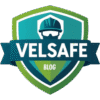
By the time the fault is identified and manual intervention restores cooling to the affected zones, the API in those zones has been at ambient temperature for approximately 11 hours. Temperature loggers confirm the excursion but the data export from one of the two affected zones fails due to a logger firmware issue, leaving a six-hour gap in the continuous record. The quality team must now manage three simultaneous nonconformances: a temperature excursion across two storage zones, a potential product quality impact on three API batches, and a data integrity gap in one zone’s temperature record.
What Occurred
14-hour power outage. Backup generator transfer switch failure for two storage zones. Temperature excursion in zones A and B across an 11-hour period. Three API batches affected. Data logger firmware failure creating a 6-hour gap in one zone’s continuous temperature record.
Nonconformances Generated
NC-001: Temperature excursion in zones A and B exceeding specified storage conditions. NC-002: Potential product quality impact on three API batches. NC-003: Data integrity gap in Zone A continuous temperature record. Each requires a separate CAPA with independent root cause investigation and effectiveness verification.
Workplace Background
API storage for pharmaceutical manufacturing is a tightly regulated activity. ICH Q1A stability guidelines and FDA cGMP requirements under 21 CFR 211 define storage condition requirements for drug substances and finished products. Deviations from specified storage conditions, however brief, generate a regulatory obligation to assess product quality impact, document the event, investigate root causes, and implement corrective measures.
Most pharmaceutical quality management systems have CAPA procedures designed around single, discrete nonconformances arising during normal operations. A batch that fails an in-process test, a piece of equipment that drifts out of calibration, a cleaning validation that produces an anomalous result. What they are less well prepared for is a cluster of simultaneous nonconformances arising from a single precipitating event, where the same resource pool that would normally investigate one issue must now manage three at once, under time pressure, while the facility is still recovering from the physical damage.
FDA inspectors who visit facilities after disaster events are specifically looking at how the quality system performed under stress. A quality system that functions correctly only under normal conditions is not considered adequate. The 483 observations that follow disaster recoveries most commonly involve delayed CAPA initiation, incomplete root cause investigations that address the proximate cause but not the systemic one, and effectiveness verification steps that were scheduled but not completed.
Incident Timeline
Day 0, 11:47 PM
Severe storm damages primary electrical feed. Facility power lost. Backup generator activates. Transfer switch operates correctly for zones C, D, E. Zones A and B do not receive backup power due to a transfer switch failure in the secondary distribution panel serving those zones. Alarm system for zones A and B activates but the on-call facility engineer does not receive the alert because the alarm notification system routes through the facility’s primary network, which is also down.
Day 1, 6:15 AM
Day shift quality technician arrives and conducts the morning walkthrough. Observes temperature display readings on zones A and B showing 18.3 and 21.7 degrees Celsius respectively. Immediately notifies the quality manager. The technician attempts to download the Zone A temperature logger but the export fails. A manual reading from the logger display shows a current temperature and the start of the excursion but a 6-hour block of the logged data is inaccessible due to the firmware issue.
Day 1, 7:30 AM
Quality manager initiates three nonconformance reports: NC-001 for the temperature excursion, NC-002 for potential API batch impact, NC-003 for the data integrity gap. The decision is made to quarantine all three API batches pending investigation. Manual power restoration to zones A and B is completed. Temperatures return to range by 8:45 AM.
Day 1 through Day 9
Stability impact assessment initiated for all three API batches. Temperature logger manufacturer contacted regarding firmware failure. Transfer switch inspection conducted by a licensed electrical contractor. CAPA investigations for NC-001 and NC-003 are initiated but the NC-002 product assessment is delayed because the stability data required to assess the excursion duration impact requires accelerated testing that will not be complete for 14 days.
Day 23
Accelerated stability data received. Two of three API batches show no significant change; one batch shows degradation at the high end of the excursion temperature range that, combined with the duration, exceeds the predetermined stability threshold. That batch is rejected and destroyed. CAPA reports for NC-001 and NC-003 are in draft. NC-002 CAPA can now be finalised with the disposition decision documented.
Day 45 (next scheduled FDA inspection)
FDA investigators arrive for a pre-announced inspection. The three CAPA reports are presented. NC-001 and NC-002 are closed. NC-003 (data integrity) remains open pending implementation of the corrective action for the logger firmware update across all monitoring equipment. Investigators note the open CAPA and the 45-day age, ask for evidence of the effectiveness verification plan, and review the alarm notification system failure as a systemic issue not addressed in the CAPA scope. A 483 observation is issued for inadequate CAPA scope.
What Went Wrong
Alarm notification system routed through primary network
The facility’s environmental monitoring alarms for zones A and B were configured to notify the on-call engineer through the primary facility network. When that network went down with the power, the alarm notification also failed. The backup generator restored some systems but the alarm routing had never been tested under the condition where the primary network was unavailable. The engineer was not notified for more than six hours.
Transfer switch failure not identified in the disaster recovery plan
The facility had a disaster recovery plan and a backup generator. The transfer switch in the secondary distribution panel serving zones A and B was not on the list of components verified during quarterly generator testing. The failure mode that caused zones A and B to lose power despite generator availability was a known vulnerability in the transfer switch model that had not been identified because the relevant zone had never been included in the testing scope.
CAPA scope did not address the systemic alarm failure
NC-001’s CAPA addressed the transfer switch failure and the generator testing scope. It did not address the alarm notification routing failure, which was identified as a contributing factor but not formally scoped into the investigation. FDA investigators cited this as an inadequate investigation scope in a 483 observation. The alarm failure was the reason the excursion ran for 11 hours rather than being caught within one or two.
Data logger firmware vulnerability not in the equipment qualification scope
The firmware issue that caused the data export failure was a known problem the manufacturer had addressed in an update released months earlier. The facility’s change control process had not captured or applied it. The resulting 6-hour data gap required a separate CAPA and complicated the product disposition decision for the batch stored in Zone A.
Investigation Findings
Nonconformance
Root Cause
FDA Concern Level
NC-001: Temperature excursion zones A and B
Transfer switch failure in secondary panel; zone not included in quarterly generator test scope; alarm routing failure masking the event for 11 hours
High: systemic CAPA scope inadequacy cited
NC-002: API batch quality impact
Consequence of NC-001; stability threshold exceeded for one batch based on temperature-duration product; two batches released after accelerated testing
Moderate: disposition documented and closed
NC-003: Data integrity gap Zone A logger
Logger firmware not updated per manufacturer service bulletin; update not captured in equipment change control; 6-hour gap in continuous temperature record
High: data integrity; CAPA open at inspection
Root Cause Analysis
Contributing Factors by Systemic Category
Disaster recovery plan not tested to failure conditions
Primary
The generator testing protocol verified that the generator started and that primary zones received power. It did not verify that every distribution path carried power under backup conditions. The secondary panel transfer switch failure was in a zone that had not been included in the testing scope, so its failure mode was never observed during testing.
Alarm independence not verified for network-down conditions
Primary
Environmental monitoring alarms are a critical control. Their independence from the systems they are monitoring is a core reliability requirement. When the alarm notification path relies on the same network infrastructure that a power failure also disables, the alarm system is not independent. This is a system design issue, not an operational one.
Equipment change control did not capture manufacturer service bulletins
Contributing
The firmware update that would have prevented the data logger export failure had been available for several months. The facility’s change control and equipment qualification processes did not include a mechanism for reviewing and acting on manufacturer service bulletins for qualified monitoring equipment. This is a systemic gap that affects all monitoring equipment, not just the Zone A logger.
CAPA scope definition did not include all contributing factors
Contributing
The CAPA for NC-001 was written around the proximate causes: the transfer switch failure and the missing zone in the generator test protocol. The alarm notification routing failure, which was the reason the excursion lasted 11 hours rather than being caught early, was identified as a contributing factor but was not included in the CAPA scope. FDA investigators consider this a failure to adequately investigate root cause.
Corrective Actions
1
Expand generator test scope to all distribution paths
Revise the quarterly generator test protocol to verify that every storage zone and critical utility zone receives backup power under generator conditions. Test to include verification at the zone level, not just at the generator output. Document pass/fail criteria for each zone and require immediate engineering review if any zone fails to receive power during testing.
2
Implement network-independent alarm notification
Route environmental monitoring alarms through a dedicated cellular or satellite notification system that operates independently of the facility’s primary network. Test alarm independence as part of the quarterly generator test: verify that alarms are received on the notification system when the primary network is disabled. This is the single most consequential corrective action because it directly addresses the 11-hour delay.
3
Establish manufacturer service bulletin review process
Create a periodic review process for manufacturer service bulletins and firmware updates for all qualified monitoring equipment. Assign responsibility to the equipment owner, with quality oversight. Evaluate each bulletin for applicability under change control and implement required updates on a documented schedule. This closes the systemic gap that allowed the logger firmware issue to persist unresolved.
4
Revise CAPA scope definition procedure
Update the CAPA procedure to require that all contributing factors identified during investigation, not just proximate causes, are included in the CAPA scope or documented as explicitly out of scope with a rationale. For disaster-related events, require a specific check that asks whether the event duration was influenced by a detection or notification failure and, if so, whether that failure is addressed in the CAPA scope.
Lessons Learned
A disaster recovery plan that has not been tested to failure conditions is a written document, not a working control
The generator was tested quarterly. The transfer switch for zones A and B had never been verified under backup conditions. A test that confirms the generator starts and that some zones receive power does not demonstrate that all critical zones are protected. Recovery plan testing should be designed to verify every critical path, not just the most visible one. In this scenario, the difference between a tested and an untested distribution path was an 11-hour temperature excursion and one rejected API batch.
CAPA scope that addresses the proximate cause but not the detection failure is incomplete
FDA’s expectation for CAPA investigations is that they identify and address all root causes and contributing factors, not just the most obvious one. When an event’s severity is significantly influenced by a detection or notification failure, that failure is a contributing cause that belongs in the CAPA scope. A CAPA that fixes the transfer switch but does not address the alarm routing that prevented the excursion from being caught for 11 hours has not adequately investigated what went wrong.
Multiple simultaneous nonconformances from a single event require explicit resource planning
This scenario generated three CAPAs simultaneously, each with different timelines driven by the underlying investigation requirements. NC-002 could not be closed until stability data was available 23 days after the event. NC-003 required a firmware update across all qualified monitoring equipment, which took longer than the initial 30-day CAPA initiation window. Disaster events should trigger a resource allocation review within the quality system to determine whether CAPA timelines need to be formally extended and documented with rationale, rather than simply running past their targets without explanation.
Prevention Checklist
Disaster Recovery Plan
Generator test protocol covers all storage zones and critical utilities, not just primary distribution
Transfer switches verified for all critical zones under backup power conditions
Recovery plan tested at minimum annually with results documented
Gaps identified during testing generate CAPAs, not just corrective maintenance
Environmental Monitoring
Alarm notification system operates independently of primary facility network
Alarm independence tested quarterly under simulated network-down conditions
Manufacturer service bulletins reviewed periodically for all qualified monitoring equipment
Firmware and software updates evaluated under change control before implementation
CAPA Program Readiness
CAPA procedure requires all contributing factors, including detection failures, to be included in scope or explicitly excluded with rationale
Multiple simultaneous CAPAs from a single event trigger resource allocation review
CAPA timeline extensions documented with rationale when driven by investigation requirements, not just overdue
Effectiveness verification steps planned at CAPA initiation, not added after closure
Frequently Asked Questions
Is a facility required to initiate CAPA for every product exposed during a power outage, even if the exposure appears brief?
Yes. Under FDA cGMP, any event that could affect product quality or data integrity requires documentation and formal investigation. The determination that an exposure was within acceptable limits is itself a quality decision that must be documented. A CAPA may close quickly with a no-action finding, but it must be formally opened and closed through the quality system.
How should a facility handle a data integrity gap in temperature records caused by a monitoring system failure during the event?
The data integrity gap is a separate nonconformance from the temperature excursion and requires its own investigation. For the affected batches, the disposition decision must account for the gap: if the temperature during the unrecorded period cannot be reconstructed through other means (witness statements, equipment logs, thermal modelling), the worst-case temperature assumption may need to be applied to the stability assessment. FDA’s data integrity guidance is clear that gaps in required continuous records are not acceptable regardless of the cause, and the CAPA must address the system failure that created the gap.
What should an effectiveness verification for a disaster recovery CAPA include?
Verification must test that corrective actions work, not just that they were completed. Expanding the generator test scope means running the expanded test and confirming every zone receives power. Changing the alarm routing means testing alarm receipt with the primary network disabled. Confirming only that actions were implemented does not satisfy FDA expectations.
Can CAPA timelines be formally extended when disaster recovery investigations require longer timelines?
Yes, and this is preferable to allowing CAPAs to run past target dates without explanation. When an investigation requires actions with fixed external timelines, such as accelerated stability testing, the extension should be documented in the CAPA record with the reason, revised target date, and quality unit approval. A documented extension is in significantly better standing with FDA reviewers than a CAPA that is simply overdue.
Government and Regulatory Sources
Related VelSafe Articles
Applying These Lessons to Your Quality System
The failures in this scenario are each individually preventable and none of them required resources that a pharmaceutical manufacturer does not already have access to. A generator test that covers all zones. An alarm system that routes through an independent network. A change control process that captures manufacturer service bulletins. A CAPA procedure that requires contributing factors, including detection failures, to be in scope. These are process improvements, not infrastructure investments. The question is whether they are in place before the next storm, not after. Find more pharmaceutical quality and compliance resources at velsafe.com.