

Situation Overview
Workplace Background
The facility in this scenario is a regional distribution warehouse handling approximately 2,000 pallet movements per day across three shifts. The forklift fleet operates across all three shifts, with the highest traffic volume during the day shift. The facility has a written safety programme that includes:
Incident Timeline
What Happened? The Breakdown in Detail
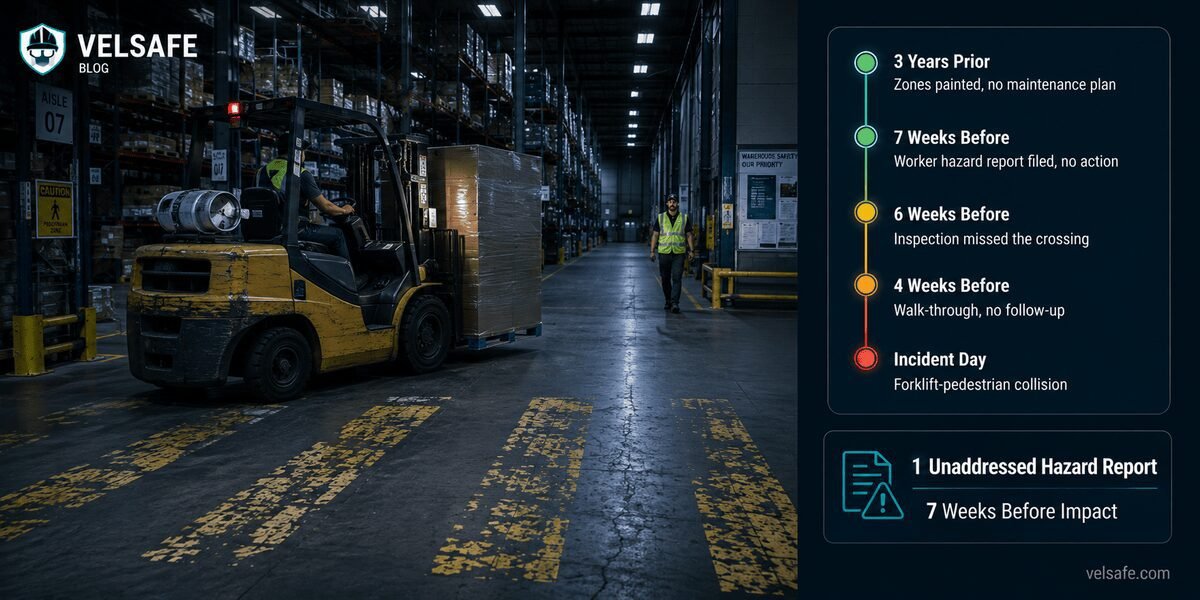
The collision itself lasted a fraction of a second. The conditions that made it possible developed over three years and went through multiple inspection and observation opportunities without being corrected. Understanding what each programme element should have done, and why it did not, is the central learning from this incident.
Immediate Response
Investigation Findings
Root Cause Analysis
The fundamental failure in this incident was not that hazards went undetected; they were detected, by a worker seven weeks before the incident. The fundamental failure was that the organisation’s safety management system had no reliable mechanism for converting a detected hazard into a corrective action. Three separate detection opportunities occurred (worker report, formal inspection, supervisor observation) and none produced a repair order for the floor markings.
Corrective Actions Implemented
Preventive Measures: What an Effective Inspection and Observation Programme Looks Like
Lessons Learned
Quick Checklist: Inspection and Observation Programme Effectiveness
Frequently Asked Questions
Government and Regulatory Sources
- OSHA – 29 CFR 1910.178: Powered Industrial Trucks
- Cal/OSHA – Title 8 CCR Section 3203: Injury and Illness Prevention Program
- OSHA – Powered Industrial Trucks Safety
- OSHA – How to File a Safety and Health Complaint