
VelsafeVelsafe

Workplace Safety Guides, Insights & Training

Velocity Safe Blog
  • Sign in /
  • join
  • Home
  • Insights
  • Guides
  • Practice Tests
  • Tips
  • Worker Safety
  • Situational
  • OSHA Tools
  • Law

Home » Tips » Page 7

Tips

Excessive dust workplace safety tips showing a worker in a hard hat and N95 respirator holding up a stop hand signal in a dusty industrial facility with a dust collection out of service sign and a do not disturb area under assessment warning sign visible, with a safety supervisor in a high-visibility vest in the background and accumulated dust covering surfaces and equipment
July 22, 2025
by VelSafe Editorial Team Tips

Excessive Dust Workplace Safety: 7 Tips for What to Do

Dust may look harmless, but in a workplace, it can be a serious safety hazard. Whether you're working in construction, manufacturing, or even in a warehouse, dust buildup can lead to health risks, equipment damage, and even fires or explosions. If yo


Read More
CE Marking Timeline Tips From Classification to Certification
July 20, 2025
by VelSafe Editorial Team Tips

CE Marking Timeline Tips: From Classification to Certification

If you’re a manufacturer looking to sell your product in the European market, CE marking is a legal must. It’s more than just a label. It shows that your product meets the European Union’s health, safety, and environmental standards.But getting that

Read More
5 Simple Ways to Protect Yourself from Bloodborne Pathogens at Work
July 19, 2025
by VelSafe Editorial Team Tips

5 Simple Ways to Protect Yourself from Bloodborne Pathogens at Work

Bloodborne pathogens like HIV, Hepatitis B (HBV), and Hepatitis C (HCV) can enter your body through cuts, splashes, or direct contact with infected blood and body fluids. Many workers, especially those in healthcare, sanitation, emergency response, a

Read More
Quick Tips for Complying with In Vivo Bioequivalence Program Requirements
July 18, 2025
by VelSafe Editorial Team Tips

Quick Tips for Complying with In Vivo Bioequivalence Program Requirements

Conducting in vivo bioequivalence (BE) studies is a critical step for companies developing generic drugs. These studies compare a test product to a reference drug to show that both perform the same in the human body. The U.S. Food and Drug Administra

Read More
Pharmaceutical representative conducting a compliant educational meal interaction with a physician under PhRMA Code guidelines
July 17, 2025
by VelSafe Editorial Team Tips

PhRMA Code Guidelines on Gifts and Interactions with Healthcare Professionals

TIPS: Pharmaceutical Industry Compliance and HCP Engagement PhRMA Code Guidelines: Gifts and Interactions with Healthcare ProfessionalsWhat Is Permitted, What Is Prohibited, and What Changed in 2022 The PhRMA Code on Interactions with Health

Read More
How to Prioritize Safety Signals Using a Risk-Based Approach
July 16, 2025
by VelSafe Editorial Team Tips

How to Prioritize Safety Signals Using a Risk-Based Approach

Safety signals are early signs that a drug, device, or treatment may be causing harm. These signals come from many places, like clinical trials, post-market surveillance, and patient reports. With so much data coming in, it can be hard to know what t

Read More
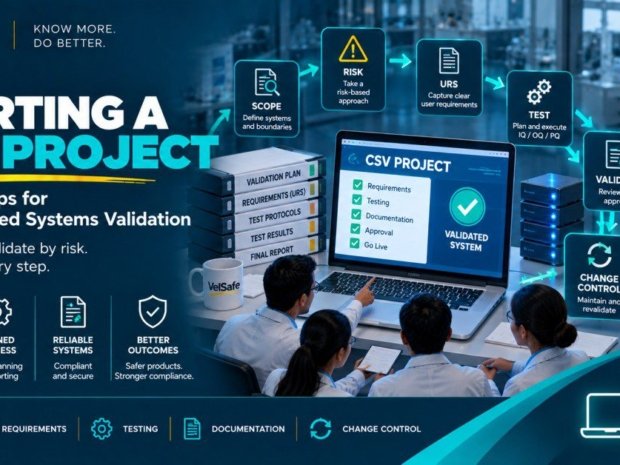
Computerized systems validation project tips showing a cross-functional team of QA and validation professionals reviewing a CSV project on a laptop with a validated system checklist covering requirements, testing, documentation, approval, and go-live, alongside a CSV project workflow from scope through risk assessment, URS, IQ OQ PQ testing, validate, and change control, with validation plan, requirements, test protocols, test results, and final report binders on the desk and an audit trail panel showing traceable, version controlled, compliant, and ready for inspection criteria
July 13, 2025
by VelSafe Editorial Team Tips

Computerized Systems Validation Project Tips: 7 to Know

Computerized Systems Validation (CSV) is a critical process in regulated industries like pharmaceuticals, biotech, and medical devices. It confirms that software and digital systems work as intended and meet all compliance requirements, especially th

Read More
How to Respond Safely to an Aggressive Driver
July 9, 2025
by VelSafe Editorial Team Tips

How to Respond Safely to an Aggressive Driver

Handling Road Rage Safely — Wave Stepper Layout /* =============== Wave Stepper Layout =============== */ .wave{all:initial;display:block;font-family:Inter,Roboto,Arial,system-ui,-apple-system,Segoe UI,sans-serif} .wav

Read More
Active shooter response tips covering Run Hide Fight framework, first 10 seconds actions, barricading, phone silence and law enforcement encounter guidance for workplace safety
July 5, 2025
by VelSafe Editorial Team Tips

What to Do in the First 10 Seconds of an Active Shooter Situation

.tiles{ all:initial; display:block; font-family:Poppins, Arial, sans-serif; } .tiles *{ all:unset; display:revert; box-sizing:border-box; } .tiles :where(p,li){line-height:1.75;} .tiles{ --brand:#0f8b8d; --brand2:#8ce4dd; --muted:

Read More
Pharmaceutical quality scientist reviewing process validation protocol documentation and trend data in a GMP laboratory
June 28, 2025
by VelSafe Editorial Team Tips

Common Process Validation Mistakes to Avoid

TIPS: GMP Process Validation and Quality Systems Common Process Validation Mistakes to AvoidWhat FDA Inspectors Find and What You Can Do Before They Do Process validation failures do not usually happen because manufacturers are careless. They

Read More
  • First
  • Previous
  • 1
  • ...
  • 5
  • 6
  • 7

Subscribe Now

VelSafe Subscribe
VelsafeVelsafe

Workplace Safety Guides, Insights & Training

Linkedin Twitter Instagram
Category
  • Insights
  • Guides
  • TIPS
  • LAW
  • Practice Tests
  • SITUATIONAL
Info
  • About Us
  • Get Featured
  • Newsletter
  • Contact Us
Popular Posts
Legal books showing OHS laws, industry regulations, and crane standards beside a yellow mobile crane at oil and gas refinery illustrating OSHA crane operations law requirements including operator certification, inspection records, and compliance enforcement
September 25, 2026

Oil and Gas Crane Operations Law:…

Oil and gas bloodborne pathogens 29 CFR 1910.1030 law article showing two oil and gas workers in hard hats and high-visibility vests at an industrial refinery site, with one worker kneeling beside a red first aid kit and holding an OSHA document on occupational exposure to bloodborne pathogens, with infographic panels below covering exposure control plan, PPE, hepatitis B vaccination, post-exposure evaluation, annual training, and recordkeeping requirements
September 19, 2026

Oil and Gas Bloodborne Pathogens: 29…

Newsletter

Send us a newsletter to get update


    © 2026 . All rights reserved.
    Shopping Basket