WORKER SAFETY: Toxic Substance Exposure and Control
Arsenic Exposure Safety Guide for Industrial Workers
What Every Worker Needs to Know About Inorganic Arsenic Hazards
Inorganic arsenic is a proven human carcinogen present in metal smelting, copper refining, wood treatment, glass manufacturing, and semiconductor production. OSHA’s inorganic arsenic standard (29 CFR 1910.1018) sets a permissible exposure limit of 10 micrograms per cubic meter and an action level of 5 micrograms per cubic meter. This guide covers the hazard, who is at risk, what protections the law requires, and what every worker should know to protect themselves.
10
Micrograms/m3 PEL
OSHA’s permissible exposure limit for inorganic arsenic is 10 micrograms per cubic meter of air averaged over an 8-hour workday. No employee may be exposed above this limit.
OSHA, 29 CFR 1910.1018(c)
5
Micrograms/m3 Action Level
At or above 5 micrograms per cubic meter, employers must implement medical surveillance, regulated areas, and enhanced monitoring. The action level triggers program requirements even before the PEL is reached.
OSHA, 29 CFR 1910.1018(b)
Group 1
IARC Carcinogen
The International Agency for Research on Cancer classifies inorganic arsenic compounds as Group 1 carcinogens, confirmed to cause lung cancer and skin cancer in humans through occupational and environmental exposure.
IARC, Monograph Vol. 100C
Understanding Inorganic Arsenic in the Workplace
Inorganic arsenic is not one chemical. Under OSHA’s standard, it means copper aceto-arsenite and all inorganic compounds containing arsenic except arsine. Arsenic occurs naturally in the earth’s crust and is a byproduct of numerous industrial processes. Workers may encounter it without realizing it is present, particularly in operations involving metal ores, recycled metals, or older treated materials.
The primary health concern with inorganic arsenic is its carcinogenicity. Long-term occupational exposure above established limits is associated with increased risk of lung cancer, skin cancer, and cancers of the nasal passages. These cancers can have latency periods of 20 years or more between significant exposure and diagnosis, meaning the health effects of today’s exposures may not be detectable until decades later. Short-term high-level exposures cause acute poisoning with gastrointestinal, cardiovascular, and neurological effects.
Three routes of occupational exposure exist. Inhalation of arsenic-containing dust or fumes is the most significant route in industrial settings. Ingestion occurs through hand-to-mouth contact, particularly when workers eat, drink, or smoke without removing contaminated gloves or washing thoroughly. Dermal contact is a less significant route for most inorganic arsenic compounds, but arsenic trichloride is rapidly absorbed through skin and half-mask respirators cannot be used when it is present.
Industries and Operations Where Inorganic Arsenic Exposure Occurs
Metal Smelting and Refining
Copper, lead, and zinc smelting generate arsenic-containing fumes and dusts as byproducts. Arsenic is released during ore heating and can reach significant airborne concentrations in insufficiently ventilated smelting operations.
Glass Manufacturing
Arsenic trioxide is used as a fining agent and decolorizer in glass production. Mixing, batching, and furnace operations can generate arsenic dust and fumes that require respiratory protection and ventilation controls.
Semiconductor Manufacturing
Arsenic is used as a dopant in semiconductor production. Gallium arsenide handling and wafer processing can generate arsenic-containing dust. Operations require engineering controls, air monitoring, and medical surveillance.
Chemical Manufacturing
Production of arsenical compounds for agricultural, pharmaceutical, or industrial uses involves direct handling of arsenic-containing raw materials. Reactors, blending, and filling operations are higher-exposure tasks.
Demolition and Renovation
Older chromated copper arsenate (CCA)-treated wood in structures built before 2004 may be encountered during demolition, cutting, or burning. Sanding, sawing, or burning CCA-treated lumber generates arsenic-containing dust and smoke.
Hazardous Waste Operations
Remediation of sites contaminated with arsenic-containing pesticides, industrial waste, or mine tailings requires HAZWOPER-trained workers and arsenic-specific exposure controls under both 29 CFR 1910.1018 and 1910.120.
What OSHA’s Inorganic Arsenic Standard Requires
OSHA’s inorganic arsenic standard, 29 CFR 1910.1018, applies to all occupational exposures to inorganic arsenic in general industry, construction, and maritime employment, with the exception of agricultural operations, pesticide application, wood treatment with preservatives, and the use of wood treated with preservatives.
Requirement
Trigger Level
What the Employer Must Do
Initial monitoring
All covered workplaces
Monitor each workplace and work operation to accurately determine the airborne concentration of inorganic arsenic to which employees may be exposed.
Regulated areas
At or above PEL (10 µg/m3)
Establish regulated areas where airborne arsenic exceeds or can reasonably be expected to exceed the PEL. Restrict access to authorized employees wearing required PPE.
Engineering and work practice controls
At or above PEL
Implement feasible engineering controls (local exhaust ventilation, process enclosure, wet methods) and work practice controls to reduce exposures to or below the PEL before requiring PPE.
Respiratory protection
Above PEL where controls are not feasible; during control implementation; emergencies
Provide appropriate respirators per 29 CFR 1910.134. Half-mask respirators are prohibited for arsenic trichloride exposure. HEPA filters required for particulate arsenic exposures above PEL.
Medical surveillance
At or above action level (5 µg/m3) for 30+ days per year, or in regulated areas for 30+ days per year
Provide medical surveillance at no cost to the employee. Initial exam, annual exams, and exams upon request or after emergency exposure. Includes medical and work history, physical examination, chest X-ray, and other tests as determined by physician.
Hygiene facilities and practices
Regulated areas and above-action-level workplaces
Provide lunchroom facilities with temperature-controlled, positive pressure, filtered air supply. Prohibit eating, drinking, smoking, and chewing gum or tobacco in regulated areas. Require employees to wash hands and face before eating.
Protective work clothing and equipment
Regulated areas
Provide and require use of coveralls or similar full-body work clothing, gloves, shoes, and face shields or other appropriate face and eye protection. Employer must clean, launder, or dispose of protective clothing at no cost to the employee.
Training
All workers exposed at or above action level
Train workers on the standard’s requirements, the health effects of arsenic, and how to prevent exposure. Training must occur before initial assignment and at least annually thereafter.
Source: OSHA | 29 CFR 1910.1018 Inorganic Arsenic Standard
Health Effects of Inorganic Arsenic Exposure
Understanding what inorganic arsenic does to the body is essential for workers to take their exposure controls seriously. The health effects span a wide range of severity and timeline.
Health Effects of Inorganic Arsenic Exposure by Severity
Lung Cancer
Primary Occupational Cancer Risk
The primary occupational cancer risk from chronic inorganic arsenic exposure. OSHA’s standard is specifically designed to minimize the risk of workers dying from lung cancer. Latency from exposure to diagnosis can exceed 20 years.
Skin Cancer and Lesions
Chronic Exposure
Chronic arsenic exposure causes characteristic skin changes including hyperpigmentation, hypopigmentation (leucomelanosis), keratosis (thickening of the skin), and ultimately skin cancer. These changes often appear on the palms, soles, and trunk.
Peripheral Neuropathy
Chronic Exposure
Numbness, tingling, and weakness in the hands and feet from chronic arsenic-related nerve damage. Symptoms may appear gradually and can progress if exposure continues without adequate controls.
Cardiovascular Effects
Chronic Exposure
Chronic arsenic exposure is associated with increased rates of heart disease, peripheral vascular disease, and hypertension. Raynaud’s phenomenon (color changes in fingers and toes in response to cold) has been observed in heavily exposed workers.
Acute Arsenic Poisoning
High-Level Acute Exposure
High acute exposures cause gastrointestinal effects (nausea, vomiting, diarrhea, abdominal pain), neurological effects, and cardiovascular collapse. Acute poisoning in occupational settings is rare when PEL controls are maintained, but can occur during accidental releases or process failures.
Source: OSHA | 29 CFR 1910.1018 Appendix A | IARC Monograph Vol. 100C
Role-Based Safety Guidance
Arsenic exposure risks and control priorities differ significantly depending on your specific job duties. The following guidance addresses the most common industrial roles where inorganic arsenic exposure occurs.
1
Smelter and Foundry Workers
YOUR PRIMARY RISK
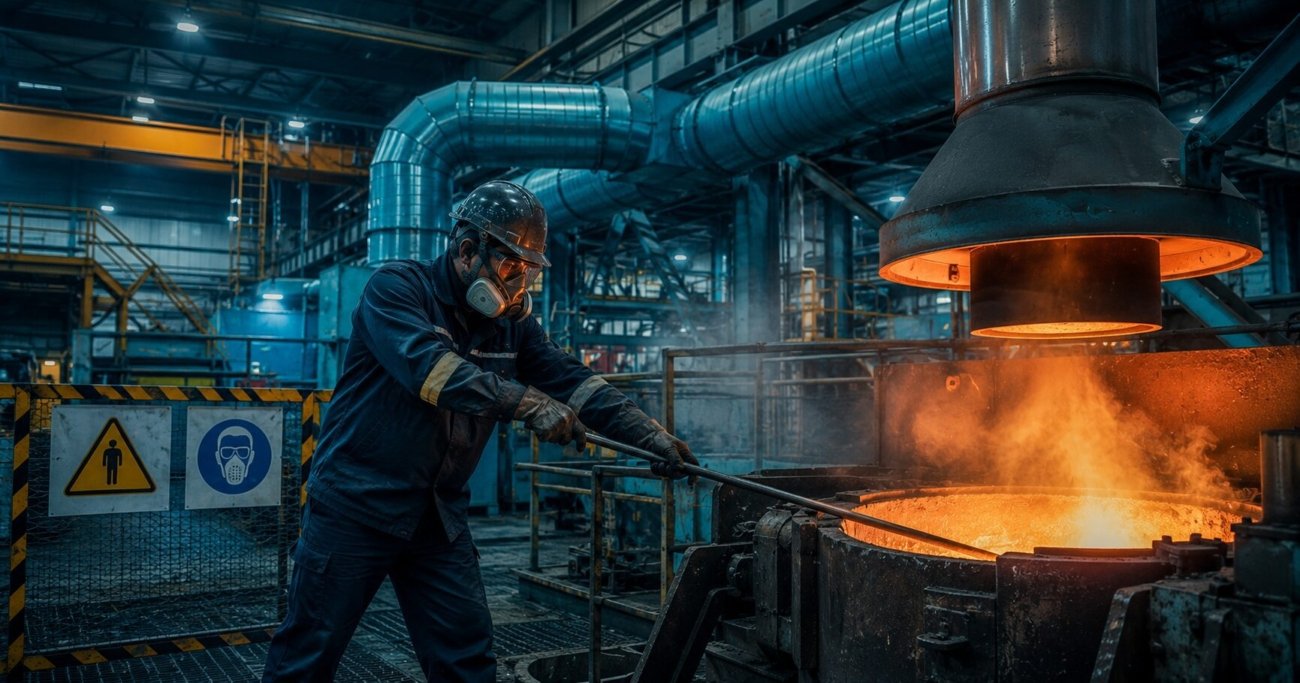
Arsenic is released as a byproduct during the smelting of copper, lead, zinc, and other ores. Furnace operations, slag handling, and dust from ore processing are the highest-exposure tasks. Arsenic levels in inadequately ventilated smelting environments can significantly exceed the PEL.
WHAT PROTECTS YOU
- Local exhaust ventilation at furnace openings, tapping points, and slag handling areas
- Wet methods for dust suppression where dry sweeping would generate airborne arsenic
- Disposable coveralls changed before leaving the work area
- Respiratory protection when ventilation alone cannot achieve the PEL
- Biological monitoring of urinary arsenic levels as part of medical surveillance
2
Glass Manufacturing Workers
YOUR PRIMARY RISK
Arsenic trioxide used as a fining agent creates dust exposure risk during raw material handling, batching, and furnace charging. The fine particle size of arsenic trioxide makes it particularly hazardous through inhalation because it penetrates deep into the lungs.
WHAT PROTECTS YOU
- Enclosed batching systems that prevent open air exposure during raw material handling
- Local exhaust ventilation at all batch mixing, weighing, and transfer points
- HEPA vacuum systems instead of dry sweeping for cleanup
- Full-body protective clothing changed before entering lunchrooms or leaving the facility
- Annual chest X-rays as part of medical surveillance
YOUR PRIMARY RISK
Gallium arsenide and other arsenical compounds used in semiconductor fabrication generate arsenic-containing dust during wafer grinding, polishing, and handling. Process gases may also contain arsenic compounds. Engineering controls in semiconductor cleanrooms generally maintain low exposures, but routine maintenance and cleaning create elevated exposure opportunities.
WHAT PROTECTS YOU
- Enclosed process equipment and HEPA-filtered exhaust systems
- HEPA vacuum systems for all cleanup involving arsenic-containing materials
- Glove bags or glove boxes for handling arsenic compounds in open air
- Specific training on gallium arsenide hazards before assignment to GaAs operations
- Routine air monitoring during maintenance operations that may disturb deposited arsenic
4
Demolition and Renovation Workers
YOUR PRIMARY RISK
Chromated copper arsenate (CCA)-treated wood was widely used in outdoor construction until 2004. Sawing, sanding, grinding, or burning CCA-treated lumber generates arsenic-containing dust and smoke. Older decks, playground equipment, utility poles, and dock structures may all contain CCA-treated wood. Burning CCA wood is prohibited in many jurisdictions.
WHAT PROTECTS YOU
- Identify CCA-treated wood before work begins (often greenish color; confirm with test kits)
- HEPA-equipped saws and grinders to capture dust at the source
- Respiratory protection rated for arsenic-containing dust when cutting or grinding
- Never burn CCA-treated wood; incineration concentrates arsenic in ash and smoke
- Wet methods during cutting to suppress airborne dust generation
5
Hazardous Waste and Remediation Workers
YOUR PRIMARY RISK
Arsenic is a common soil contaminant at former pesticide manufacturing sites, mine tailings, and industrial waste sites. Excavation, soil handling, and dewatering of arsenic-contaminated material can generate significant airborne exposure. HAZWOPER training is required, and site-specific HASPs must address arsenic as a chemical of concern.
WHAT PROTECTS YOU
- Site characterization data establishing arsenic concentrations before work begins
- PPE level selection based on measured or anticipated arsenic concentrations
- Wet methods during excavation and soil handling to suppress fugitive dust
- Decontamination before leaving the exclusion zone
- Medical surveillance under both 29 CFR 1910.1018 and 1910.120(f) as applicable
6
Maintenance and Custodial Workers
YOUR PRIMARY RISK
Maintenance and custodial workers in facilities with arsenic-generating processes may encounter arsenic deposits in ductwork, ventilation systems, and on equipment surfaces. Routine cleaning without appropriate controls can resuspend settled arsenic dust and create exposures that primary process workers never face.
WHAT PROTECTS YOU
- HEPA vacuum systems for all cleanup in areas where arsenic processes are conducted
- Never dry sweep or use compressed air to clean arsenic-contaminated surfaces
- Respiratory protection during ductwork cleaning and ventilation system maintenance
- Inclusion in the arsenic medical surveillance program if 30-day exposure threshold is met
- Training on arsenic hazards specific to the maintenance tasks performed
Hygiene Practices That Prevent Arsenic Ingestion
Ingestion is a preventable exposure route in almost every case. Arsenic does not have to be inhaled to enter the body. Workers who touch contaminated surfaces and then touch their face, eat food, or smoke introduce arsenic directly into the gastrointestinal tract. These hygiene practices are required under 29 CFR 1910.1018(k) in regulated areas and represent essential personal protection in any arsenic workplace.
Never eat, drink, smoke, or chew in work areas
These activities bring your hands and the contaminated air around you into direct contact with your mouth. OSHA prohibits eating, drinking, smoking, and chewing gum or tobacco in regulated areas. This applies even to water bottles carried in work pockets.
Wash thoroughly before leaving contaminated areas
Wash hands and face before eating, drinking, smoking, or using toilet facilities. In regulated areas, OSHA requires washing facilities to be provided and used. Washing hands and face before breaks is the single most effective personal hygiene measure against arsenic ingestion.
Change work clothing before leaving the facility
Do not wear contaminated work clothing home. Arsenic on clothing can transfer to vehicle seats, furniture, and household surfaces, creating secondary exposure for family members. Employer-laundered work clothing must be used in regulated areas; never take it home for personal laundering.
Signs and Symptoms to Report Immediately
Workers who notice any of the following signs or symptoms should report them to their supervisor and seek medical attention promptly. Many of these symptoms can result from arsenic exposure, but they also have other causes. Medical evaluation by a physician familiar with your occupational exposure history is essential for accurate diagnosis.
Symptom or Sign
What It May Indicate
Persistent cough, shortness of breath, or chest pain
Possible respiratory tract effects from inhalation exposure; requires chest X-ray evaluation
Skin thickening, dark or light spots, or wart-like growths
Characteristic arsenic-related skin changes; require dermatological evaluation and documentation in medical surveillance records
Numbness, tingling, or weakness in hands or feet
Possible peripheral neuropathy from arsenic exposure; requires neurological evaluation
Nausea, vomiting, abdominal pain, or diarrhea following potential exposure
Possible acute ingestion or inhalation exposure; requires immediate medical evaluation and may be a reportable incident
Unusual fatigue, weakness, or changes in mental status
Systemic arsenic effects; requires medical evaluation with specific focus on occupational exposure history
Source: OSHA | 29 CFR 1910.1018 Appendix A: Substance Safety Data Sheet for Inorganic Arsenic
Your Rights Under the Arsenic Standard
Right to Know Your Exposure Level
Your employer must notify you of any monitoring results and whether they show exposure at or above the action level. You have the right to observe monitoring being conducted and to access your exposure records.
29 CFR 1910.1018(e)(4) and 1910.1020
Right to Medical Surveillance
If you are exposed at or above the action level for 30 or more days per year, or you work in a regulated area for 30 or more days per year, you are entitled to medical surveillance at no cost to you. This includes annual physical examinations and chest X-rays.
29 CFR 1910.1018(n)
Right to Access Your Medical Records
Your employer must provide you with the physician’s written opinion after each medical surveillance examination. You have the right to access your complete medical records under 29 CFR 1910.1020 and your employer must retain those records for 40 years or the duration of employment plus 20 years, whichever is longer.
29 CFR 1910.1018(n)(5) and 1910.1020
Key Takeaways
The Action Level Triggers Most of the Program
Many workers and even some employers focus only on the PEL of 10 µg/m3. But most of OSHA’s protective program requirements, including medical surveillance and regulated areas, are triggered at the action level of 5 µg/m3. Know both numbers.
Latency Means You Cannot Wait for Symptoms
Arsenic-related cancers may not appear for 20 or more years after exposure. By the time a lung or skin cancer is diagnosed, the relevant exposures may have occurred during an entirely different job or decade. Participate in medical surveillance, keep your own records, and report exposure history to every physician you see.
Engineering Controls Come Before PPE
OSHA requires feasible engineering controls to be implemented before respirator use is required as the primary means of compliance. Local exhaust ventilation and process enclosure that keep exposures below the PEL are preferred over relying on workers to correctly wear respirators every moment they are in the area.
Hygiene Is a Control, Not a Courtesy
OSHA’s hygiene requirements in regulated areas (no eating, drinking, or smoking; mandatory handwashing; employer-laundered clothing) are not suggestions. They prevent the ingestion exposure route that engineering controls and respirators cannot address. Contaminated clothing taken home is a family exposure risk.
Frequently Asked Questions
Does the arsenic standard apply to all forms of arsenic?
No. 29 CFR 1910.1018 applies to inorganic arsenic, which means copper aceto-arsenite and all inorganic compounds containing arsenic, except arsine. Arsine (AsH3) is a separate hazard governed by the general industry PEL table at 29 CFR 1910.1000 (Table Z-1). Organic arsenic compounds are not covered by 1910.1018. The standard also does not apply to agricultural operations, pesticide application, or the treatment of wood with preservatives.
If my employer provides respiratory protection, are we still required to do air monitoring?
Yes. Air monitoring under 29 CFR 1910.1018(e) is required regardless of whether workers wear respirators. The monitoring determines actual exposure levels, which drives the overall program including whether regulated areas are needed, what medical surveillance tier applies, and whether engineering controls are feasible. Respirator use is measured for exposure purposes as if the respirator were not being worn.
Can I refuse to work in an arsenic-regulated area if I am not given proper PPE?
Yes. OSHA’s anti-retaliation protections under Section 11(c) of the OSH Act protect workers who refuse tasks they reasonably believe pose an imminent danger. Working in a regulated area without the required protective clothing and respirators is a condition that warrants refusal. Report the condition to your supervisor and to OSHA if it is not corrected.
What is biological monitoring and will I be asked to do it?
Biological monitoring measures the amount of arsenic in body fluids, typically urine. It is used as a supplement to air monitoring to assess actual internal dose from all exposure routes combined. Your physician may include biological monitoring in your medical surveillance examinations, particularly for high-exposure roles in smelting or glass manufacturing. The test is non-invasive and provides a direct measure of how much arsenic has actually entered your body from all sources.
Government and Regulatory Sources
Research and Health References
Related VelSafe Articles
Know Your Exposure, Know Your Rights, Protect Your Health
Arsenic-related cancers are slow to develop and often impossible to reverse once they occur. The controls your employer is required to provide (ventilation, monitoring, medical surveillance, hygiene facilities, PPE) exist specifically because occupational arsenic exposure has caused preventable cancers in workers across multiple industries for decades. Use the controls provided, participate in medical surveillance, know your exposure level, and report symptoms early. Find more worker safety resources at velsafe.com.