GUIDES: HAZWOPER Personal Protective Equipment
HAZWOPER: PPE Levels A and B
Use, Care, and Inspection
Level A and Level B PPE are the two highest protection levels at HAZWOPER sites. Both require SCBA for respiratory protection, but they differ significantly in how they protect the skin, what hazard conditions require them, and how they must be inspected, maintained, and donned. This guide covers everything workers and employers need to know about selecting, using, and caring for Level A and B PPE correctly.
A
Highest Protection Level
Level A provides the greatest protection for skin, respiratory system, and eyes. The vapor-tight totally-encapsulating chemical protective suit prevents any skin or eye contact with the hazardous atmosphere.
OSHA, 29 CFR 1910.120 Appendix B
SCBA
Required for Both Levels
Both Level A and Level B require a pressure-demand SCBA approved by NIOSH under 42 CFR Part 84. Air-purifying respirators are never acceptable substitutes at either level.
OSHA, 29 CFR 1910.120 Appendix B
42 CFR
SCBA Approval Standard
SCBA used in HAZWOPER Level A and B operations must be NIOSH-approved under 42 CFR Part 84. No other respiratory protection meets the standard for unknown atmospheres or IDLH conditions.
NIOSH, 42 CFR Part 84
Understanding HAZWOPER PPE Levels: The Framework
OSHA’s HAZWOPER standard (29 CFR 1910.120) establishes four levels of PPE protection for hazardous waste operations and emergency response: Levels A through D. These levels are defined in Appendix B to 1910.120, which is non-mandatory as guidance but whose underlying PPE requirements are made mandatory by 29 CFR 1910.120(g). The four levels represent a graduated scale from maximum protection (Level A) to minimal protection appropriate only for uncontaminated environments (Level D).
This guide focuses on the two highest levels: A and B. Both require the use of self-contained breathing apparatus (SCBA) because neither an air-purifying respirator nor any other non-SCBA respiratory device is acceptable when atmospheric composition is unknown, when oxygen deficiency is possible, or when IDLH concentrations of any hazardous substance may be present. The distinction between Level A and Level B is in the degree of skin protection required, not in the respiratory component.
Quick Comparison: Level A vs Level B
Level A
Totally-encapsulating vapor-tight suit (TECP). SCBA worn inside. Maximum respiratory AND skin protection. Used when vapor or gas skin absorption hazard exists or atmosphere is unknown.
Level B
Chemical-resistant splash suit (non-vapor-tight). SCBA worn outside the suit. Maximum respiratory protection, splash protection for skin but NOT vapor-tight. Used when vapor absorption is not a primary concern but SCBA is still required.
Key Difference
Level A protects against vapor and gas skin exposure. Level B protects against liquid splash but not against vapors or gases that can absorb through skin. Selecting B when A is required exposes workers to unacceptable vapor absorption risk.
Level A PPE: When to Use It
Level A is selected when the hazard assessment indicates that skin, eye, or respiratory exposure to vapors, gases, or particulates that are harmful through skin absorption is possible, or when the atmospheric composition is completely unknown. OSHA’s Appendix B identifies specific conditions that indicate Level A is the appropriate choice.
Condition
Why Level A Is Required
Chemical identified as having high degree of hazard to skin, eyes, or mucous membranes
Even if concentrations are below IDLH, chemicals that are highly toxic through skin contact require vapor-tight protection. The suit prevents any skin contact with the hazardous atmosphere.
Atmosphere contains high concentration of chemicals harmful through skin absorption
When air monitoring confirms concentrations are high enough that dermal absorption poses a significant risk, Level A is required even if the respiratory hazard alone could be managed at a lower level.
Unknown atmosphere at uncharacterized sites
When the chemical identity or concentrations are unknown, assume Level A until monitoring data justifies downgrading. You cannot assume a lower hazard than the data supports.
Operations where splashing, immersion, or injection of hazardous liquids is possible
Where pressure or physical operations could produce liquid spray or misting of highly hazardous materials, the vapor-tight suit provides the highest degree of liquid splash protection alongside vapor protection.
Site characterization indicates high potential for oxygen deficiency or IDLH atmosphere
IDLH conditions require maximum protection for both respiratory and skin pathways. SCBA alone (Level B) may be sufficient for the respiratory component, but if skin hazard analysis also indicates vapor absorption risk, Level A is required.
Level A Equipment Components
Totally Encapsulating Chemical Protective Suit
Primary Component
A one-piece vapor-tight suit that covers the entire body including the head, with an integrated visor or window. The SCBA is worn inside the suit. The suit must be gas-tight: seams, zippers, and closures must all maintain a positive pressure seal. NFPA 1991 governs performance standards for TECP suits.
Pressure-Demand SCBA
Worn Inside the Suit
NIOSH-approved under 42 CFR Part 84. Must be pressure-demand (positive pressure) type. The positive pressure prevents contaminants from entering the facepiece if a seal leak occurs. The air cylinder worn inside the suit limits entry time and determines work duration before exit is required.
Inner and Outer Chemical-Resistant Gloves
Double Glove System
Level A requires double chemical-resistant gloves: an inner glove layer and an outer glove layer. Glove material must be chemically compatible with the substances being handled. No single glove material protects against all chemicals. Compatibility charts must be consulted for each chemical on site.
Chemical-Resistant Boots
Steel-Toed, Chemical-Resistant
Chemical-resistant steel-toed and shank boots worn inside the suit boot covers. The suit provides the outer vapor barrier, but boots worn inside must still be chemical-resistant in case of a suit integrity failure. Boot covers integral to the suit must be inspected at every donning.
Hard Hat and Two-Way Radio
Communication and Head Protection
A hard hat inside the suit provides impact protection. Communication inside a Level A suit is severely restricted. Intrinsically safe two-way radio systems designed for use inside encapsulating suits are required where voice communication is needed. Pre-entry buddy system protocols and hand signals must be established and practiced before entry.
Level B PPE: When to Use It
Level B is selected when SCBA is required for respiratory protection, but the vapor or gas skin absorption hazard is significantly lower than what would require Level A. This typically means the chemical has been identified and air monitoring has confirmed that concentrations do not pose a significant dermal absorption risk, but the atmosphere is still IDLH or oxygen-deficient, or contaminant identity is known but skin vapor absorption is not the primary risk pathway.
Condition
Why Level B Is Appropriate
IDLH atmosphere present but vapor skin absorption is not a significant hazard
The chemical requires SCBA for respiratory protection but does not pose a dermal vapor absorption risk at the concentrations present. A non-vapor-tight splash suit provides adequate skin protection against liquid splash.
Atmosphere is oxygen-deficient
Oxygen deficiency requires SCBA regardless of chemical identity. If skin vapor absorption is not a hazard, Level B provides the required respiratory protection without the additional constraint of a vapor-tight suit.
Initial site entry before full hazard characterization
When some information is available but the site has not been fully characterized, Level B is sometimes used as the initial entry level when it is known the site does not contain chemicals with high dermal vapor absorption hazard but full identity and concentration are still being assessed.
Chemical concentration is above IDLH but skin absorption at exposure level is not significant
For chemicals where dermal toxicity is low relative to inhalation toxicity, SCBA with splash protection may be the appropriate balance. The hazard assessment must document why vapor-tight skin protection is not required at the measured concentrations.
Level B Equipment Components
Chemical-Resistant Hooded Suit
Non-Vapor-Tight
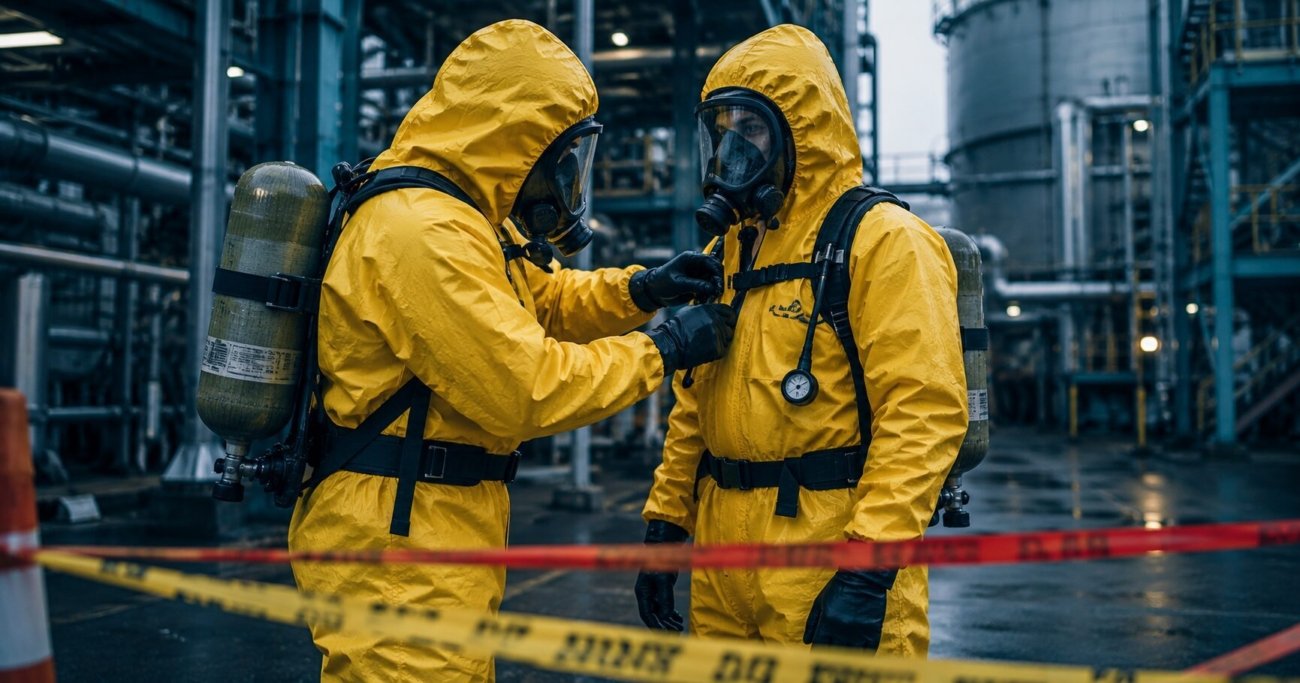
A hooded chemical-resistant coverall or two-piece suit. Unlike Level A, this suit is not vapor-tight. It protects against liquid splash but does not prevent vapor or gas from penetrating through the suit material or at the closures. The SCBA is worn outside the suit, which is the defining visual difference from Level A.
Pressure-Demand SCBA
Worn Outside the Suit
Same NIOSH-approved, pressure-demand SCBA as Level A, but worn outside the chemical-resistant suit. This provides easier access to the air cylinder and pressure gauges but means the SCBA harness and cylinder are potentially exposed to chemical splash. The SCBA facepiece must form a complete face seal before any exposure.
Inner and Outer Chemical-Resistant Gloves
Double Glove System
Same double-glove requirement as Level A. Chemical compatibility with site-specific substances must be confirmed using manufacturer compatibility charts for each chemical of concern. Gloves must be taped or secured to the suit sleeves to prevent liquid from running inside during work activities.
Chemical-Resistant Boots and Covers
Worn Over Suit or Inside
Chemical-resistant steel-toed boots. At Level B, the boot arrangement depends on the specific suit design. Outer boot covers over the suit provide additional liquid protection. The boot cover joins the suit at the ankle must be inspected at every donning and re-taped if sealing has degraded.
Safety Glasses or Chemical Goggles
Under SCBA Facepiece
Worn under the SCBA facepiece for eye protection when the facepiece is removed post-decontamination. In the hot zone, the SCBA facepiece provides eye protection. After decontamination in the warm zone, safety glasses protect during doffing before the area is confirmed clean.
Critical Distinction: The decision to use Level A versus Level B is not based on how dangerous the site looks or how experienced the workers are. It is based on the hazard assessment and air monitoring data. The Incident Commander or Safety Officer makes the PPE level call based on documented evidence, not judgment or convention. Downgrading from Level A to Level B without supporting monitoring data is a compliance violation and a safety failure.
Pre-Entry Inspection: Level A Suits
Every Level A totally-encapsulating chemical protective (TECP) suit must be inspected before each use. The inspection is not a formality. A suit that has a pinhole, a compromised zipper, or a degraded glove attachment is providing zero chemical protection at the point of failure, regardless of its protective ratings.
Level A Suit Pre-Entry Inspection Checklist
Pressure test (positive pressure inflation test)
Inflate the suit to a specified positive pressure and hold for the manufacturer’s specified time. Any pressure drop indicates a leak. This test must be performed per the method in OSHA Appendix A to 1910.120 or the manufacturer’s test protocol. A suit that fails the pressure test must not be used.
Zipper inspection
Check the gas-tight zipper for broken teeth, bent pulls, or damaged seals. Run the zipper fully through its range of motion. Any catching, skipping, or resistance indicates potential seal failure. Clean zipper with manufacturer-specified lubricant only.
Visor and window inspection
Inspect the suit visor for cracks, crazing, scratches that impair vision, and the integrity of the seal between visor and suit body. Any crack in the visor compromises the vapor-tight integrity of the suit entirely.
Glove and boot attachment inspection
Glove rings and boot attachment points are high-stress areas. Inspect for tearing, separation from the suit body, and proper lock-ring engagement. A glove that detaches in the hot zone provides immediate skin exposure.
Suit material inspection
Inspect entire suit exterior for punctures, tears, abrasions, chemical staining, or discoloration. Staining may indicate prior chemical exposure that has degraded the suit material. Degraded material may pass the pressure test but fail under actual chemical contact conditions.
Exhalation valve and communication equipment check
Test exhaust valves and any built-in communication system before donning. A stuck exhaust valve can prevent proper SCBA function inside the suit. Communication system failures mean a worker in the hot zone cannot signal distress.
Pre-Entry Inspection: Level B Suits and SCBA
Component
Inspection Points
Chemical-resistant hooded suit
Inspect seams for separation or fraying. Check zipper or closure for smooth operation and full engagement. Look for punctures, tears, or chemical degradation on the fabric. Verify hood integrity and attachment to the suit collar.
SCBA cylinder and harness
Check cylinder pressure (must meet minimum required for planned entry duration, plus reserve). Inspect harness for fraying, broken buckles, and proper adjustment. Check regulator connections and hose for damage.
SCBA facepiece
Inspect the face seal for cracks, deformities, or foreign material. Check exhalation valve for free operation. Verify lens clarity and freedom from scratches that impair vision. Perform a positive and negative pressure user seal check before entering the hot zone.
Gloves (inner and outer)
Inflate each glove by rolling the cuff and squeezing to check for pinhole leaks. Inspect for discoloration, stiffening, or chemical degradation. Confirm material compatibility with chemicals on site for this entry.
Boot covers
Inspect for sole separation, tears at the seam line, and integrity of the attachment tape or ring at the suit ankle. Replace any boot cover showing sole separation or seam failure before entry.
Tape and sealing materials
Confirm chemical-resistant tape is available and not expired. Tape is used to seal glove-to-sleeve junctions and boot-to-leg junctions on Level B suits. Expired or degraded tape does not provide adequate sealing against liquid splash.
SCBA Pre-Use Inspection: Both Levels
The SCBA is the most critical piece of equipment in both Level A and Level B ensembles. SCBA failure in a hot zone is a life-threatening emergency. The following inspection procedure applies before every entry where SCBA is required.
1
Check Cylinder Pressure
Verify cylinder pressure meets or exceeds the minimum required for the planned entry duration plus the required reserve margin. Know the expected air consumption rate for the anticipated workload. Never enter with a partially filled cylinder without confirming adequacy.
2
Activate and Check Alarm
Turn on the unit and verify the low-pressure alarm activates at the correct pressure. The alarm must be audible through a Level A suit or in high-noise environments. If the alarm cannot be heard during pre-entry testing, a different alarm system or backup communication protocol is required.
3
Inspect Facepiece and Hose
Inspect the regulator connection, demand valve, and hose for cracks, kinks, or damage. Check the facepiece exhalation valve. Inspect the face seal surface for any material that could prevent a complete seal. Clean any contamination from the face seal surface before donning.
4
Perform User Seal Check
After donning the facepiece, perform both the positive pressure seal check (cover the exhalation valve, exhale, check for outward pressure) and negative pressure check (cover inhalation ports, inhale, check for inward face seal). Perform per the manufacturer’s protocol.
5
Confirm Buddy Awareness
Confirm with your buddy that they have checked your SCBA and suit from the back and sides that you cannot see. Confirm air cylinder is fully secured, hose is not kinked, and no suit anomalies are visible from outside. Both workers confirm readiness before entry.
6
Document the Inspection
Record the pre-entry inspection in the site log: equipment ID, cylinder pressure, inspector name, date, time, and result. OSHA’s PPE program requirement under 1910.120(g)(5) includes maintenance and inspection documentation. Uninspected equipment has no documented integrity.
Maintenance and Storage
Level A and B suits and SCBA have strict maintenance and storage requirements. Improper storage degrades suit material, compromises zipper integrity, and reduces glove chemical resistance. Poorly maintained SCBA can fail to deliver air under pressure at the moment it is needed most.
Suit Cleaning After Use
All suits used in a contaminated environment must be decontaminated in the warm zone before doffing. After decontamination, follow manufacturer cleaning protocols. Do not use solvents, bleach, or cleaning agents that are incompatible with the suit material. Improper cleaning agents can degrade the suit faster than chemical exposure.
Zipper Maintenance
Gas-tight zippers on Level A suits must be lubricated with the manufacturer-specified wax or lubricant after every cleaning and before storage. Zippers stored dry or lubricated with incompatible materials may stick, develop leaks at the teeth, or fail to close fully during the next use.
Suit Storage Conditions
Store suits away from UV light, ozone sources, and extreme temperatures. Fold or hang per manufacturer instructions. Never store suits in compressed or folded positions that crease zippers or stress glove attachment points. Keep suits in manufacturer packaging until ready for use when possible.
SCBA Maintenance Schedule
SCBA requires annual inspection by a certified technician per NFPA 1852. Monthly inspections by qualified users check cylinder pressure, facepiece condition, and regulator function. Cylinders must be hydrostatic tested on the schedule specified by the cylinder manufacturer and regulatory authority (typically every 5 years for carbon fiber cylinders).
Glove Replacement Schedule
Chemical-resistant gloves do not last indefinitely even without visible damage. Manufacturer specifications include a service life based on chemical exposure type and frequency. Establish a replacement schedule based on manufacturer guidance and replace any glove that shows degradation, stiffening, or discoloration regardless of age.
Retirement Criteria
Retire and remove from service any suit that: fails a pressure test, shows chemical degradation, has an unresolvable zipper defect, has been exposed to chemicals outside its documented compatibility range, or has exceeded the manufacturer’s stated service life. Never attempt to repair a failed Level A suit for return to service without manufacturer authorization.
Key Takeaways
Level Selection Is Data-Driven, Not Judgment-Based
The choice between Level A and Level B must be supported by hazard assessment and air monitoring data. Convenience, cost, or habit are not acceptable factors in PPE level selection. Downgrading without data that justifies the lower level exposes workers and violates the HAZWOPER standard.
Level B Is Not a Safer Version of Level A
Level B provides maximum respiratory protection but significantly less skin protection than Level A. For chemicals with high dermal vapor toxicity, Level B is not a conservative choice. It is an inadequate one. The difference between the two levels is specifically in vapor-tight skin protection, not in respiratory protection.
Inspect Before Every Entry, Not Just Periodically
Pre-entry inspection is not an annual or monthly event. It is a before-every-use requirement. Suit degradation, zipper damage, and SCBA pressure loss can occur between uses. A suit that passed last Thursday’s inspection may have developed a defect during storage, transport, or prior entry.
Document Everything
OSHA’s PPE program requirement under 1910.120(g)(5) includes maintenance and inspection records. Pre-entry inspection logs, decontamination records, suit maintenance records, and SCBA service records are all program documentation requirements. Equipment without inspection records has no documented integrity.
Frequently Asked Questions
Can an air-supplied respirator (airline) substitute for SCBA in Level A or Level B operations?
Under limited conditions, yes. OSHA permits the use of a combination airline respirator with an auxiliary SCBA escape unit for Level A and Level B operations where the entry duration exceeds SCBA air supply limitations. However, the airline must be rated for IDLH conditions, the escape SCBA must be worn or immediately accessible, and the overall ensemble must maintain the required protection factor. Airline respirators without an escape unit are not acceptable in Level A or B environments.
How do I know if a chemical requires Level A rather than Level B?
Consult the Safety Data Sheet for skin absorption and dermal toxicity data, the NIOSH Pocket Guide, and chemical-specific OSHA standards. Chemicals with high skin permeation rates, skin absorption routes of toxicity, or documented dermal IDLH concerns typically require Level A. The hazard assessment must document the basis for the level selected. When in doubt, select Level A and downgrade only when monitoring data and hazard assessment support the lower level.
What happens if a Level A suit fails the pressure test?
The suit must be removed from service immediately and not used until the defect is identified and repaired by the manufacturer or a certified repair facility. Do not attempt field repairs of a failed Level A suit. A suit that fails a pressure test has a detectable leak that could allow chemical vapors to enter during hot zone operations. Repair and re-test before returning to service, and document the failure, repair, and re-test results.
Does the buddy system apply to Level B as well as Level A?
Yes. OSHA’s HAZWOPER standard requires a buddy system for all entries into the hot zone, regardless of PPE level. No worker should enter a Level A or Level B environment alone. The buddy monitors for signs of heat stress, suit integrity failure, SCBA alarm activation, and behavioral changes that may indicate exposure. Both workers must be able to communicate and must have pre-established exit signals.
Government and Regulatory Sources
Industry References
Related VelSafe Articles
Know Your Suit, Know Your Limits, Know When to Exit
Level A and Level B PPE are the most demanding protection systems any worker will wear. They restrict movement, limit communication, accelerate heat stress, and constrain every decision to the time remaining in your SCBA air supply. The workers who use them most safely are the ones who inspect them methodically before every entry, know exactly what hazard each component protects against, and exit before conditions exceed what their equipment can handle. Find more HAZWOPER compliance resources at velsafe.com.