

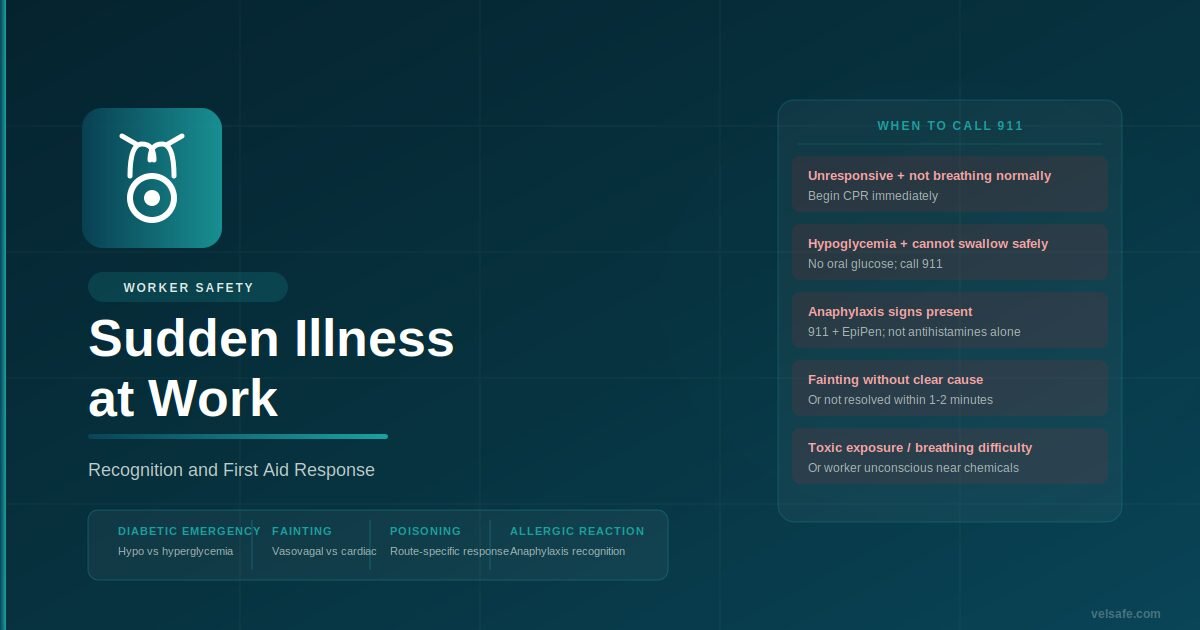
Sudden illness at work is distinct from traumatic injury in one critical way: there is often no obvious cause visible to the first aider. A worker who collapses with no preceding event, complains of feeling faint without apparent reason, or develops respiratory distress at their workstation requires a first aider who can recognize the pattern quickly and respond appropriately without a clear injury mechanism to guide them.
This article covers the most common categories of sudden illness in workplace settings: diabetic emergencies, fainting, poisoning and toxic exposure, severe allergic reactions, and respiratory distress. For each, it covers recognition, the first aid decision tree, and the most common response errors.
Why Sudden Illness Is Harder Than Traumatic Injury
When a worker cuts their hand or falls from a ladder, the mechanism is obvious. When a worker says they feel dizzy, nauseous, or “not right,” the first aider must distinguish between hypoglycemia, heat exhaustion, carbon monoxide exposure, a cardiac event, a stroke, and a panic attack, among other possibilities, without diagnostic equipment and under time pressure.
The practical solution is not to diagnose. The first aider’s job is to recognize that something is wrong, call 911 when appropriate, and apply supportive care while gathering the SAMPLE history that will help EMS narrow the differential. The key question is not “what is this?” but “how sick is this person right now, and does this require immediate emergency response?”
Diabetic Emergencies
Diabetes is the seventh leading cause of death in the US and affects approximately 38 million Americans. In a workplace with multiple employees, the statistical probability that one or more workers has diabetes is high. Diabetic emergencies fall into two categories with opposite causes and partly different responses: hypoglycemia (low blood sugar) and hyperglycemia (high blood sugar, including diabetic ketoacidosis).
First Aid for Hypoglycemia (Low Blood Sugar)
If the worker is conscious and able to swallow safely, give them a fast-acting carbohydrate: 4 ounces of fruit juice, 4 ounces of regular (not diet) soda, glucose tablets per the label, or 1 tablespoon of sugar dissolved in water. Have the worker rest and check whether symptoms improve within 15 minutes. If symptoms do not improve after one treatment, give a second dose and call 911.
Fainting (Syncope)
Fainting is a sudden, brief loss of consciousness caused by a temporary reduction in blood flow to the brain. In the workplace, common triggers include prolonged standing in heat, sudden changes in posture, pain, emotional stress, and dehydration. Most fainting episodes are benign, but fainting can also be the first sign of a cardiac arrhythmia, a serious neurological event, or internal bleeding.
In incident reports involving workplace fainting, the most consistent documentation gap is the absence of information about what preceded the episode. Whether the worker had chest pain, palpitations, or shortness of breath before they fainted is clinically significant and affects EMS triage. First aiders should actively ask bystanders who witnessed the event about what the worker was doing and saying in the minute before they fell.
Poisoning and Toxic Exposure
Workplace poisoning includes ingestion of toxic substances, inhalation of fumes or gases, skin or eye contact with chemicals, and injection of substances under pressure. The 2024 OSHA ITA data records poisonings as one of the most reported illness categories in US workplaces. Construction workers face solvent and lead exposure; manufacturing workers face chemical fumes; healthcare and janitorial workers face cleaning agent exposure.
Respiratory Distress
Respiratory distress at work can arise from asthma, COPD exacerbation, allergic reaction, chemical exposure, hyperventilation, cardiac event, or pulmonary embolism. The first aider cannot distinguish between these causes without medical evaluation, and the distinction rarely changes the immediate first aid response: keep the person calm and upright, call 911, and monitor breathing.
Breathing rate above 20 per minute or below 12; visible effort to breathe (using neck and shoulder muscles); skin color pale, blue, or grey; worker is unable to speak in full sentences; audible wheezing or stridor; worker is leaning forward with hands on knees (tripod position).
Call 911 for any moderate or severe respiratory distress. Keep the worker calm and in a position of comfort, typically sitting upright and leaning slightly forward. Loosen tight clothing. Do not lay them flat; this makes breathing harder for most respiratory conditions. If the worker has a prescribed inhaler for asthma, assist them in using it per their prescription.
Hyperventilation (rapid breathing from anxiety or panic) may appear similar to respiratory distress. Do not use the paper bag technique; it can dangerously lower oxygen levels. Instead, coach the worker to slow their breathing: breathe in slowly for 4 counts, hold for 2 counts, and breathe out slowly for 6 counts. If in doubt about the cause of rapid breathing, treat as genuine respiratory distress and call 911.
Allergic Reactions
Allergic reactions range from mild (localized hives and itching) to life-threatening anaphylaxis. The challenge in the workplace is that the worker may not know they have a severe allergy, or the trigger may not be obvious.
Localized hives, itching, or mild swelling without respiratory or systemic symptoms. First aid: remove or avoid the trigger if identified. Monitor closely for any sign of progression. Oral antihistamine (OTC) may reduce symptoms. If symptoms spread or worsen, treat as anaphylaxis.
Respiratory symptoms, swelling of the throat or tongue, drop in blood pressure, loss of consciousness. Call 911 immediately. Administer epinephrine auto-injector (EpiPen) if available and the worker cannot do so themselves. Antihistamines alone are not adequate treatment.
A recurring scenario in workplace anaphylaxis incidents: a worker is stung by a bee during outdoor work. They say they are “just allergic” and decline EMS. A co-worker gives them a Benadryl. Twenty minutes later the worker’s throat is swelling and they are in respiratory distress. Antihistamines reduce skin symptoms but do not prevent or reverse the vascular collapse and airway swelling of anaphylaxis. When a worker with a known insect allergy is stung, the appropriate response is 911 and epinephrine, not antihistamines and watchful waiting.
General Principles for Sudden Illness Response
Common Response Errors
Aspiration risk is significant. Even for suspected hypoglycemia, if the worker cannot swallow safely, call 911 and do not attempt oral glucose administration.
Antihistamines do not reverse the life-threatening components of anaphylaxis. Epinephrine is the only first-line treatment. Antihistamines may reduce skin symptoms while the systemic reaction progresses.
This technique can dangerously lower oxygen levels and is not recommended in current guidelines. If the cause of rapid breathing is uncertain, treat as genuine respiratory distress.
A first aider who enters a confined space or chemically contaminated area without respiratory protection becomes a second victim. Call 911 and keep others clear until the atmosphere is confirmed safe or trained rescue personnel arrive.
Some chemicals cause additional injury when vomited. Follow Poison Control guidance at 1-800-222-1222 before any action on an ingestion.
For most respiratory conditions, lying flat increases breathing difficulty by reducing diaphragm excursion. Keep the worker sitting upright in a position they find most comfortable until EMS arrives.
Sources
- CDC, “National Diabetes Statistics Report 2024”
- AHA/Red Cross, “2024 First Aid Guidelines” (Circulation, 2024)
- OSHA, “29 CFR 1910.151: Medical Services and First Aid”
- Poison Control, “National Poison Control Center: 1-800-222-1222”
- AIHA, “OSHA Releases 2024 Workplace Illness and Injury Data” (April 2025)
- Mayo Clinic, “Diabetic Hypoglycemia: First Aid”
- Mayo Clinic, “Fainting: First Aid”