
What Every Worker Needs to Know
Every time you leave a hazardous work zone, you carry a risk with you. Contaminants can cling to your gloves, your boots, your outer garments, and your skin. If you skip decontamination or rush through it, you transfer those hazards to clean areas, to coworkers, to your vehicle, and potentially to your family at home.
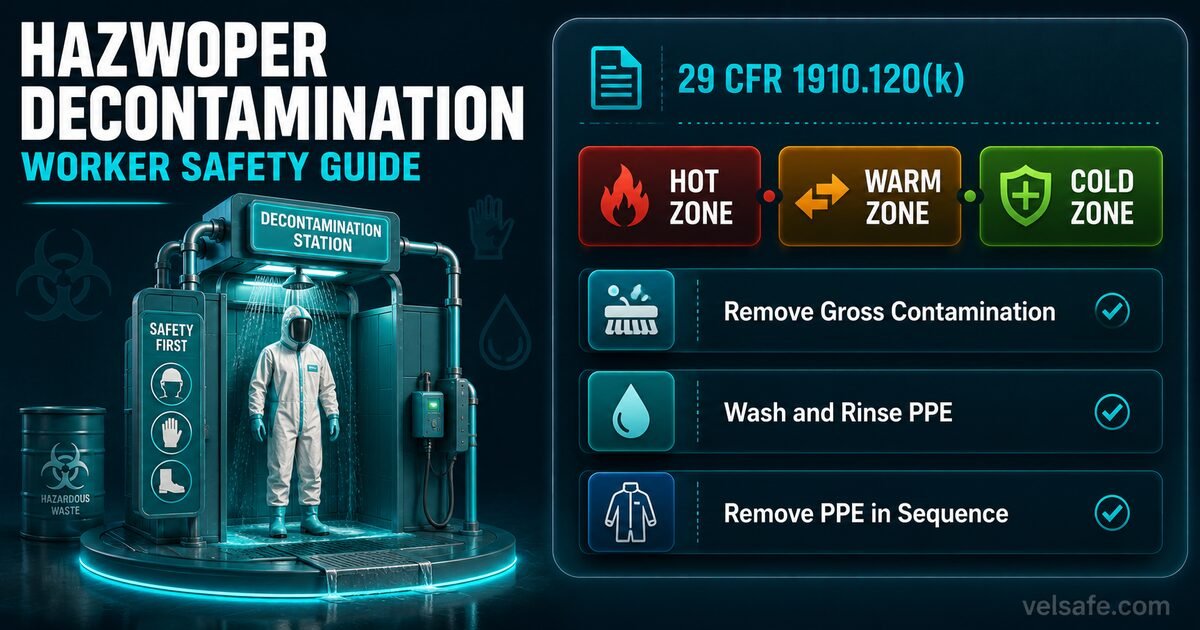
HAZWOPER decontamination is the structured process of removing or neutralizing hazardous substances from workers, equipment, and PPE before they leave a contaminated area. Under 29 CFR 1910.120(k), OSHA requires that written decontamination procedures be established before hazardous waste operations begin. This guide explains what that means for you as a worker on a HAZWOPER site.
Why This Matters
Hazard Overview: Three Types of Contamination
The Three Work Zones and Where Decontamination Happens
(Hot Zone)
(Warm Zone)
(Cold Zone)
Signs of Danger: When to Call for Help During Decontamination
- Visible tears, punctures, or discoloration on your outer PPE that were not present before you entered the exclusion zone
- Unusual odors or sensations (burning, tingling, warmth) on your skin during decontamination
- Difficulty breathing or eye irritation while removing a respirator
- Contaminated decontamination solution splashing onto your skin or face during the wash step
- Your buddy showing signs of dizziness, confusion, or skin irritation during decontamination
Safe Work Practices: The 9-Step Decontamination Sequence
PPE Requirements and Decontamination Levels
Do and Don't: Decontamination Rules Every Worker Must Know
Emergency Response: If Decontamination Goes Wrong
Supervisor Tips: Your Decontamination Responsibilities
Worker Safety Checklist
Key Takeaways
Frequently Asked Questions
What is HAZWOPER decontamination?
HAZWOPER decontamination is the process of removing or neutralizing hazardous substances from workers, PPE, and equipment after work in a contaminated area. It is required under OSHA 29 CFR 1910.120(k) and must be carried out using written, site-specific procedures before workers enter the support zone.
Where does decontamination take place on a HAZWOPER site?
Decontamination takes place in the Contamination Reduction Zone (the warm zone), located between the Exclusion Zone (hot zone) and the Support Zone (cold zone). Workers pass through the decontamination line in the defined sequence before entering the clean area.
Do I need to decontaminate even for a brief entry into the exclusion zone?
Yes. Decontamination applies to every exclusion zone exit, regardless of how short the entry was. The duration of exposure does not determine whether decontamination is required. The fact of entering the zone determines it.
Can I take contaminated PPE home to wash it?
No. OSHA prohibits workers from laundering contaminated clothing at home. If external laundry facilities are used, they must be specifically informed of the hazardous nature of the items and the substances involved.
What happens if my PPE is torn or breached during the job?
Report a breach immediately to the site safety officer before completing decontamination. A breached suit may mean direct skin exposure occurred, which requires a medical evaluation. Do not attempt to continue work or self-treat a potential exposure.
Who is responsible for setting up the decontamination line?
The employer is responsible for establishing the decontamination line and ensuring it is operational before any worker enters the exclusion zone. On-site, a designated decontamination officer or site safety officer manages the line. Workers are responsible for following the procedure correctly.
Sources
Government and Regulatory Sources
- OSHA. HAZWOPER Preparedness. U.S. Department of Labor.
- OSHA. 29 CFR 1910.120 Full Standard Text. U.S. Department of Labor.
- OSHA. HAZWOPER Standards Overview. U.S. Department of Labor.
Technical and Training Sources
- National Environmental Trainers. HAZWOPER Decontamination Practices.
- OSHACode. (2025). HAZWOPER Level A Decontamination Sequence.
- OSHACode. (2025). HAZWOPER Level C PPE Minimum Decontamination.
- DuraLabel. (2026). Understanding OSHA 1910.120 HAZWOPER Requirements.
- EHS Leaders. (2025). Steps in the Hazardous Waste Decontamination Process.
Related VelSafe Articles
Your Safety Starts Before You Leave the Zone
Decontamination is not the last step of the job. It is part of the job. Workers who treat the decontamination line as optional are not just putting themselves at risk. They are putting their coworkers, their families, and their communities at risk.
Explore the VelSafe training library to build the knowledge you need before you step into a hazardous site.