GUIDES: Food Safety Compliance
How to Identify and Correct Food Safety Violations: A Step-by-Step Guide for Inspectors and Safety Managers
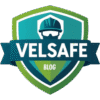
Food safety violations range from temperature control failures and cross-contamination events to labelling errors and sanitation breakdowns. Each category carries its own regulatory consequence, corrective action standard, and documentation requirement. This guide walks food safety inspectors, quality managers, and compliance officers through a structured process for identifying, classifying, correcting, and documenting violations under FDA’s food safety framework.
48M
Foodborne Illness Cases Per Year (US)
The CDC estimates 48 million Americans experience a foodborne illness each year, resulting in 128,000 hospitalisations and approximately 3,000 deaths. Most cases are preventable through proper food safety controls.
CDC, Foodborne Illness Estimates, 2024
1,800+
FDA Food Facility Recalls Per Year
FDA oversees more than 1,800 food recalls annually. Undisclosed allergens, microbial contamination, and foreign material contamination consistently rank as the top three causes of food product recalls.
FDA, Food Recalls and Alerts, 2024
FSMA
The Governing Framework Since 2011
The Food Safety Modernization Act shifted FDA’s food safety approach from reactive (responding to outbreaks) to preventive (requiring hazard analysis and controls before problems occur). FSMA’s Preventive Controls rules apply to most human food and animal food manufacturers.
FDA, FSMA Overview, 2024
Food safety inspection has changed fundamentally since the Food Safety Modernization Act (FSMA) was signed into law in 2011. The pre-FSMA model focused primarily on responding to violations after they were observed. The FSMA model requires facilities to identify hazards before they cause harm, implement preventive controls adequate to address those hazards, monitor those controls during production, and verify that the controls are working. An inspector under FSMA is not just looking for violations: they are evaluating whether the facility’s food safety system is capable of preventing violations from reaching consumers.
This guide addresses the practical skills that food safety inspectors, quality managers, and compliance officers need: how to systematically identify violations across the key hazard categories, how to classify their severity, what corrective action standard applies, and how to document findings in a way that supports both immediate correction and longer-term corrective action planning.
Why Food Safety Violations Must Be Identified and Documented Correctly
Undocumented violations recur. A violation that is corrected on the spot without written documentation creates no record for trend analysis. The same violation will likely recur because there is no corrective action, no root cause investigation, and no mechanism to verify that the correction held. Inspection without documentation is observation without improvement.
Severity classification determines the response timeline. A critical violation involving an adulterated product in commerce requires immediate action (potentially a product hold or recall). A minor sanitation violation requires correction before the next inspection. Misclassifying a critical violation as minor delays the response and creates regulatory liability for the inspector and the facility.
FSMA enforcement is based on patterns, not individual events. Under FSMA’s preventive controls framework, FDA evaluates whether a facility’s food safety plan is adequate and whether it is being followed. A pattern of repeated violations in the same category tells an inspector that the preventive control is either inadequate or not being implemented. That pattern finding can result in a Warning Letter or mandatory recall even if no individual incident caused an illness.
FDA, FSMA Preventive Controls for Human Food
Violation Category Risk and Inspection Finding Frequency
Temperature Control Failures (TCS foods)Critical: highest frequency
Time and Temperature Control for Safety (TCS) violations are the most consistently cited food safety findings. Improper hot holding, cold holding, cooling, and thawing are the primary subcategories.
Allergen Controls (undisclosed allergens)Critical: leading recall cause
Undisclosed allergens are the leading cause of food recalls. Labelling errors, cross-contact during shared equipment runs, and bulk ingredient substitutions without label review are the primary failure modes.
Cross-Contamination (biological, chemical, physical)Critical to serious
Raw-to-ready-to-eat contact, improperly sanitised surfaces, airborne contamination from adjacent operations, and chemical residue in food contact surfaces are the primary cross-contamination findings.
Sanitation and Hygiene (employee practices, facility)Serious to minor
Handwashing failures, improper glove use, ill employee policies, facility sanitation deficiencies, and pest control gaps. Severity depends on whether the failure creates direct product contact risk.
Labelling and Records (FSMA documentation)Serious
Missing or incomplete food safety plan, inadequate monitoring records, corrective action records not maintained, and labelling non-compliance with required disclosures including allergens and nutrition facts.
Facility and Equipment (structural, maintenance)Minor to serious
Equipment in disrepair, unsealed penetrations, inadequate ventilation, improper plumbing, and structural deficiencies that create contamination pathways or harborage sites.
FDA Food Recall Data | CDC Foodborne Illness Surveillance
Severity Level
Definition
Required Response
Example
Critical
Likely to cause illness or injury if not corrected immediately
Immediate correction, product hold evaluation, written corrective action, root cause investigation
Poultry at 54°F in a cold hold unit; undisclosed peanut allergen on label
Serious
Significant risk if not corrected; may contribute to illness under certain conditions
Correct within agreed timeframe (typically before next operation or within 10 days); written corrective action
Inadequate handwashing stations; missing food safety plan records; raw meat stored above ready-to-eat foods
Minor
Low immediate risk but indicates systemic gap or non-compliance with good practice standards
Correct before next inspection; note in inspection record; repeated minor violations may escalate
Missing date label on internal prep item; worn caulking not creating harborage; lighting slightly below specification
FDA, FSMA Preventive Controls Framework
Critical Violation: Immediate Response Protocol
Step 1: Stop the hazard. For temperature abuse, remove the affected product from service and place on hold. For cross-contamination events, segregate any potentially affected product and stop the operation creating the contamination pathway. For allergen cross-contact, place all product from the affected run on hold pending allergen verification.
Step 2: Evaluate the affected product. Assess whether held product can be safely served (for example, reheating to a safe temperature may rescue some temperature-abused items if they have not been out of temperature too long). Document the quantity, description, and lot numbers of all product evaluated and the basis for the disposition decision (serve, rework, or discard).
Step 3: Correct the source of the violation. Repair the cold unit, fix the handwashing procedure, implement the allergen cleaning protocol. Verify the corrected state before returning to production.
Step 4: Document everything and require a root cause investigation. The root cause investigation must be completed in writing within five business days and must address: why the violation occurred, what systemic gap allowed it, and what preventive action will prevent recurrence. An investigation that concludes “employee error” without identifying why the employee made the error is not adequate under FSMA’s preventive controls framework.
21 CFR Part 117: Current Good Manufacturing Practice, Hazard Analysis, and Risk-Based Preventive Controls for Human Food
Problem: The facility disputes the temperature reading
Root cause: The facility’s unit thermometer reads differently from your probe thermometer, or the facility believes the product is compliant.
Fix: Show your thermometer calibration record. Take a second reading in the same location and document it. If the unit thermometer differs significantly from your probe, that difference is itself a finding (inaccurate monitoring equipment). Do not remove the critical finding because the facility disagrees. Provide a clear written description of the methodology used and the result obtained.
Problem: The facility cannot produce food safety plan records
Root cause: Records are stored in a location not accessible during the inspection, were not completed, or the facility does not maintain a food safety plan as required by FSMA.
Fix: Under 21 CFR Part 117, facilities subject to FSMA preventive controls must maintain a food safety plan and make it available for FDA review on request. Inability to produce the plan is itself a serious violation. Document the inability to produce records and require production of all records within 24 hours. If records do not exist, classify the finding accordingly and escalate to your supervisor.
Problem: A finding appears to be both a Critical and a Minor violation simultaneously
Root cause: Some violations have both a critical component (the immediate hazard) and a minor component (the underlying systemic gap). These are not in conflict; they are two separate findings.
Fix: Document them separately. For example: (1) Critical: raw chicken stored directly above ready-to-eat salad in walk-in cooler. (2) Serious: no written storage hierarchy procedure in place for cold storage organisation. Both findings are real and both require corrective actions at their respective severity levels.
Temperature Control Is the Highest-Frequency Critical Violation
TCS food temperature failures are the most commonly identified critical violation in food facility inspections. Every inspection should include direct temperature measurement of all TCS foods using a calibrated probe thermometer, not reliance on unit thermometers alone.
Undisclosed Allergens Are the Leading Recall Cause
Allergen cross-contact through shared equipment and labelling errors that omit declared allergens are the primary drivers of food recalls in the United States. Allergen verification must be part of every food manufacturing facility inspection, including review of cleaning verification records for shared equipment.
Documentation Quality Determines Corrective Action Quality
Vague violation descriptions (“food not stored properly”) cannot drive specific corrective actions. Every finding must include the specific observation with measurements, the applicable food code section, the severity classification, and the required corrective action with a named responsible party and due date.
On-Site Correction Does Not Replace Root Cause Investigation
Correcting a critical violation on-site during an inspection (discarding product, fixing a temperature unit) eliminates the immediate hazard. It does not identify or address the systemic cause of the violation. A root cause investigation is required for every critical and serious finding, even those corrected on-site.
Record Review Reveals What Floor Observation Cannot
Temperature logs without any deviations, corrective action records that all show “N/A”, and sanitation records that are always completed exactly on schedule indicate monitoring that exists on paper but not in practice. Record review before the floor walkthrough directs the inspector to the areas most likely to have real compliance gaps.
Repeat Violations Drive Enforcement Escalation
Under FSMA’s preventive controls framework, FDA evaluates whether a facility’s corrective actions are effective. A violation that recurs in the same category at successive inspections is evidence that the corrective action was inadequate. Repeat critical violations are the primary driver of Warning Letters and voluntary shutdown requests.
What is the safe temperature range for cold holding TCS foods?
TCS (Time/Temperature Control for Safety) foods in cold holding must be maintained at 41°F (5°C) or below. This requirement applies to all TCS foods including meat, poultry, seafood, dairy, cooked foods, cut fruits and vegetables, and foods with pH and water activity combinations that support pathogen growth. The 41°F standard is based on the growth characteristics of Listeria monocytogenes, which can multiply at refrigeration temperatures above this threshold. Some jurisdictions allow 45°F for specific product types, but 41°F is the FDA Food Code standard.
What is required in a FSMA food safety plan?
Under 21 CFR Part 117, a food safety plan for a covered facility must include: a written hazard analysis identifying known or reasonably foreseeable biological, chemical, and physical hazards for each food; preventive controls for hazards requiring a preventive control; monitoring procedures for each preventive control; corrective action procedures; verification activities to confirm controls are working; recall plan; and supply chain programme for supplier-controlled hazards. The plan must be prepared by a qualified individual (PCQI) and reviewed at least every three years or when a significant change occurs.
When must a food facility initiate a recall?
A food facility must initiate a recall when a product in commerce is found to be adulterated or misbranded in a way that poses a health risk. Under FSMA, FDA has mandatory recall authority for food products that present a reasonable probability of causing serious adverse health consequences. Most food recalls are voluntary, initiated by the manufacturer when they identify a hazard. A facility that identifies a potential allergen, pathogen, or foreign material contamination issue in a distributed product should immediately notify FDA and initiate a recall rather than waiting for FDA to order one. Proactive voluntary recall is treated significantly better than a mandatory recall in subsequent enforcement interactions.
What sanitiser concentrations are required for food contact surfaces?
The FDA Food Code specifies minimum sanitiser concentrations for common chemical sanitisers. Chlorine (hypochlorite) sanitiser: 50 to 200 parts per million (ppm) at pH 8.0 or below and a minimum temperature of 55°F, with a contact time of at least 7 seconds. Iodine sanitiser: 12.5 to 25 ppm at a minimum temperature of 68°F, with contact time of at least 30 seconds. Quaternary ammonium compounds: per manufacturer’s specification, typically 200 to 400 ppm, with contact time per label directions. Sanitiser concentration must be verified with test strips at the correct concentration range during every preparation and periodically during use as the solution dilutes.
How should an inspector handle an employee who appears ill?
If an inspector observes an employee showing symptoms of vomiting, diarrhoea, jaundice, or open sores on the hands or arms, the inspector should ask the supervisor or manager about the facility’s ill employee policy and whether the affected employee has been evaluated under it. Under the FDA Food Code, employees with vomiting or diarrhoea must be restricted from food handling or excluded from the facility depending on the suspected illness. Jaundice requires reporting to the regulatory authority and exclusion from food handling. Document the observation, the response, and the corrective action taken. If the facility has no written ill employee policy, that is a separate serious violation.
What is the difference between a food safety plan and a HACCP plan?
A HACCP (Hazard Analysis and Critical Control Points) plan is based on the original seven HACCP principles: hazard analysis, identifying CCPs, establishing critical limits, monitoring, corrective actions, verification, and recordkeeping. A FSMA food safety plan (required under 21 CFR Part 117) incorporates HACCP principles but adds broader hazard categories (including radiological hazards and economically motivated adulteration), requires a supply chain programme, and requires a qualified individual (PCQI) to prepare the plan. Facilities with existing validated HACCP plans may satisfy most FSMA requirements, but must verify that their plan meets all FSMA-specific elements including the supply chain programme and the PCQI requirement.
How are repeat violations classified and what do they trigger?
A repeat violation is a finding in the same category as a violation identified at a prior inspection that was not adequately corrected. The classification depends on the original severity: a repeat of a serious violation may be elevated to critical; a repeat of a minor violation may be elevated to serious. Repeat critical violations at successive inspections indicate that the facility’s corrective action was not effective and that the preventive control is not working. Under FSMA, this pattern can result in a Warning Letter, a regulatory meeting, or a referral for mandatory recall or injunction. Inspectors must reference the prior inspection record when documenting a repeat finding and note the prior finding date and the corrective action that was required.
VelSafe Food Safety Guides
Every Food Safety Violation Is a System Failure, Not Just an Observation
Identifying a violation is the starting point. Understanding its root cause, documenting it correctly, and verifying that the corrective action prevented recurrence is the full food safety inspection cycle. VelSafe covers food safety regulations, FSMA compliance, FDA inspection readiness, and food safety management for quality professionals and inspectors.
Browse Compliance Guides