

VelsafeVelsafe

Workplace Safety Guides, Insights & Training

Velocity Safe Blog
  • Sign in /
  • join
  • Home
  • Insights
  • Guides
  • Practice Tests
  • Tips
  • Worker Safety
  • Situational
  • OSHA Tools
  • Law

Home » Chemicals and Hazard Communication » Page 8

Chemicals and Hazard Communication

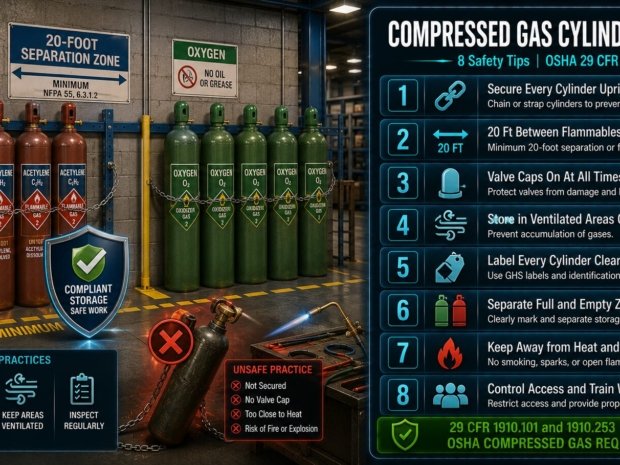
Compressed gas cylinder storage safety tips covering OSHA 29 CFR 1910.101 requirements including cylinder securing, 20-foot flammable oxidiser separation, valve caps, ventilation, GHS labelling and access control
July 25, 2025
by VelSafe Editorial Team Tips

How to Store Compressed Gas Cylinders Safely – A Simple Checklist

Read More
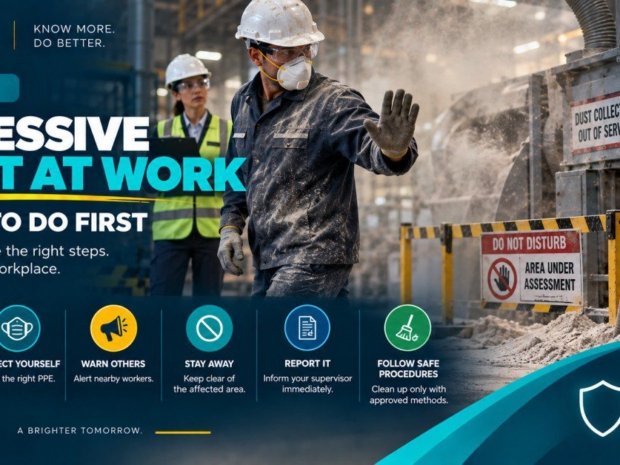
Excessive dust workplace safety tips showing a worker in a hard hat and N95 respirator holding up a stop hand signal in a dusty industrial facility with a dust collection out of service sign and a do not disturb area under assessment warning sign visible, with a safety supervisor in a high-visibility vest in the background and accumulated dust covering surfaces and equipment
July 22, 2025
by VelSafe Editorial Team Tips

Excessive Dust Workplace Safety: 7 Tips for What to Do

Dust may look harmless, but in a workplace, it can be a serious safety hazard. Whether you're working in construction, manufacturing, or even in a warehouse, dust buildup can lead to health risks, equipment damage, and even fires or explosions. If yo
Read More
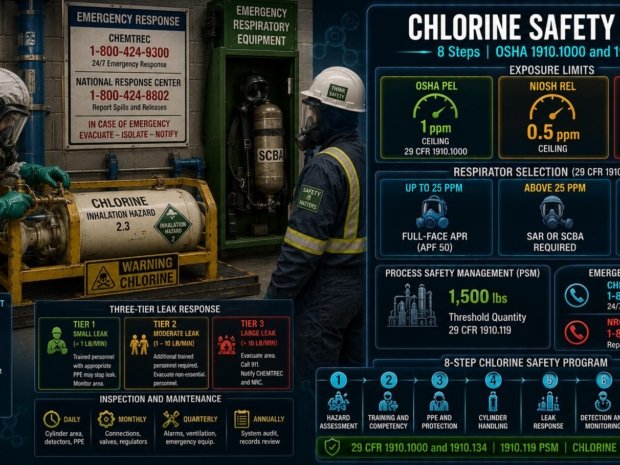
Chlorine safety guide covering OSHA exposure limits 1 ppm ceiling and IDLH at 10 ppm, respirator APF-based selection, PSM requirements at 1500 pounds, cylinder handling procedures, three-tier leak response and inspection schedules under 29 CFR 1910.1000 and 1910.134
July 20, 2025
by VelSafe Editorial Team Guides

How to Handle Chlorine Safely: A Step-by-Step Guide for Workers and Supervisors

Read More
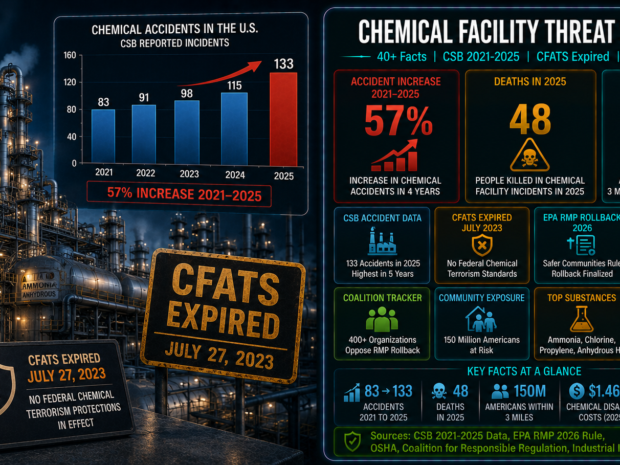
Chemical facility threats U.S. statistics infographic showing 57% increase in serious chemical accidents from 2021 to 2025, 48 deaths in 2025 (nearly double 2024), CFATS chemical security program expired July 2023 leaving 3,200 facilities without mandatory security oversight, and EPA proposing rollback of 2024 Safer Communities chemical accident prevention rule in February 2026.
July 20, 2025
by VelSafe Editorial Team Insights

Chemical Facility Threats in the U.S.: 40+ Statistics From CSB, EPA, and CISA Through 2025-26

Read More
5 Simple Ways to Protect Yourself from Bloodborne Pathogens at Work
July 19, 2025
by VelSafe Editorial Team Tips

5 Simple Ways to Protect Yourself from Bloodborne Pathogens at Work

Bloodborne pathogens like HIV, Hepatitis B (HBV), and Hepatitis C (HCV) can enter your body through cuts, splashes, or direct contact with infected blood and body fluids. Many workers, especially those in healthcare, sanitation, emergency response, a

Read More
Holiday Staffing Gaps and Biosafety Waste Minimizing Risk During Low-Supervision Periods
July 18, 2025
by VelSafe Editorial Team Situational

Holiday Staffing Gaps and Biosafety Waste: Minimizing Risk During Low-Supervision Periods

The holiday season often means fewer people on-site, shorter hours, and less direct supervision in labs, clinics, and healthcare facilities. While many operations slow down, biosafety waste management cannot be paused. Improper handling or delayed di
Read More
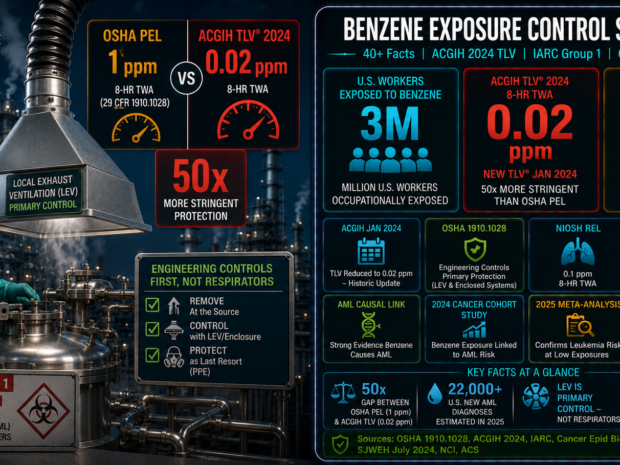
Benzene engineering controls effectiveness statistics infographic showing 3 million U.S. workers occupationally exposed to benzene, ACGIH January 2024 TLV reduction to 0.02 ppm (50 times more stringent than OSHA's 1 ppm PEL), IARC Group 1 carcinogen classification causing acute myeloid leukemia, and OSHA 1910.1028 requirement that local exhaust ventilation and enclosed systems serve as primary exposure controls rather than respirators.
July 17, 2025
by VelSafe Editorial Team Insights

Engineering Controls for Benzene Exposure: 40+ Statistics on Effectiveness, Limits, and Cancer Risk Through 2025

Read More
Post-fire warehouse storage room with charred e-bike remains and battery fire incident timeline showing thermal runaway sequence and three root causes
July 17, 2025
by VelSafe Editorial Team Situational

Battery and Charger Safety During Holiday Downtime: Fire and Leak Prevention

Holiday season means winding down operations, but batteries and chargers still require attention—even when staff are away or shifts are reduced. Whether your facility uses forklifts, backup power systems, or everyday electronics, risks don’t pause ju

Read More
Asbestos exposure statistics for the US showing approximately 3000 annual mesothelioma deaths, 1.3 million workers with significant annual exposure, industry hotspots from insulation work to firefighting, the 2024 EPA chrysotile ban timeline, and OSHA PEL compliance data
July 13, 2025
by VelSafe Editorial Team Insights

Asbestos Exposure in the US: Trends, Statistics, and Industry Hotspots

Read More
Legal penalties for failing to train workers on asbestos hazards featured image showing an OSHA Penalty Notice clipboard, gavel, respirator, and Danger Asbestos Hazard sign at a construction site, with a four-point panel showing OSHA citations, heavy fines, enforcement actions, and reputational damage consequences.
July 13, 2025
by VelSafe Editorial Team Law

Legal Penalties for Failing to Train Workers on Asbestos Hazards

LAW: Asbestos Hazard Training Legal Penalties for Failing to Train Workers on Asbestos Hazards Asbestos exposure is a leading cause of occupational cancer in the United States. Federal law requires employers in construction, general industry,

Read More
  • First
  • Previous
  • 1
  • ...
  • 6
  • 7
  • 8
  • 9
  • Next
  • Last

Subscribe Now

VelSafe Subscribe
VelsafeVelsafe

Workplace Safety Guides, Insights & Training

Linkedin Twitter Instagram
Category
  • Insights
  • Guides
  • TIPS
  • LAW
  • Practice Tests
  • SITUATIONAL
Info
  • About Us
  • Get Featured
  • Newsletter
  • Contact Us
Popular Posts
Legal books showing OHS laws, industry regulations, and crane standards beside a yellow mobile crane at oil and gas refinery illustrating OSHA crane operations law requirements including operator certification, inspection records, and compliance enforcement
September 25, 2026

Oil and Gas Crane Operations Law:…

Oil and gas bloodborne pathogens 29 CFR 1910.1030 law article showing two oil and gas workers in hard hats and high-visibility vests at an industrial refinery site, with one worker kneeling beside a red first aid kit and holding an OSHA document on occupational exposure to bloodborne pathogens, with infographic panels below covering exposure control plan, PPE, hepatitis B vaccination, post-exposure evaluation, annual training, and recordkeeping requirements
September 19, 2026

Oil and Gas Bloodborne Pathogens: 29…

Newsletter

Send us a newsletter to get update


    © 2026 . All rights reserved.
    Shopping Basket