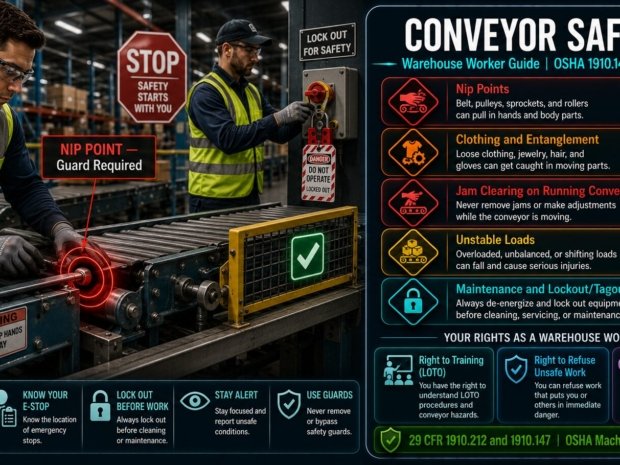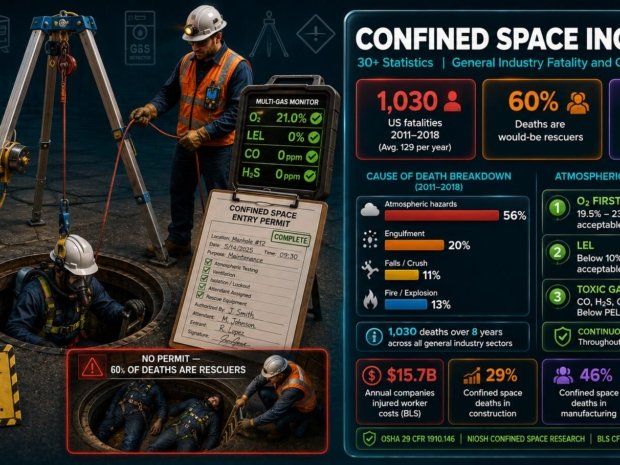

Practical tips to protect workers from hazardous energy and support OSHA compliance. Safety Guide OSHA 29 CFR 1910.147 · Subpart S Table of Contents Introduction OSHA Context: Why Lockout/Tagout Matters Common Electrical
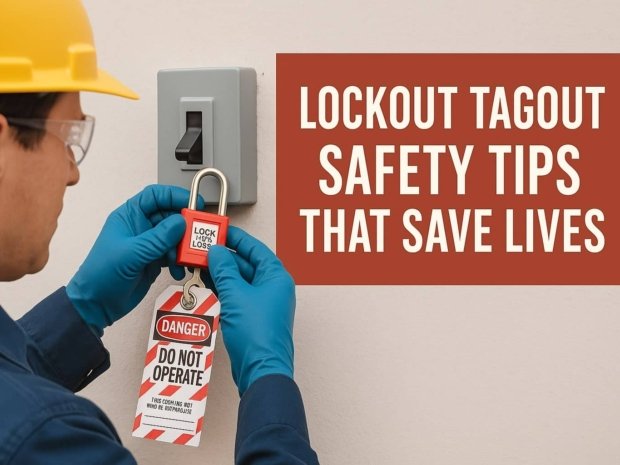
Practical tips to protect workers from hazardous energy and support OSHA compliance. Safety Guide OSHA 29 CFR 1910.147 · Subpart S Table of Contents Introduction OSHA Context: Why Lockout/Tagout Matters Common Electrical

Practice Test - 20 Question Interactive Demo Select or submit your answers. Once marked, answers are locked and cannot be changed unless you refresh the page. Use the score button to tally your results. .vs-card{border:1px solid #e2e8f0;b

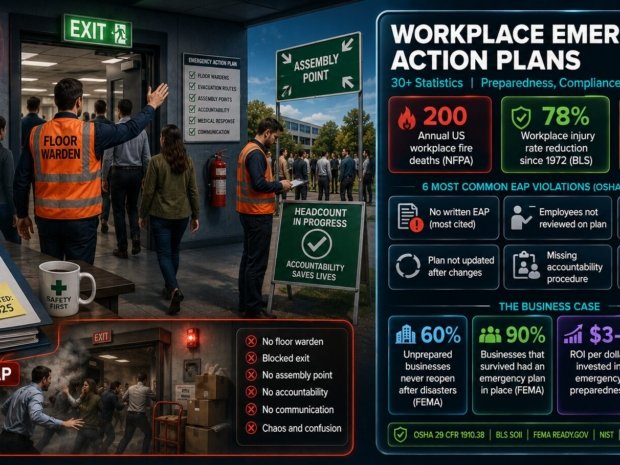
Simple guidance to meet OSHA rules and protect workers in real emergencies ⏱️ 8–9 min read | Updated: September 3, 2025 Table of Contents OSHA Standards Overview Exit Routes: What OSHA Requires Emergency Action Plans: Req
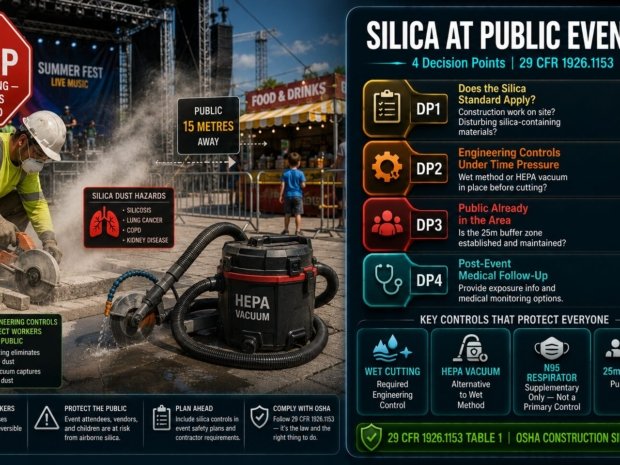
SITUATIONAL: Silica Exposure at Public Events Silica Exposure at Public Events: Safety for Temporary Stages and Construction Zones Crystalline silica hazards in construction are well understood. What gets missed is when the same cutting and g

Cryogens like liquid nitrogen, oxygen, argon, and helium are commonly used in industrial settings, research labs, and manufacturing plants across the U.S. These substances are stored at extremely low temperatures (below –150°C), which makes them both

TIPS: Crane and Rigging Safety Crane Hand Signals Every Operator Should KnowThe OSHA and ASME B30.5 Standard Signals, Who Must Use Them, and How There are 19 standard crane hand signals defined under OSHA 29 CFR 1926 Subpart CC Appendix A and